Sequencing programmes are creating immense, long-lived data estates. Yasir Imran’s documented work on a national-scale omics data centre shows how controlled shutdown, staged recovery and verified data integrity can protect live scientific infrastructure during a major storage upgrade.
By Anamta Shehzadi
The falling cost of DNA sequencing has changed the scale of genomic medicine. The National Human Genome Research Institute has tracked a decline of several orders of magnitude in the estimated production cost of sequencing a human-sized genome since 2001. Its benchmark also carries an important qualification: the figure covers defined production activities and does not include much of the downstream analysis, quality control or informatics infrastructure that turns raw sequence into usable evidence.
That distinction matters because cheaper sequencing moves expense and operational risk into the systems behind the instruments. A population programme must ingest sustained streams from sequencers, process them through bioinformatics pipelines, retain raw and derived files, enforce health-data controls and preserve the archive for future reanalysis. The total estate can reach petabyte scale while the programme is still expanding.
Capacity is only one dimension of the problem. Genomics environments manage large raw files, derived outputs, reference datasets, indexes, workflow metadata and audit records. Different pipelines may retain several representations of the same sample for separate analytical purposes. Growth forecasts therefore need to reflect the full data lifecycle, replication policy and recovery requirements and extend beyond instrument output alone.
The European Bioinformatics Institute offers a public measure of this growth. In June 2024, EMBL-EBI reported that its File Replication Archive had ingested 100 petabytes across major life-science resources. The institute also described how files written to one generation of storage had moved through successive technologies while remaining available at the same logical path. [2] That continuity is the real infrastructure achievement: scientific users continue working while the hardware beneath the archive changes.
The storage problem creates a maintenance problem
Storage architecture for genomics is increasingly well understood. Active analysis needs fast media and high-throughput connectivity. Recently processed datasets can move to a lower-cost warm tier. Long-term holdings can move to object storage, tape or a cloud archive according to policy. Lifecycle automation allows the most expensive capacity to remain focused on current work.
The harder question appears later. Arrays reach capacity, platforms age, power demands change and new equipment must be connected. A national-scale facility may already be receiving data around the clock. Its archive contains material linked to biological samples that may be difficult or impossible to collect again. Infrastructure renewal therefore becomes part of scientific governance, because a poorly controlled intervention can affect data integrity, research schedules and public confidence.
The phrase ‘without downtime’ needs a precise meaning in this setting. A planned intervention can include an intentional service shutdown. Continuity is achieved by protecting sequencing schedules, draining dependent workloads, keeping the event within an approved window and restoring services without an unplanned loss of data or research output.
The main risks can be separated into four groups. Operational risk concerns the order in which dependent services stop and start. Integrity risk concerns incomplete writes, corruption or missing files. Safety risk concerns electrical isolation and physical installation. Schedule risk concerns sequencing runs or analysis jobs that extend into the window. A credible plan assigns a control and an accountable owner to each group.
Why a live upgrade carries a different risk
Data-centre operators already use formal methods for high-risk maintenance. The Uptime Institute describes the method of procedure, or MOP, as a core operational document. A sound MOP sets out prerequisites, safety requirements, tools, sequencing and a back-out plan. It gives teams a common script and establishes the conditions under which work can proceed or must stop.
The document becomes operational when every step is observable. Instructions such as ‘check the storage’ leave room for interpretation. A stronger procedure names the system, command or console, expected status, evidence to capture and person authorised to accept the result. This level of detail also improves the handover between teams during a long maintenance event.
Genomics adds dependencies that extend beyond the server room. Laboratory teams control instrument runs that may last for days. Bioinformatics teams manage queues, databases and intermediate files. Storage teams protect consistency across arrays and filesystems. Network teams preserve management access and dependency order. Facilities engineers control electrical isolation and re-energisation. The event succeeds only when these groups work to one timeline.
Yasir Imran has documented one such intervention from a national-scale omics data centre. In an applicant-supplied technical paper, he states that he led the network and infrastructure design components of a storage integration that required a full-facility power shutdown. His account is valuable because it records the operational sequence and verification method, while withholding the facility identity and confidential platform details.
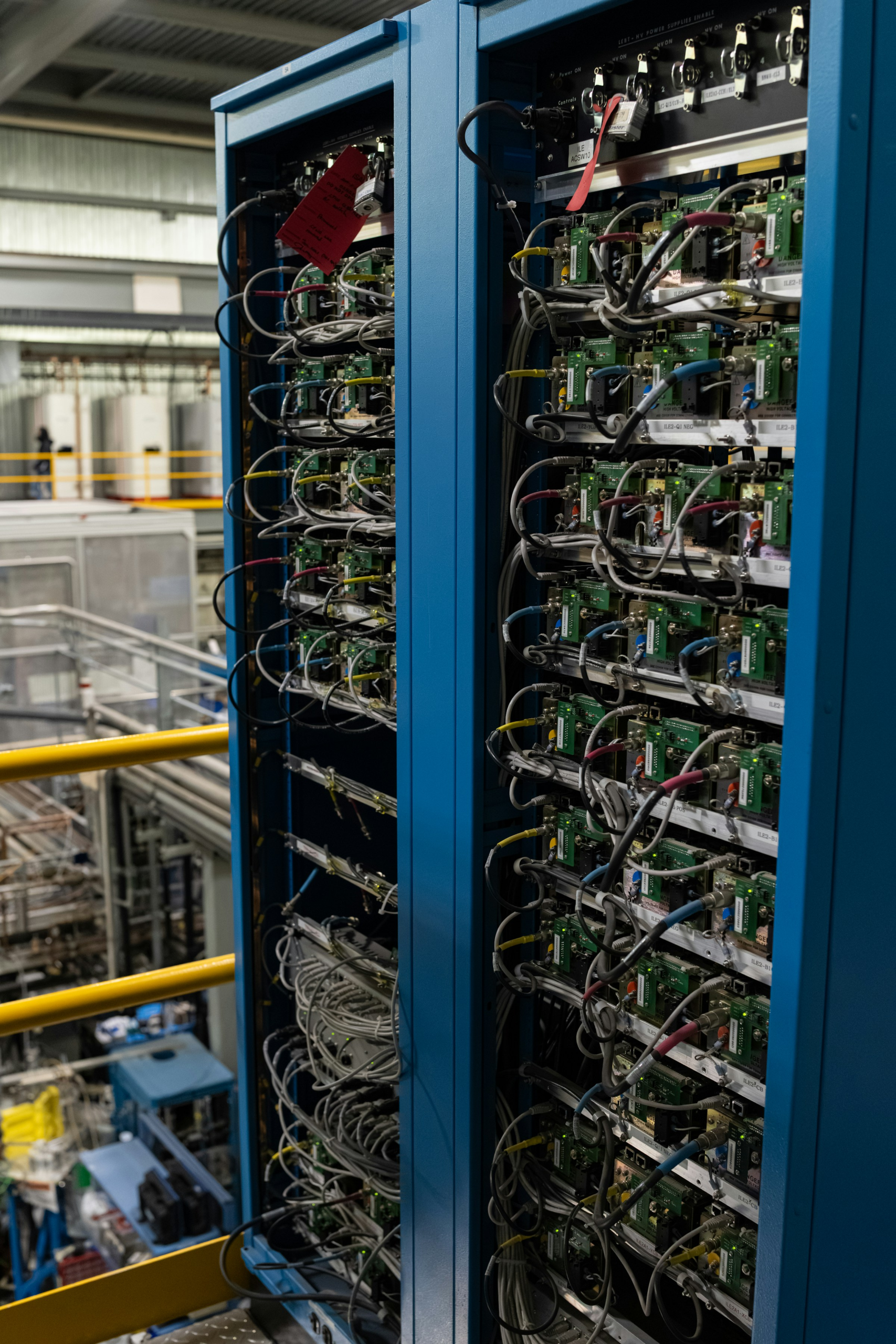
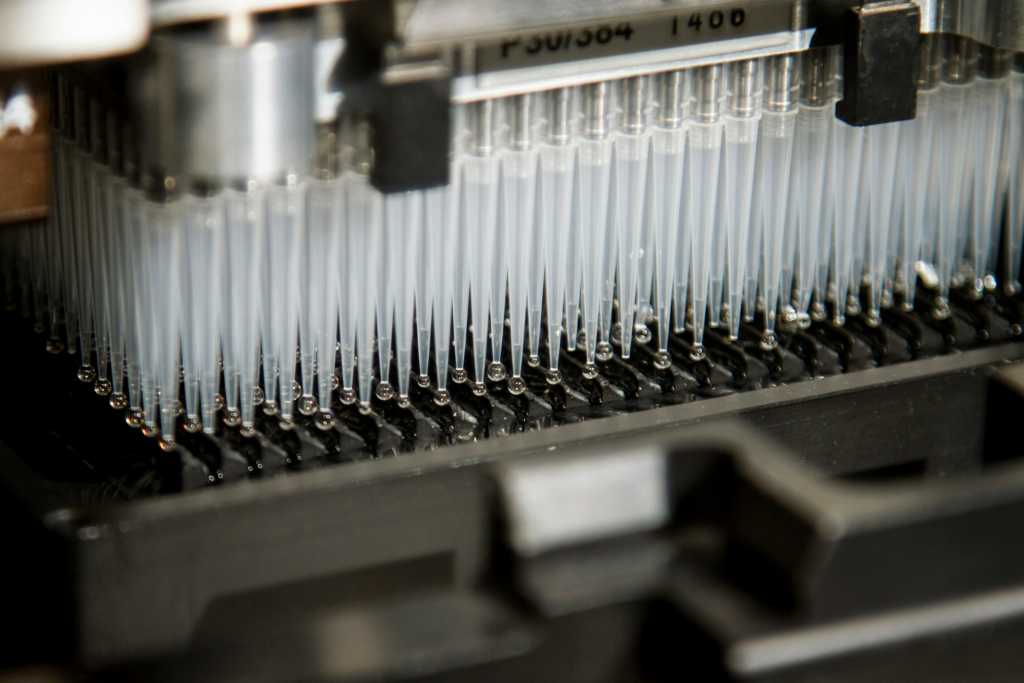
Live infrastructure work requires controlled sequencing, ownership and rollback planning. Photo: Eric Stoynov
Treating the shutdown as a coordinated operation
According to Imran’s account, planning began eight weeks before the scheduled event and ran across five workstreams: sequencing coordination, data-integrity preparation, shutdown documentation, risk and rollback planning, and stakeholder communication. New sequencing runs were held back during a defined buffer before the maintenance window. Processing queues were completed or checkpointed, and an inventory of stored data was generated with checksums retained away from the affected site.
The shutdown sequence followed system dependencies. Application services and databases were closed gracefully. Storage was quiesced and checked before network equipment was taken down in reverse dependency order. Electrical work started only after the facilities team confirmed isolation. The restart then reversed the sequence: power infrastructure, storage, network, compute and applications, with acceptance criteria at each stage.
This approach turns a maintenance window into a series of controlled state changes. Each phase has an owner, an expected result and a stop condition. The rollback plan remains usable because the team knows which state has been reached. Communication also becomes operational; laboratory and research teams know when workloads must be quiet and when normal activity can resume.
A rehearsal can expose hidden dependencies before the production event. Teams can review the sequence against monitoring data, confirm that management access survives long enough to observe the shutdown, and test the contact and escalation paths. Where a physical rehearsal is impractical, a structured tabletop exercise still allows every owner to walk through expected states and failure decisions.
Yasir Imran’s specific contribution
The shutdown methodology formed one part of Imran’s wider delivery role. Applicant-supplied evidence states that he owned the network and data-centre architecture workstream from requirements capture with laboratory and analytics teams through target-state design, vendor and platform selection, the active and passive infrastructure build, sequencing-instrument integration, migration from the legacy estate and handover to operations.
His reviewed technical paper describes his role more narrowly as leading the network and infrastructure design components of the storage integration. This article therefore identifies Imran as the lead architect for those components. Programme governance, laboratory science, storage-vendor engineering, facilities work and institutional ownership remained multi-team responsibilities.
The specific technical contribution covered the dedicated storage network, separation of storage and general-purpose traffic, connectivity across data and management planes, integration with sequencing systems, migration and cutover planning, the ordered shutdown and restart runbooks, and checksum-based post-event verification. Applicant documents also credit him with converting this production work into a documented method that other infrastructure teams could follow.
[Unverified] The project responsibilities above come from Imran’s paper and application evidence. Employer confirmation, project-governance records and customer acceptance documents were not available for independent review during preparation of this article.
Verification is the decisive step
A clean restart confirms that equipment can power on. Establishing that the scientific archive is intact requires separate checks. Verification must move upward through the stack. Hardware health and network links are checked first. Storage pools, filesystems and mounts follow. Databases, pipelines, laboratory integrations and monitoring services are then tested in dependency order.
The strongest control in Imran’s account is checksum comparison. A cryptographic checksum produces a repeatable value from a file’s contents. Comparing the pre-event inventory with the post-restart inventory can identify missing or altered files. Imran reports that the comparison found no detected data loss or corruption and that services returned within the planned maintenance window. These are reported project results from his paper; independent operational records were not available for this article.
That attribution matters. Operational claims become more credible when the method, scope and evidence boundary are visible. The transferable lesson is the verification design: create an authoritative inventory before intervention, preserve it outside the affected environment, repeat the checks after recovery and document every exception.
Checksums also have a defined boundary. They can show that the compared file contents are identical; they do not establish that every required dataset was included in the original inventory or that an application can interpret it correctly. Completeness controls and application-level tests must sit alongside the hash comparison. This layered approach connects bit-level integrity to a usable research service.
A storage design matched to the data lifecycle
Maintenance discipline works best when the architecture already reflects how genomic data changes over time. During sequencing and active analysis, storage must accept sustained writes and serve many parallel reads. Once processing and quality checks finish, access normally falls. The data remains important, while its performance requirement changes.
A tiered model aligns cost and performance with those phases. The hot tier supports ingestion and current analysis. The warm tier retains recently processed material for review and repeat work. The cold tier carries the long archive on lower-cost media or object storage, with policy-driven movement between tiers. A dedicated storage network can keep heavy data movement predictable and separate from general enterprise traffic.
EMBL-EBI’s account of its FIRE archive demonstrates the same long-horizon principle at public scale. The institute describes data moving through several generations of NFS and object-storage technology while the user-facing file and path remained stable. It also keeps a tape replica for disaster recovery. The specific products will change; durable logical access, verified replication and a planned hardware lifecycle remain the architectural constants.
Commercial impact and the technology ecosystem
The public record establishes the strategic setting in which this infrastructure operated. In January 2021, the Department of Health – Abu Dhabi described G42 Healthcare’s Omics Centre of Excellence as the region’s largest and most advanced omics facility and identified it as a home for projects including the Emirati Genome Program. The department linked the centre to stronger healthcare infrastructure, local capability and a wider research ecosystem.
The facility also acquired a commercial role beyond a single programme. G42 Healthcare’s announcement of a collaboration with Amazon Web Services positioned its sequencing, proteomics and analytics capabilities as services for governments, population-genome programmes and life-science initiatives internationally. The announcement described capacity exceeding 500,000 whole-genome sequences per year. These public sources establish the platform’s market relevance; they do not identify Imran or allocate individual credit for that capacity.
Applicant-supplied evidence attributes the enabling network and data-centre architecture to Imran. It frames his commercial contribution as creating the infrastructure required for production sequencing and producing a design that could be reused for later healthcare-data deployments. Verified revenue, margin, cost-saving and contract-value figures were unavailable, so this article states no monetary impact.
Management-estimated figures in Imran’s CV state that the fabric connected more than 40 sequencing instruments, carried approximately 6 petabytes of genomic data annually and supported more than 500 whole genomes per day. The same document states that the architecture became a reference pattern reused across at least three subsequent G42 healthcare-data builds. These metrics and the reuse count were not independently verified.
The claimed ecosystem impact sits in that reuse. A repeatable architecture can give later teams a starting point for laboratory connectivity, storage networking, security boundaries, migration and maintenance control. The applicant evidence presents Imran’s contribution as a production pattern adopted beyond the original facility, while the DoH and G42 sources show the wider network of public health, research, technology-vendor and international service relationships built around the omics platform.
Why the lesson travels beyond genomics
The same operating problem appears wherever instruments create high-consequence data and the systems must evolve while services remain dependable. Medical imaging archives, connected diagnostics, clinical-trial platforms and regulated scientific facilities all combine long retention periods with periodic hardware renewal.
The method transfers cleanly: map dependencies, coordinate the producing systems, define a detailed procedure, set go or no-go gates, preserve a rollback route and verify the data after recovery. The technology stack will vary. The governance pattern remains recognisable because it links operational work to the integrity of the information the institution exists to protect.
For population genomics, this discipline is becoming strategic. Sequencing capacity attracts the headlines, while the programme’s longevity depends on an infrastructure estate that can be maintained for decades. Storage renewal is therefore part of the scientific mission. The facilities that make their maintenance methods explicit, testable and evidence-led are better equipped to preserve trust as their archives and responsibilities grow. Clear records also give future teams a tested starting point for the next generation of infrastructure change.
Sources
[1] National Human Genome Research Institute. DNA Sequencing Costs: Data from the NHGRI Genome Sequencing Program. Source page Last updated 16 May 2023
[2] EMBL-EBI. The EMBL-EBI File Replication Archive hits 100 petabytes. Source page Published 5 June 2024
[3] Uptime Institute. The Making of a Good Method of Procedure. Source page
[4] Imran, Yasir. ‘Scalable Storage Infrastructure for Omics Data Centres: Integration Challenges, Zero-Downtime Commissioning, and Practical Lessons from a National Genomics Programme.’ American Journal of AI Cyber Computing Management, vol. 5, no. 4(2), pp. 126-135, October 2025.
[5] Department of Health – Abu Dhabi. DoH Chairman inaugurates G42 Healthcare’s Omics Centre of Excellence. Source page Published 25 January 2021;
[6] G42 Healthcare and AWS collaborate to offer global genomics services. Source page