
From Solutions Architecture to Site Reliability Engineering: Harish Chamarthi’s Vision for the Future of AI-Driven Cloud Infrastructure

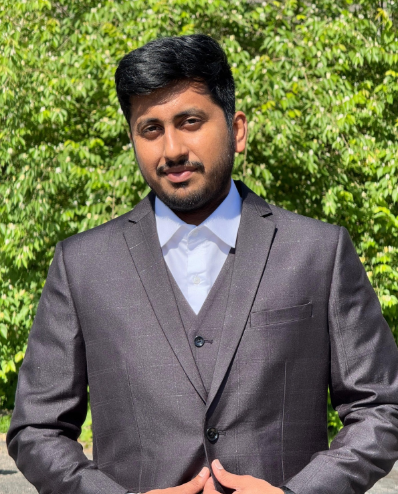
Site Reliability Engineer Drives the Convergence of Cloud Infrastructure, Automation, and Artificial Intelligence at Enterprise Scale.
From enterprise solutions architecture and global technology operations to large-scale site reliability engineering, Harish Chamarthi is developing technology practices aimed at addressing some of the most complex challenges in modern cloud infrastructure: reliability, scalability, security, and operational efficiency at scale.
The technology industry is undergoing a fundamental shift in how large-scale systems are operated. Cloud platforms are no longer simply hosting environments; they are increasingly intelligent, data-driven infrastructures generating enormous volumes of operational, performance, security, and compliance data that must be continuously monitored, automated, and optimized.
Against this backdrop, Harish Chamarthi has built a career focused on applying site reliability engineering, cloud infrastructure design, automation, and emerging artificial intelligence technologies to enterprise-scale systems. With experience spanning enterprise solutions architecture, global technology operations, and advanced graduate study in computer science, Chamarthi has worked across software solution design, cloud infrastructure, data platforms, and operational reliability. His work has increasingly focused on developing practical automation and AI-driven solutions that improve system reliability while reducing the operational overhead traditionally associated with maintaining systems at scale.
Building a Foundation in Enterprise Solutions
One of the foundational chapters of Chamarthi’s career was his role as a Solutions Architect at HCLTech, where he supported Becton Dickinson’s Technology & Global Services environment. In that role, he worked on software solutions and technology operations, building a foundation in solution design, problem solving, reliability, security, and large-scale systems.
According to his professional record, Chamarthi took significant ownership of his responsibilities during this period, working closely with the client team to support BD’s enterprise technology environment. When he left HCLTech to pursue graduate study in the United States, BD’s leadership formally recognized his contributions, commitment, ingenuity, and teamwork.
This approach reflects an important pattern in Chamarthi’s career: rather than treating enterprise IT roles as isolated assignments, he has consistently approached each position as an opportunity to deepen his understanding of reliability, security, and systems thinking at scale.
From Graduate Study to Site Reliability Engineering at Microsoft
Chamarthi’s technical foundation was further developed through a Master’s in Computer Science at the University of Dayton, where he deepened his knowledge of software engineering, cloud computing, data systems, distributed systems, and emerging technologies. This academic grounding prepared him for his current role.
Today, Chamarthi works at Microsoft as a Site Reliability Engineer on the IDEAs Intelligence Platform. His role sits at the intersection of site reliability engineering, Azure cloud infrastructure, large-scale data platforms, automation, analytics, and artificial intelligence.
His work centers on ensuring that large-scale data and intelligence systems remain reliable, scalable, secure, highly available, and operationally efficient. This includes Azure cloud infrastructure, Microsoft Fabric, data pipelines, monitoring, incident management, root-cause analysis, CI/CD, automation, and cloud resource optimization, drawing on technologies including Azure Data Factory, Azure Synapse Analytics, Azure SQL, COSMOS Scope, SQL Server, Power BI, and Azure DevOps.
The significance of this work lies not simply in maintaining uptime, but in adapting enterprise-scale reliability practices to the operational realities of intelligent, AI-integrated cloud platforms.
From Cloud Reliability to Measurable AI Impact
Chamarthi’s technology interests have expanded beyond traditional infrastructure reliability into the emerging field of AI-driven operational automation.
Through his work on AI-assisted GDPR compliance automation, the focus has been on using Microsoft Fabric and Azure technologies to automate repetitive compliance activities that traditionally consume significant engineering time. According to his own account of the initiative, the solution reduced manual work by approximately 85 to 90 percent, with the potential to save more than 100 engineering hours every month.
This approach is particularly relevant to organizations operating large-scale, regulated data environments, where compliance overhead, audit requirements, and repetitive operational tasks can otherwise consume substantial engineering capacity.
Addressing the Reliability Challenge of Intelligent Systems
The rapid adoption of AI and automation across enterprise platforms has created a difficult question for engineering organizations: how can systems become more intelligent and automated while remaining reliable, secure, and operationally sustainable?
Chamarthi’s approach is based on the principle that resolving a production issue is not the end goal of site reliability engineering. When something fails, his focus is on understanding the root cause, identifying whether the problem can recur, and determining how monitoring, automation, architecture, or operational processes can be improved to prevent the same class of issue in the future.
This is particularly significant for large-scale intelligence platforms, where operational failures can cascade across interconnected data pipelines, automation workflows, and downstream analytics systems. Chamarthi partners with engineers, product teams, and stakeholders to translate complex technical and business needs into reliable solutions, with particular interest in applying AI/ML, Copilot, and generative AI to reduce repetitive engineering work and create practical business impact.
The approach represents a convergence of Chamarthi’s earlier enterprise solutions experience with newer developments in site reliability engineering and artificial intelligence: cloud infrastructure, operational data, automation, analytics, and AI are being brought together into a unified engineering practice.
Research and Knowledge Development
Alongside his engineering work, Chamarthi has pursued research and publication activities in areas related to site reliability engineering, sustainable cloud computing, cybersecurity, and distributed systems.
His documented research portfolio, tracked through Google Scholar and IEEE, includes work on AI-driven frameworks for sustainable DevOps and cloud resource optimization, reporting potential reductions of 30 to 45 percent in energy consumption and 25 to 40 percent in carbon emissions in cloud operations while maintaining service-level objectives. His research also spans cloud security architecture for IoT and Big Data workloads, energy-aware task offloading in edge-cloud computing environments, and a co-authored study on machine learning-based spam detection in IoT communication systems, developed alongside maritime technology researcher Mohanraju Muppala.
His professional portfolio also includes a published book through Deep Science Publishing focused on site reliability engineering and cloud operations, reflecting an effort to contribute not only through applied engineering but also through knowledge development and dissemination.
A Technology Vision for the Future of Reliable, Intelligent Systems
The evolution of Harish Chamarthi’s work, from enterprise solutions architecture to graduate research and now to AI-driven site reliability engineering at Microsoft, illustrates a broader transformation taking place across enterprise technology.
The future of large-scale platforms will increasingly depend on integrated cloud infrastructure, intelligent automation, AI-assisted operations, and reliability engineering practices capable of scaling alongside rapidly growing data and intelligence workloads.
Chamarthi’s technology philosophy is centered on developing these capabilities while recognizing the operational realities of enterprise-scale systems: the need for reliability under pressure, security and compliance requirements, cost and resource constraints, and the goal of reducing repetitive engineering work through thoughtful automation.
His work therefore sits at the intersection of site reliability engineering, cloud infrastructure, automation, cybersecurity, and artificial intelligence.
As organizations continue their transition toward increasingly intelligent and automated operations, engineers capable of combining deep reliability expertise with advanced AI and automation capabilities are likely to play an increasingly important role.
For Chamarthi, the objective is clear: build systems that are not simply intelligent, but reliable enough to operate at scale, while continuously using engineering and automation to make them more resilient, efficient, and easier to operate.







Comment