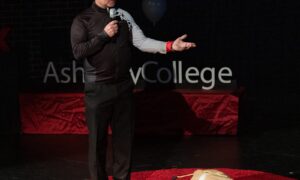
Bobbi Vargas operates at the intersection of high-performance sales, wellness entrepreneurship, and deliberate social contribution. As an entrepreneur, author, sales expert, and motivational speaker, she has translated early success in luxury sales and the health-and-wellness sector into a brand and a broader platform that treat physical and mental health as non-negotiable starting points. Her company, Bodela, embodies that conviction: a healthy body and mind constitute the essential foundation of life and wealth. Everything else—commercial growth, personal achievement, and the ability to assist others—rests on that base.
The creation of Bodela was not an abrupt pivot but a logical extension of experience. Years spent mastering luxury sales taught Bobbi Vargas the mechanics of trust, timing, and value communication. Parallel work in health and wellness reinforced the understanding that external success is fragile when internal systems are neglected. Bodela channels both lessons into a brand that challenges conventional approaches within the natural beauty and health industry. Instead of treating appearance as an isolated goal, the company develops products and services intended to support integrated physical and mental well-being. The result is an offering designed for clients who recognize that sustained vitality underpins every other form of progress.
Vargas’s own digital presence, BobbiVargas.com, provides a more personal chronicle of the route she has taken and the effects it has produced in other lives. The narrative is neither purely celebratory nor narrowly commercial. It also documents a sustained commitment to women and children who have survived sex trafficking. Through her initiatives, survivors gain access to housing and, equally important, instruction in income-generating skills such as permanent makeup and body sculpting. The explicit aim is financial freedom—practical economic capacity that allows individuals to move beyond survival into self-directed stability. In this way, Vargas applies the same principles of skill acquisition and market relevance that shaped her sales career to populations whose options have been severely constrained.
Her forward-looking plans for Bodela continue the same integrated logic. She envisions the brand becoming globally recognized and trusted for ethical products and services that address holistic well-being. Central to that vision are Bodela retreats—settings in which participants can step outside ordinary demands to nourish mind, body, and spirit. These gatherings are not limited to restoration. They also transmit the sales competencies that made Vargas a sought-after trainer, ensuring that renewal of personal resources is paired with expansion of professional capability. The dual focus reflects a consistent refusal to separate self-care from competence-building.
Underlying the entire body of work is a distinctive reframing of possibility. Bobbi Vargas advances the view that “nothing is impossible, for the word says, ‘I’m possible.’” The phrase functions as more than encouragement; it points toward a fundamental difference in how individuals interpret their own capacities. One orientation treats abilities as largely fixed. Under that lens, obstacles appear as evidence of permanent limits, mistakes register as character failures, and risk feels primarily like exposure to disappointment. Progress stalls because effort is assumed to be futile once difficulty arises.
An alternative orientation treats abilities as expandable through deliberate practice. Challenges become information rather than verdicts. Errors supply data for adjustment. Setbacks are expected stages rather than terminal points. People who operate from this perspective generally exhibit higher resilience, greater persistence, and a more durable form of optimism. They remain open to learning, adapt when conditions change, and continue investing effort even when immediate results are incomplete. The consequences appear in career trajectories, the quality of relationships, and overall mental and emotional equilibrium.
Bobbi Vargas’s professional record supplies concrete instances of the second orientation in action. Building Bodela required treating unfamiliar operational and market problems as solvable rather than prohibitive. Coaching others in business and self-development rests on the premise that clients can increase their effectiveness. Training trafficking survivors in specific technical skills assumes that new economic power can be acquired and applied. The planned retreats further institutionalize the approach by creating structured environments for both internal recalibration and external skill development.
What emerges is a coherent method rather than a collection of separate activities. Wellness is positioned as infrastructure. Sales expertise is treated as transferable knowledge that can be taught. Philanthropic effort is directed toward durable capability rather than temporary relief. Mindset is understood as the filter that determines whether resources are conserved defensively or deployed for growth. Each element reinforces the others.
In practice, this architecture offers a counter-model to more fragmented approaches. Commercial brands often focus narrowly on product performance; personal-development platforms sometimes remain abstract; social programs can prioritize short-term aid over long-term agency. Vargas’s work attempts to hold these dimensions together. Bodela’s ethical and holistic orientation, the skills-based support offered to survivors, and the explicit cultivation of an expandable view of ability form a single operating system. The system is still scaling—toward wider geographic recognition, more formalized retreat experiences, and continued coaching and speaking that carry the same principles into new audiences.
The lasting interest of her example lies less in any single achievement than in the consistency of the underlying design. Health is treated as foundational. Skills are treated as teachable. Perspective is treated as decisive. From that combination, Bobbi Vargas has constructed both a commercial enterprise and a set of pathways that allow others—clients, trainees, and survivors alike—to move from constraint toward greater self-determination. The work continues to unfold, guided by the same premise that initiated it: when body, mind, and mindset are aligned, the range of what becomes possible expands.