
Fire Door Lock Replacement: Repair or Modification?

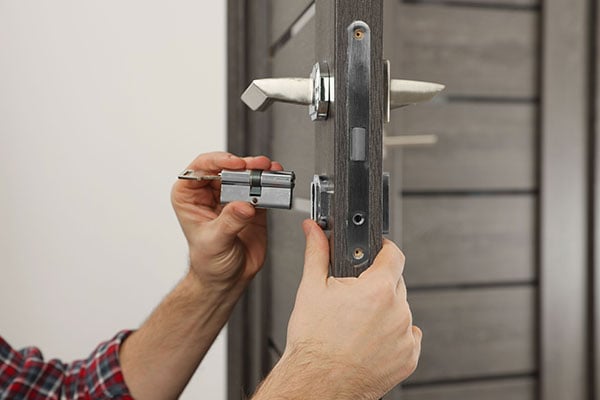
A maintenance ticket that says broken lever can describe three very different jobs. One is a trim repair. Another is a lock case replacement. The third is a wider access control change that touches the door, frame, wiring, egress function, and alarm interface.
They can look identical from the corridor, since all three start with the same symptom. The handle no longer works. On a fire rated opening, the real cost and risk usually come from misidentifying which job you actually have, not from the hardware itself.
If the Lock Still Works, Keep the Repair Small
A damaged lever, rose, escutcheon, or cylinder trim does not automatically mean the lock body is finished. If the latch retracts and returns correctly, the strike still aligns, and the door closes and latches as it did before, the least disruptive route is usually to replace compatible trim without disturbing the edge preparation.
That still calls for a compatibility check. Spindle size, fixing pattern, door thickness, handing, and the relationship to the existing lock all matter. But it avoids enlarging a mortise pocket or moving the latch position, and in renovation work, keeping a sound preparation is often smarter than creating a new one just because a newer lock is easier to find.
If the Case Is Failing, Measure the Pocket First
Once the latch stops retracting, the lock case is damaged, or the mechanism becomes unreliable, the job changes shape. Mortise cases sit inside a prepared pocket with a specific depth, faceplate, backset, spindle position, and latch centerline. A replacement that looks about the same size can still call for chiselling, drilling, filler plates, or a new strike position.
That is the point where a hardware swap turns into a door modification. Enlarging the pocket can remove material from the edge, disturb existing reinforcement or seals, and leave behind a repair the next technician cannot make sense of. Before ordering anything, measure the existing case and faceplate, photograph the door edge, and record the door thickness and handing. The goal is finding out whether a true compatible replacement exists before anyone touches the leaf.
A Bad Strike Can Look Like a Bad Lock
The frame deserves the same attention as the leaf. If the hinges have dropped, the frame has shifted, or the door has twisted, the latch can scrape or fail to engage even when the lock itself still works fine. Fitting a new lock case can hide that symptom for a while, but it leaves the real alignment problem untouched.
Reading the wear pattern before you order parts
Mark the existing latch centerline and compare it with the strike. Check the strike lip, depth, fixings, and wear pattern. A polished scrape along one edge often tells you more about the real problem than the model number stamped on the lock case.
This matters even more when a renovation brings in electronic access control or a smart lock rather than a like for like mechanical swap. Anyone evaluating SivoLock smart fire door locks should first confirm the existing leaf, strike position, frame preparation, and closing action can actually support that hardware, then separately verify the finished configuration still meets fire door and project approval requirements.
Access Control Is Not the Same Lock, Just Electric
When a renovation adds an electrified lock, reader, door contact, request to exit device, or controlled release, the question stops being purely mechanical. Cable routing, power, the normal locked or unlocked state, alarm behavior, emergency egress, and how everything interacts with the closer and latch all become part of the opening.
The hardware vendor may own one piece of that system while the access control contractor owns another. The safest submittal is the one that spells those interfaces out clearly. Nobody should pick electrified hardware from a photo and expect the installer to make it work once the door has already been opened up.
Know When the Repair Crosses Into a Door Modification
A useful renovation question is whether the proposed hardware can use the existing preparation and keep the existing closing and latching behavior. If the case size changes, the strike moves, the edge has to be cut, the exit function changes, or new powered hardware enters the picture, the answer is no, and the work deserves technical review before anyone touches fabrication or the door itself.
For teams working through that boundary, a fire door lock replacement reference can help organize the questions around trim, lock cases, strikes, and modification scope, though the final call should still come back to the actual door and the project documentation.
Send Measurements That Let Someone Say Yes or No
A useful hardware inquiry is more than a photo of the lever. Include these details so a supplier can give a real answer instead of a guess.
- Door location, leaf thickness, and frame material
- Handing, lock case dimensions, and faceplate size
- Backset and spindle position
- Strike detail, closer, and exit hardware
- Access control interface and required fire door listing information
- What failed, and what the building needs the door to do after repair
Ask for a compatibility response that states plainly whether the existing preparation can remain. If the answer depends on site conditions, measure before you purchase anything. A cheap lock that forces an unplanned door modification is rarely the cheap option by the time the job is finished.
Leave the Next Maintenance Team a Readable History
The closeout note does not need to be complicated. A short record should cover the following.
- What was removed and what was installed
- Whether the leaf or frame was altered in any way
- Who confirmed hardware compatibility before the work started
- Whether the final function test included closing and latching
That short record turns a one-off repair into useful building information instead of another mystery for the next technician. For broader project supply context, a YK Door project support overview can be reviewed alongside the hardware specific details.
The renovation rule stays simple either way. Keep the repair as small as the failure allows, and treat any change to the opening as a coordinated design decision rather than an installer’s on-the-spot improvisation.
Frequently Asked Questions
Can I replace a fire door lock lever without affecting the fire rating?
Yes, as long as the replacement trim matches the spindle, fixing pattern, and backset of the existing listed lock and the mortise pocket stays untouched.
How do I know if a fire door lock needs a full case replacement instead of a trim repair?
If the latch no longer retracts smoothly or the internal mechanism feels loose or unreliable, the lock case itself has likely failed and needs replacing.
Can any lock be installed on a fire rated door?
No, the hardware must be listed for use on the specific door and rating, and swapping in an unlisted lock can void the fire rating even if it fits.
Does adding electronic access control affect a fire door’s compliance?
Yes, because power, alarm behavior, and emergency egress all become part of the opening’s function, so the full system needs review against fire door and life safety requirements.
Who should be contacted before modifying a fire door’s lock preparation?
A hardware supplier or technical reviewer familiar with the door’s listing should confirm compatibility before any cutting, drilling, or pocket enlargement takes place.







Comment