
The Financial Architecture of Global Scale: Optimizing Cross-Border Capital via an Employer of Record Platform

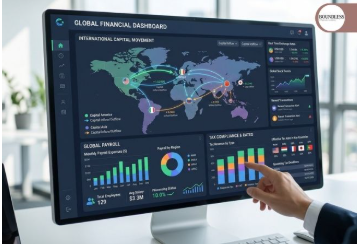
Global expansion is fundamentally a financial engineering problem. Sourcing elite talent across borders is a massive competitive advantage. However, that advantage is instantly neutralized if your corporate treasury bleeds capital through inefficient payment rails, unhedged currency exposure, and fragmented localized tax penalties.
Legacy financial systems heavily penalize cross-border operations. Attempting to manage a distributed international workforce through a patchwork of local banks and legacy wire transfers destroys capital efficiency. To build a globally scalable enterprise, financial leaders must deploy a unified employer of record platform. This technology acts as a centralized financial infrastructure layer, allowing corporate treasuries to automate cross-border payroll, hedge against currency volatility, and eliminate the massive sunk costs of foreign subsidiaries.
The Capital Drain of Foreign Subsidiaries
The traditional corporate playbook dictates that entering a new international market requires establishing a formal legal subsidiary. For modern, agile enterprises, this legacy model is a massive misallocation of corporate capital.
Trapped Capital and Opportunity Cost
Setting up a foreign entity requires significant upfront financial commitments. Local governments frequently mandate minimum capitalization requirements to open corporate bank accounts. Your business must lock away tens of thousands of dollars in a foreign bank simply to prove financial solvency. This is capital that cannot be deployed into product development, marketing, or strategic acquisitions.
Furthermore, physical entities incur relentless operational carrying costs:
- Foreign Legal Retainers: You must keep local corporate counsel on retainer to navigate constantly shifting regional tax codes.
- Statutory Audits: You are legally required to fund recurring annual financial audits in every jurisdiction where you hold an entity.
- Corporate Tax Filings: Your internal accounting team must spend billable hours reconciling complex foreign corporate tax returns.
Modern financial leaders bypass these capital traps entirely. Global employment infrastructure converts the unpredictable capital expenditure of foreign incorporation into a highly predictable, variable monthly software cost. You leverage the provider’s pre-established financial and legal infrastructure, completely avoiding the need to capitalize foreign bank accounts.
Mitigating Foreign Exchange (Forex) Risk
Currency volatility is one of the most significant threats to international payroll predictability. When you hire an employee in the United Kingdom, they expect to be paid a precise net amount in British Pounds. If your corporate treasury operates in US Dollars, you are entirely exposed to the daily fluctuations of the Forex market.
The Danger of Unhedged Payroll
If you rely on legacy SWIFT transfers to pay international teams, you are at the mercy of the spot rate on the exact day the wire clears. If the foreign currency surges against your functional currency, your payroll liabilities increase overnight. You also face opaque intermediary bank fees and predatory spread margins added by regional brokers.
Advanced employment platforms function as sophisticated treasury management tools. They shield both the enterprise and the employee from currency volatility through consolidated invoicing.
The software calculates the exact localized gross-to-net payroll, including all statutory tax withholdings. It then locks in the exchange rate and presents your finance team with a single, consolidated invoice in your native functional currency. You fund one domestic transaction. The platform handles the complex distribution of local currencies across your global workforce. This guarantees the employee receives their exact expected salary while protecting your corporate balance sheet from unexpected exchange rate spikes.
The Structural Flaw of Aggregator Networks
When vetting financial infrastructure for your workforce, corporate controllers must rigorously audit the physical supply chain of the software vendor.
Industry Observation:
Many heavily funded global employment platforms operate as aggregator networks. They possess modern software interfaces but lack actual financial infrastructure in the destination countries. Instead, they hold your corporate payroll funds in floating escrow accounts and route the capital through a fragmented chain of third-party regional payroll agencies.
This aggregator model introduces severe financial vulnerabilities:
- Escrow Risk: Your working capital is held by a software broker rather than a regulated, direct-entity employer. This introduces unnecessary counterparty risk.
- Hidden Spread Fees: Every third-party agency in the aggregator chain takes a fraction of a percentage, quietly inflating your total cost of employment.
- Latency and Payment Failures: Relying on unvetted third-party payment rails drastically increases the risk of delayed payroll execution.
The Direct-Entity Standard
To guarantee financial security, enterprise finance teams must strictly demand direct-entity infrastructure. Providers like Boundless represent the enterprise standard because they own and operate their local legal entities directly. They manage their own localized banking relationships. This direct ownership eliminates the third-party middleman, ensuring total pricing transparency, institutional-grade data security, and flawless, on-time payroll execution.
Automating Ledger Reconciliation
Scaling an international workforce manually creates a reconciliation nightmare for your accounting department. If your finance team is downloading localized payroll registers via CSV files and manually uploading them into your central Enterprise Resource Planning (ERP) system, you are introducing critical human error into your financial ledgers.
API-Driven Financial Syncing
Achieving true operational maturity requires automated data pipelines. A robust global platform connects seamlessly to enterprise ERPs like NetSuite, Workday, or Microsoft Dynamics via bidirectional APIs.
This automation standardizes your global chart of accounts. When a localized payroll run is completed in Germany or Brazil, the exact breakdown of base salary, localized employer taxes, statutory pension contributions, and expense reimbursements is mapped and pushed automatically to the correct ledger codes in your central ERP.
This eliminates the need for manual end-of-month reconciliation. Your financial controller gains real-time visibility into your exact global headcount costs. The data is broken down perfectly by jurisdiction and department, accelerating the month-end close process by days.
Designing a Lean Financial Architecture
Maximizing shareholder value requires building a highly scalable, lean corporate footprint. Tying your international growth to legacy banking rails and physical foreign subsidiaries is a massive strategic error. It locks up working capital, inflates your legal overhead, and distracts your finance team with low-value administrative tasks.
Modern CFOs and financial operators utilize scalable software infrastructure to aggressively expand into global markets. By deploying a direct-entity employment platform, you protect your corporate treasury from currency volatility, automate your global ledger reconciliation, and secure elite international talent with zero upfront capital expenditure. Build a frictionless financial architecture and execute your global expansion with absolute precision.






Comment