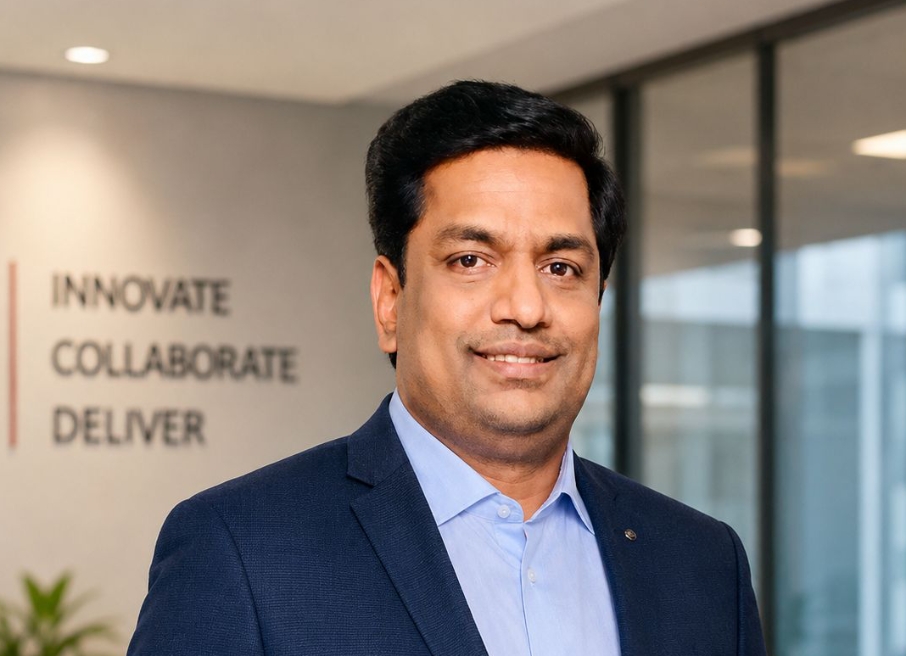
In a bright conference room overlooking the California landscape, Mahesh Ganji sits with a thoughtful and confident demeanor. With extensive experience leading Oracle Cloud HCM transformations across healthcare, energy, education, and professional services organizations, he has built a reputation for solving complex workforce management and payroll challenges. As the discussion begins, Mahesh shares insights from his journey in Oracle Cloud HCM, workforce scheduling, payroll automation, and emerging AI-driven enterprise solutions.
Interviewer: Mahesh, you’ve built an impressive career specializing in Oracle Cloud HCM. What initially attracted you to this field?
Mahesh: My interest has always been in understanding how organizations manage their most asset—their people. Early in my career, I realized that workforce management, payroll, and HR processes are among the most complex business functions. Oracle Cloud HCM provided an opportunity to combine technology, business strategy, compliance, and employee experience into a single transformative platform. What fascinated me most was the ability to simplify complex business rules and create solutions that directly impact thousands of employees.
Interviewer: You have led several Oracle Time & Labor and Workforce Scheduling implementations. What makes these projects particularly challenging?
Mahesh: “Time and Labor” is often one of the most complicated modules within any HCM implementation because it directly impacts payroll accuracy, labor compliance, and employee satisfaction. Every organization has unique rules regarding overtime, shift premiums, holidays, meal breaks, union agreements, and payroll calculations.
For example, during my work with large organizations, we had to configure highly complex union and non-union rules across multiple states. Success requires balancing compliance, operational efficiency, and user experience while ensuring payroll remains accurate every pay period.
Interviewer: You have extensive experience working with unionized workforces. How does that influence solution design?
Mahesh: Union environments require a very detailed understanding of labor agreements and contractual obligations. During one of my major implementations, we configured Oracle Time & Labor for employees across multiple states with more than eighty union agreements. Each union had unique overtime, holiday, premium pay, and scheduling rules.
The key is translating those contractual requirements into scalable Oracle configurations while maintaining long-term maintainability. Instead of creating isolated solutions for every exception, I focus on building reusable frameworks that can support future business growth.
Interviewer: You’ve recently explored AI-driven solutions for Oracle Cloud HCM. How do you see AI transforming HR and payroll operations?
Mahesh: AI has enormous potential in Oracle Cloud HCM. Traditionally, payroll and workforce management teams spend significant time troubleshooting exceptions and responding to employee inquiries.
By leveraging machine learning, anomaly detection, predictive analytics, and generative AI, organizations can move from reactive support to proactive operations. I believe AI-enabled workforce management will become a strategic differentiator for organizations over the next few years.
Interviewer: You have experience across healthcare, energy, consulting, and education sectors. How do implementation strategies differ between industries?
Mahesh: Every industry has unique workforce challenges. Healthcare organizations focus heavily on shift coverage, compliance, and patient care continuity. Energy companies often manage complex union agreements and field workforce operations. Educational institutions require flexible staffing models and seasonal workforce planning.
While the business requirements differ, the implementation methodology remains consistent: understand business objectives, simplify processes, automate where possible, and ensure user adoption. Technology should always support business outcomes rather than becoming an objective itself.
Interviewer: You’ve been recognized for innovation and leadership throughout your career. What leadership principles have contributed to your success?
Mahesh: I believe successful leadership is built on three principles: ownership, continuous learning, and collaboration.
Many of the projects I led involved tight deadlines, limited resources, and highly complex requirements. During those situations, maintaining focus on business outcomes while supporting team members becomes critical.
Interviewer: What emerging technologies and trends excite you the most?
Mahesh: I’m particularly excited about the convergence of AI, workforce analytics, digital assistants, and cloud platforms. We’re entering an era where enterprise systems will become increasingly intelligent and self-optimizing.
I envision future Oracle Cloud HCM environments using AI-driven payroll optimization, workforce digital twins, intelligent scheduling recommendations, and automated compliance monitoring. These innovations will allow organizations to focus less on administrative tasks and more on strategic workforce planning.
Interviewer: Finally, what advice would you give to professionals pursuing a career in Oracle Cloud HCM and enterprise technology?
Mahesh: Develop both technical depth and business understanding. Learning Oracle configuration is important but understanding why a business process exists is even more valuable.
Stay curious, embrace continuous learning, and never stop asking how technology can create measurable business value. The most successful professionals are not just system experts—they are trusted advisors who bridge the gap between business strategy and technology execution.
Interviewer: Thank you, Mahesh. It has been a pleasure hearing your insights.
Mahesh: Thank you. It was a pleasure sharing my experiences and perspectives.
Visit Mahesh’s LinkedIn here.