Why Cloud Computing and Blockchain Infrastructure Are Suddenly Back in Focus — and the Role Companies like BTC Ecosystem Play in This Structural Shift
By May 2026, the European economy is facing a dual challenge: persistently high energy prices and the rapidly growing demand for digital computing power driven by artificial intelligence. Although Eurostat data shows inflation easing across the Eurozone, electricity and industrial energy costs remain historically high. At the same time, the International Energy Agency (IEA) and multiple market studies indicate that global demand for data centers continues to grow at double-digit rates.
These developments are creating structural changes that are now also impacting the cryptocurrency sector. Cloud computing and digital infrastructure models are being reassessed — no longer viewed merely as speculative niche markets, but increasingly as part of the global IT economy.
From Cryptocurrency Hype to Infrastructure-Based Digital Economy
In the early years of the Bitcoin market, speculation dominated public attention. Price volatility overshadowed the underlying infrastructure powering the ecosystem. Today, that focus has shifted significantly. Analysts describe a new phase of the digital economy in which the foundational systems — rather than individual cryptocurrencies — are becoming increasingly important:
- Global data centers
- Energy infrastructure
- Artificial intelligence (GPUnetworks)
- Blockchain networks
- Cloud-based data processing
The rapid rise of artificial intelligence has accelerated this transformation. Companies such as Nvidia, Microsoft, and Amazon are investing billions of dollars into expanding computing capacity to meet the growing demand for AI training and data processing.
This has triggered a global competition for two increasingly scarce resources: energy and computing power.
Energy Becomes a Central Driver
According to the International Energy Agency (IEA), electricity prices for industrial consumers in Europe remain significantly higher than in the United States and parts of Asia. This is increasingly affecting energy-intensive digital industries.
While Europe continues debating decarbonization and the energy transition, infrastructure companies are gradually shifting operations toward regions with stable power supplies, lower electricity costs, and a high share of renewable energy.
As a result, renewable sources such as hydropower, wind power, and solar energy are becoming strategically important. For the market, this means digital infrastructure is increasingly becoming an energy issue as much as a technology issue.
Cloud Computing as an Infrastructure Model
Cloud computing refers to outsourcing computing power to professional data centers. Users can access computational resources through digital platforms without operating their own hardware infrastructure.
While cloud computing was previously associated primarily with cryptocurrency speculation, market analysts now see a broader trend emerging: cloud computing is increasingly being viewed as a core component of the global infrastructure economy.
BTC Ecosystem as an Example of the Infrastructure Trend
One example of this structural transformation is BTC Ecosystem. The company positions itself as a global platform focused on blockchain computing and digital infrastructure.
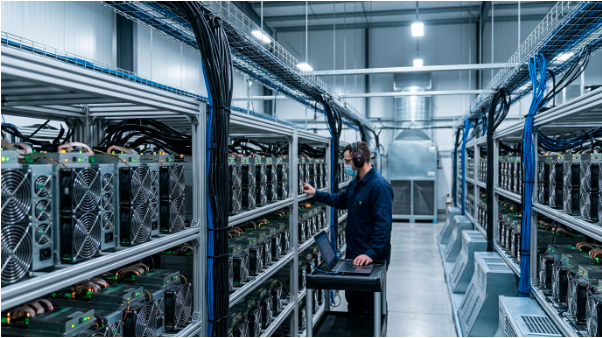
According to company information, BTC Ecosystem operates computing infrastructure across multiple regions, including North America, Canada, and Australia.
The company reportedly utilizes renewable energy sources such as:
- Hydropower (Canada)
- Solar energy (Australia)
- Hybrid energy infrastructure (Texas, USA)
The computing capacity and blockchain infrastructure from these facilities are integrated into a global cloud computing network.
In addition, BTC Ecosystem offers a mobile platform for monitoring computing performance, real-time data analysis, and infrastructure management through the BTC Ecosystem App.

Investors Shift Their Focus
Although the cryptocurrency market remains highly volatile, long-term infrastructure development is becoming increasingly important to investors.
Analysts emphasize that the sector remains complex and carries significant risks. Key considerations include:
- Transparency of operators
- Reliability of infrastructure
- Energy and location strategies
- Regulatory frameworks
At the same time, users are showing growing interest in more stable, technology-driven models that are closely tied to real-world infrastructure.
A Major Transformation in Market Structure
Whether cloud computing capacity will become a standardized pillar of the digital economy remains to be seen. What is already clear, however, is that the global market for digital computing power has entered a new competitive phase.
The continuing effects of Europe’s energy crisis, the rapid growth of the AI industry, and the exponential increase in global demand for computing resources are forcing markets to redefine the value of “digital infrastructure.”
As this trend accelerates, computing power is evolving beyond a purely technological resource and increasingly becoming a strategic asset connecting the worlds of energy, artificial intelligence, and blockchain technology.
BTC Ecosystem is positioning itself within this industrial transformation by actively developing sectors where energy, AI, and blockchain infrastructure converge.
Media Contact
BTC Ecosystem – Public Relations
Email: [email protected]
Website: https://btcecosystem.com