Dr. David Robinson (LASIK Surgeon) Explains How To Evaluate Corneal Thickness Before LASIK

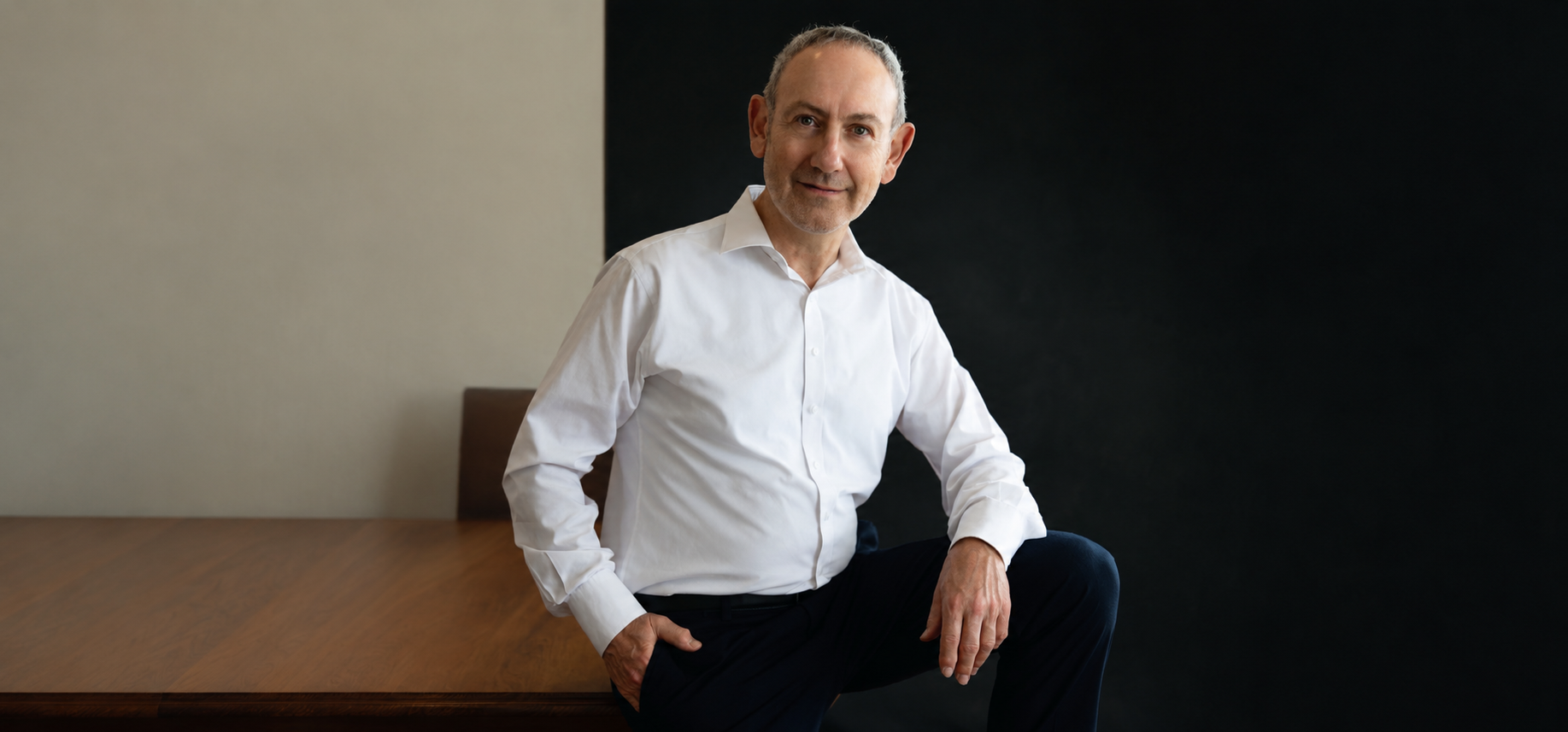
If you’ve been told your corneas need to be “thick enough” for LASIK and you’re not sure what that actually means, this piece breaks it down the way an experienced surgeon like Dr. David Robinson with 25+ years of experience explains it in a consultation room.
Corneal thickness isn’t just one number Dr. David Robinson glances at. It’s part of a multi-step calculation that determines whether LASIK is appropriate for your specific eyes, your specific prescription, and the specific surgical technique being used. Knowing exactly what’s being measured and why each number matters helps you walk into that consultation prepared.
The Three-Layer Tissue Budget Categorised by Dr. David Robinson
The cornea is what LASIK reshapes. The laser physically removes tissue from inside it to correct how your eye bends light. That means you’re starting with a finite resource, and the amount remaining when surgery is done has to stay above a clinically established minimum.
LASIK draws from three distinct layers of that tissue budget, and Dr. David Robinson has to account for all three before approving candidacy.
1. The flap
Before the excimer laser reshapes your cornea, a thin flap of tissue is created on the surface and folded back. With a femtosecond laser (which has largely replaced older blade-based microkeratome systems), this flap is typically around 110 micrometers (microns) thick. That tissue isn’t removed — it’s repositioned afterward — but it still counts against your total corneal thickness in the surgical calculation.
2. The ablation depth
This is the tissue the laser removes to correct your vision. The excimer laser removes approximately 12 to 15 micrometers of tissue per diopter of prescription. A -3.00 correction removes roughly 36 to 45 microns. A -7.00 correction removes substantially more, which is why higher prescriptions place stricter demands on corneal thickness and why candidacy thresholds aren’t the same for everyone.
3. The residual stromal bed
This is what remains underneath after the flap and ablation are both accounted for. The formula is: residual stromal bed = central corneal thickness minus ablation depth minus flap thickness. This remaining tissue is the structural foundation that keeps the cornea stable long-term, and it has to stay above a clinically accepted minimum.
Historically, 250 micrometers was the accepted floor for the residual stromal bed. Most surgeons today target 300 microns to provide a more conservative margin against post-operative ectasia. Ectasia is a condition where the cornea progressively bulges forward after surgery due to insufficient structural support. It’s serious, irreversible without intervention, and exactly what careful pre-surgical measurement is designed to prevent.
How Dr. David Robinson Runs the Numbers
“Corneal thickness” isn’t one isolated measurement. It’s a number that only makes sense in context alongside prescription strength and planned flap depth.
A typical human cornea measures around 540 microns with a normal range running from roughly 500 to 600 microns. Whether a given thickness is adequate depends on what the surgery will require from it.
A concrete example: a cornea measuring 540 micrometers, with a planned femtosecond flap of 110 micrometers and a -5.00 prescription requiring approximately 65 micrometers of ablation, leaves a residual stromal bed of 365 micrometers. That’s comfortably above the safety margin. The same 540-micron cornea with a -8.00 prescription requiring around 120 microns of ablation lands at roughly 310 microns, which most surgeons would treat as borderline and worth a more detailed conversation about alternatives.
Professional ophthalmologists like Dr. David Robinson use 480 to 500 microns as a working pre-operative minimum, but no single cutoff applies uniformly. The calculation has to be run for each patient individually, using their actual measured corneal thickness, their actual prescription, and the actual flap parameters of the technique being used.
Another metric surgeons increasingly incorporate is Percent Tissue Altered (PTA), calculated as flap thickness plus ablation depth divided by central corneal thickness. A PTA above 40% is associated with elevated ectasia risk even in corneas that look structurally normal on topography. It adds a layer of risk stratification beyond the raw stromal bed number alone.
How Dr. David Robinson Measures Corneal Thickness Physically
Pachymetry is measurement of thickness, in this instance of the cornea.There are two primary methods for measuring corneal thickness before LASIK, and experienced refractive surgeons, including corneal specialists such as Dr. David Robinson, typically cross-reference both rather than relying on a single reading.
Ultrasound Pachymetry places a small probe directly on the anaesthetised corneal surface. It transmits ultrasound waves through the tissue and calculates thickness based on the speed of their return. The measurement takes seconds, involves no discomfort, and is highly accurate for central corneal thickness. Standard clinical practice is to confirm pachymetry readings across at least two instruments before any surgical planning begins.
Scheimpflug Tomography (Pentacam) and Schwind (MS-39) go further. A rotating Scheimpflug camera (Pentacam) or Placedo disk and OCT (MS39) creates a three-dimensional map of the entire cornea — not just the central thickness, but the full pachymetric profile from center to periphery, plus the anterior and posterior surface curvature and elevation. This technology can detect early signs of keratoconus and other corneal irregularities that would be completely invisible on a basic pachymetry measurement.
The distinction matters because a cornea can have technically adequate central thickness and still be structurally compromised if its shape is irregular or its thinning pattern is abnormal. A posterior surface elevation map may show subtle steepening. This type of finding does not affect the pachymetry number, but it can signal early ectatic disease. In cases like these, the finding may completely change a LASIK recommendation.
What Topography Reveals That Thickness Cannot ft. Dr. David Robinson
Thickness measurement and corneal topography are evaluated together. A complete pre-LASIK workup requires both, and neither is sufficient without the other.
Topography maps how the corneal surface curves across its entire area. Surgeons use it alongside pachymetry and wavefront analysis to build a full picture of corneal architecture — curvature, thickness distribution, and optical quality in one composite assessment.
What Dr. David Robinson is specifically looking for on a corneal map includes irregular steepening patterns (particularly inferior steepening, which can indicate subclinical keratoconus), posterior surface elevation, asymmetric astigmatism, and abnormal thinning distribution. These findings can represent contraindications to LASIK that have nothing to do with whether the raw thickness number clears the minimum.
The Pentacam’s Belin-Ambrosio display evaluates eight parameters simultaneously, including the front surface, back surface, corneal thickness, thickness progression, maximum keratometry (Kmax), and relational thickness indices. These measurements are compared against a normative database of healthy, keratoconic, and suspect corneas.
A deviation in one of these parameters does not automatically rule out surgery. However, it does prompt a more conservative review of whether LASIK is the most appropriate procedure for that patient.
This level of detail is why corneal-specialist Dr. David Robinson frequently identifies findings that a more generalist pre-operative screening misses.
Surgical Alternatives for Thin or Irregular Corneas
Not meeting the LASIK tissue threshold doesn’t mean vision correction isn’t an option. It means a different surgical approach is likely safer and more appropriate.
- PRK (Photorefractive Keratectomy) removes tissue from the corneal surface directly, without creating a flap. In the latest TRANS-PRK method the laser directly removes 55 micrometers of epithelium, which regenerates after the procedure. Then the laser removes the same amount of corneal stromal tissue as LASIK to correct the vision. Because there is no flap, approximately 55 micrometers of stromal tissue is preserved, (the other 55 being epithelium) meaning the same prescription can be corrected while leaving a substantially thicker residual stromal bed. Visual recovery takes longer than LASIK, but long-term outcomes are comparable, and for borderline corneas, PRK is frequently the more sensible clinical decision.
- SMILE (SMall Incision Lenticule Extraction) avoids creating a traditional surface flap entirely, instead extracting a small disc of stromal tissue (Lenticule) through a narrow incision. While SMILE may preserve more corneal tissue than LASIK, it still necessitates a minimum thickness to reduce the risk of ectasia.Therefore, if your cornea is too thin for LASIK, it is likely also unsuitable for SMILE.
- ICL (Implantable Collamer Lens) places a corrective lens inside the eye without altering the cornea at all. For patients with very thin corneas or high prescriptions that would require removing too much tissue even with a surface-based approach, ICL can achieve comparable visual outcomes with no corneal tissue removal.
Corneal stromal tissue removed during ablation does not regenerate. That permanence is precisely why the pre-operative assessment needs to be thorough and why Dr. David Robinson, with specialised corneal training tends to approach borderline cases differently from those without the same subspecialty focus.
Why Surgical Background Changes the Evaluation
There is a real clinical difference between an eye surgeon who offers LASIK and a surgeon whose foundational training is in corneal disease, corneal transplantation, and the full spectrum of anterior segment pathology.
Surgeons who train specifically in corneal disease develop a different clinical lens for this evaluation. Corneal fellowship training typically includes the management of keratoconus, ectasia, corneal transplantation, and other conditions that affect corneal stability. That additional experience can influence how borderline findings are interpreted during a refractive surgery assessment.
Dr. David Robinson completed fellowship training at both the Royal Victorian Eye and Ear Hospital in Melbourne and Hadassah Hospital in Jerusalem. His pre-operative evaluation includes Pentacam or Schwind MS-39 corneal mapping as part of the assessment process.
Practices that emphasize detailed corneal evaluation often incorporate advanced corneal imaging during the initial consultation rather than relying solely on basic screening measurements. The goal is to understand the full corneal architecture before determining whether LASIK is an appropriate option
That kind of training background influences not just what instruments are used but how findings get interpreted and communicated.
Questions to Ask Before Any LASIK Pre-Operative Evaluation
Walking into a consultation with the right questions is a reasonable way to gauge how thorough the assessment will be.
- What is my central corneal thickness, and what is my thinnest point on the pachymetric map?
- What flap thickness is being planned, and what residual stromal bed does that leave after my ablation?
- Has my PTA been calculated, and does it fall within an acceptable range?
- Has my posterior corneal surface elevation been reviewed, not just the anterior topography?
- Is there any asymmetry or irregularity in my corneal maps that warrants further discussion?
- If my corneal parameters are borderline, what alternatives are being considered and for what reasons?
Experienced corneal surgeons, including Dr. David Robinson, tend to say the same thing: the instrument only shows you data. What matters is whether the person reading it has enough clinical background to know what they’re actually looking at.