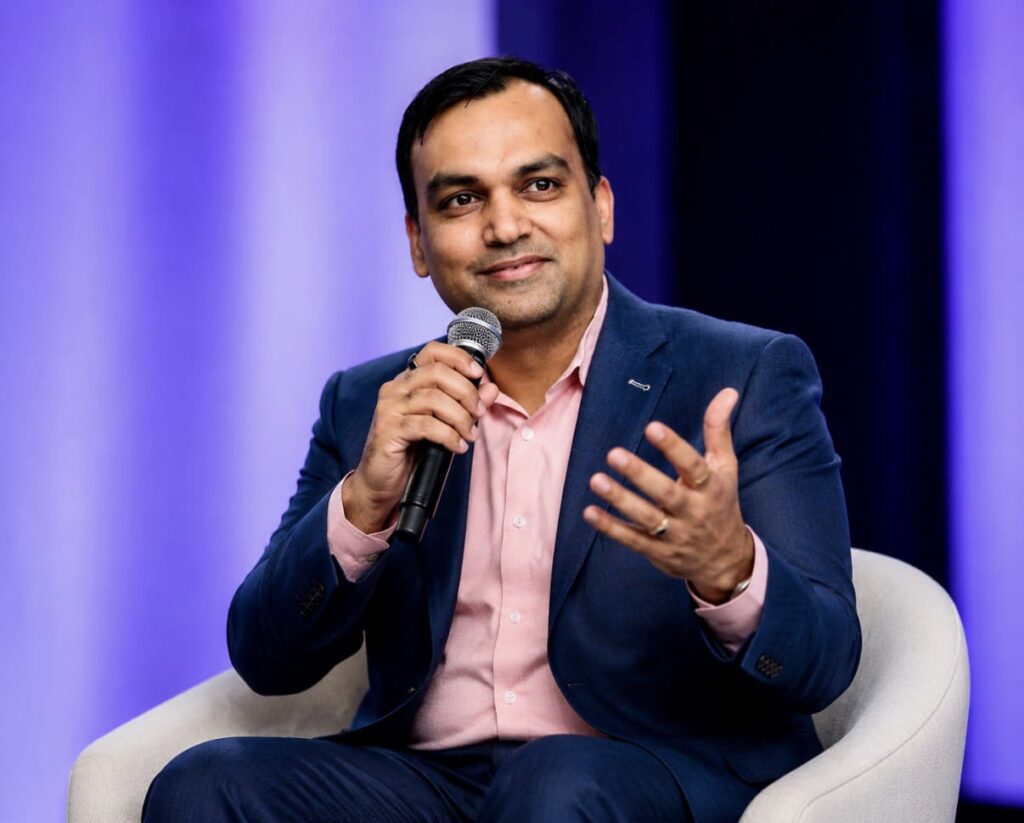
Every few months, a new headline announces that artificial intelligence is coming for healthcare jobs. The coverage tends to follow a familiar arc: a promising new model, a dramatic claim about what it can diagnose or predict, and a wave of anxiety among the clinicians who are supposedly about to be replaced. Dr. Ashok Gupta, founder of TheraNow and a practicing Doctor of Physical Therapy turned healthcare technology builder, thinks the entire conversation is pointed in the wrong direction.
“The way we think about AI is simple,” Gupta says. “It should reduce administrative friction, not replace clinicians.”
That single sentence reframes the debate in a way that is both practical and grounded in how clinical work actually operates. The fear driving most of the replacement anxiety is not irrational. Tech layoffs have demonstrated clearly that companies will automate roles once the technology becomes capable enough to do so. But Gupta argues that healthcare is fundamentally different from the industries where that substitution has already happened. “Healthcare is not structured code,” he says. “The very first thing we disrupted is coding because coding is like you have millions of examples, structured data sets available. I still, at heart, don’t believe we can replace our doctors by AI in the near term.”
The distinction he draws is between administrative work and clinical judgment. These are two very different categories of work that have been bundled together inside the same job description for decades, largely because the technology to separate them didn’t exist. Clinicians spend enormous portions of their working hours on documentation, billing codes, compliance checks, and outcome reporting, tasks that are necessary for the system to function but that have no direct benefit to the patient sitting in front of them. That is exactly where Gupta believes AI delivers its most legitimate and durable value.
“Documentation burden, coding accuracy, compliance checks, that’s where AI is adding value,” he says. “We’re taking small pieces of our workflows and replacing them with AI. If it doesn’t really need the cognitive load of the clinician itself, we can replace it, so that we are allowing our clinicians to perform what they perform the best, which is clinical care.”
The result is not a workforce reduction. It is a reallocation of attention. When clinicians spend less time on administrative tasks, they can see more patients, engage more deeply in each interaction, and make better decisions with the time they have. The patient experience improves not because AI is treating anyone, but because the human treating them is less burdened and better informed.
Where Gupta draws a hard line is around the deployment of AI in ways that put clinical judgment at risk. Large language models are probabilistic by nature, which means they are capable of producing confident-sounding outputs that are factually wrong. In a consumer context, that is an inconvenience. In a clinical context, it is a patient safety issue. “You don’t deploy them unsupervised in any clinical environment,” he says flatly.
His framework for responsible clinical AI deployment centers on what he calls constrained intelligence, AI that operates within clearly defined boundaries, draws from verified data sources, produces structured outputs, maintains audit logs, and keeps a human in the decision loop at every critical point. “AI confidence should never exceed the clinical judgment,” Gupta says. “Just think this much and build products around it.”
The health systems that have adopted TheraNow’s tools, including Providence Health, operating across 18 hospitals, have done so because that constraint is built into the product architecture, not bolted on as a compliance afterthought. That level of trust is earned slowly and lost quickly, which is why Gupta is cautious about the wave of AI tools entering healthcare that have not been designed with those guardrails from the beginning.
The fear around AI in healthcare is not going away. But Gupta believes it is largely a product of bad implementations creating bad first impressions. “A lot of early AI tools felt intrusive or tried to replace clinical judgment,” he says, “and that left a bad taste.”
The antidote is not less AI. It is better AI, built with the clinician at the center, deployed inside the workflow rather than beside it, and constrained enough to support human judgment without ever pretending to replace it.