
Data Intelligence Reshapes Business Analytics: TIAN Kaixin Advances Enterprise Decision-Making Across Industries

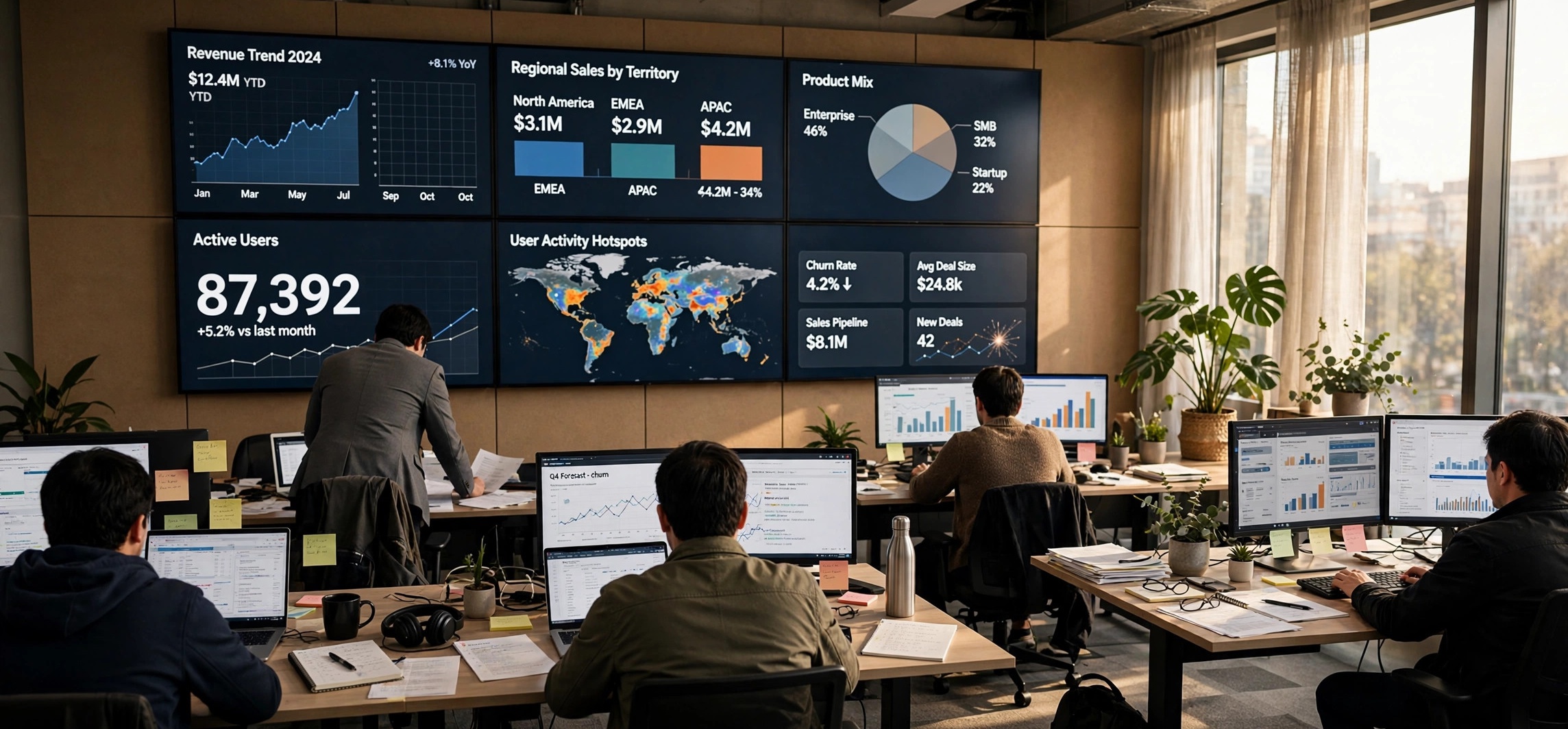
As digital technologies become increasingly embedded in business operations, the convergence of data intelligence and business analytics is reshaping how companies make decisions and manage performance.
According to Verified Market Research, the global business analytics market exceeded $84.42 billion in 2024 and is expected to grow to $176.14 billion by 2032, driven in large part by AI integration, real-time data intelligence and growing demand for data-driven decision-making.
Against this backdrop, TIAN Kaixin, a technology practitioner working at the intersection of data intelligence and business analytics, has developed a systems-based approach designed to translate advanced data capabilities into measurable operational outcomes.
Rather than treating data analytics as a stand-alone technical capability, TIAN’s work focuses on integrating data, business rules, decision processes and operational execution into a unified intelligence-driven framework. The approach is intended to address a longstanding challenge in enterprise analytics: converting fragmented and often ambiguous business problems into structured, actionable data insights that can support repeatable and informed decision-making.
Traditional business analytics has often been constrained by siloed systems, delayed reporting and reactive decision processes. Data generated across different business functions may reside in separate platforms, making it difficult for organizations to build a comprehensive view of operations.
In many cases, conventional reporting systems are designed primarily to summarize what has already happened. They can identify historical trends but are less effective at anticipating risk, detecting anomalies in real time or optimizing resource allocation before problems emerge.
TIAN’s approach is designed to shift that model from retrospective analysis toward continuous monitoring and forward-looking decision support. By combining data intelligence with structured business rules, her systems are intended to connect data validation, trend analysis, anomaly detection and operational decision-making within a single workflow.
One of the clearest examples of this approach comes from TIAN’s work in regional operations at FedEx.
Within the operating environment, key datasets—including payment records, service data, budget accounts and contract adjustments—were maintained across separate systems. That fragmentation made it difficult to monitor cost movements in real time and increased the risk of inefficient resource allocation.
To address the issue, TIAN developed a dynamic payment data analysis system that consolidated multiple data sources into a structured analytical framework. The system incorporated automated data-validation rules alongside trend analysis and anomaly-detection mechanisms, enabling regional budget information to be monitored and evaluated on an ongoing basis.
According to project results, the system helped identify and prevent approximately $1 million in potential monthly overpayments and unnecessary operating costs, while enabling the organization to monitor and manage regional spending with greater granularity.
The project also became an early demonstration of a broader principle behind TIAN’s work: data intelligence systems developed for one operational setting can often be adapted to other industries when the underlying decision problems are similar.
TIAN’s technology framework has since been applied beyond logistics to business consulting, project management, intelligent marketing and other data-intensive enterprise operations.
The cross-industry potential rests on a relatively simple observation: while industries may use different terminology and operational metrics, many organizations face similar analytical problems. These include fragmented data, complex business rules, short decision windows, abnormal or inconsistent data patterns, uneven validation processes, and difficulties identifying emerging trends and potential operational risks before they materially affect performance.
By standardizing how these problems are translated into structured data frameworks and intelligence-driven analytical workflows, TIAN’s systems are designed to provide a reusable technical foundation rather than a one-off solution for a single sector.
In the consulting sector, a China-based business consulting company adopted TIAN’s Project Budget Data Integrated Management System V1.0 to improve the management of consulting projects.
Traditional project-budget processes often relied heavily on manual coordination and reconciliation, creating high labor costs, slow processing times and greater exposure to human error.
Following implementation, the system shortened the overall project-management cycle to approximately two to three working days. It also reduced administrative and communication costs, generating estimated annual savings of roughly RMB 250,000.
More importantly, the system introduced a more standardized and data-driven approach to project management, allowing budget information, execution status and related operational data to be managed through a more consistent and transparent workflow.
Another application emerged in the intelligent marketing and data intelligence sector.
A Beijing-based data technology company integrated two systems developed by TIAN to address bottlenecks in data-driven marketing projects, particularly the inefficiencies associated with data preparation, analytical workflow optimization and ongoing system maintenance.
Through standardized data modeling and more structured project workflows, the systems reduced redundant data processing and operational work while improving coordination across project management, data governance and analytical development.
According to implementation results, the company reduced its end-to-end project execution cycle by 40%.
The case is notable because intelligent marketing environments typically involve highly complex data flows, evolving analytical requirements and close coordination between technical and commercial teams. The deployment suggests that TIAN’s architecture can be adapted not only to operational analytics but also to data-intensive marketing workflows in which analytical capabilities must be continuously aligned with business requirements.
It also illustrates a broader shift taking place in marketing technology. Traditional marketing-data tools are often designed around individual functions, such as reporting, campaign measurement or audience analysis. More advanced enterprise environments increasingly require systems that connect data governance, intelligent analysis, workflow management and operational decision-making.
In this context, TIAN’s framework provides one example of how standardized data intelligence infrastructure can support more integrated marketing operations.
The cross-industry applications are based on TIAN’s view that logistics, marketing and consulting, despite their differences, share a similar underlying analytical structure.
Marketing organizations focus on advertising efficiency, conversion performance and return on investment. Consulting firms emphasize project budgets, delivery schedules and execution costs. Logistics operators prioritize capacity utilization, service timeliness and exception management.
At the data level, however, the core questions are often similar: Is the data reliable? Are business rules being applied consistently? Can abnormal patterns be detected early? And can resources be allocated more effectively based on available information?
This perspective has shaped TIAN’s approach to data intelligence.
In TIAN’s view, data intelligence is not intended to replace business judgment. Instead, its value is in turning proven business judgment into repeatable and scalable system capabilitie.
She compares traditional reporting to a vehicle’s rearview mirror: useful for understanding what has already happened, but limited in its ability to guide what comes next. Data intelligence-driven analytics, by contrast, can function more like a steering system, helping organizations identify emerging trends, detect risks earlier and adjust decisions dynamically.
From this perspective, the differences between industries often lie in their metrics and business rules rather than in the fundamental analytical architecture. Budget control, resource allocation, execution tracking and performance analysis are common requirements across a wide range of enterprise projects.
TIAN believes the next stage of business analytics will increasingly be organized around decision scenarios rather than traditional industry categories.
Under this model, areas such as anomaly detection, budget forecasting, resource scheduling, service validation and operational performance analysis could become foundational data intelligence capabilities used across multiple sectors.
The competitive advantage, therefore, may shift toward organizations capable of combining business rules, standardized data models and intelligent analytical capabilities into integrated systems that can be transferred from one operating environment to another.
Such an approach could help companies reduce the cost of rebuilding analytics infrastructure for every new business scenario while also improving consistency in how data-driven decisions are made.
Some of TIAN’s independently developed systems, including AI-Powered Logistics End-to-End Computing Software and ERD Database Schema Construction and Management System, have obtained software copyright registrations in China and the United States. Related frameworks have now been applied across logistics, business consulting and data-intelligence scenarios, providing multiple use cases through which their practical applicability has been tested.
From monthly cost savings in FedEx operations to shorter project cycles in consulting and intelligent marketing, TIAN’s work provides several examples of how data intelligence can be integrated with operational processes to produce measurable business outcomes.
Rather than developing tools around the requirements of a single industry, her approach focuses on building a reusable data intelligence foundation that can be adapted to different business environments.
Looking ahead, TIAN expects machine learning and business analytics to become increasingly interconnected, creating new opportunities for more intelligent and efficient business decision-making. She sees particular potential in predictive forecasting, real-time risk detection, smarter resource allocation and the development of analytical systems that can be adapted across industries. As these technologies continue to evolve, TIAN believes their deeper integration will help businesses move beyond analyzing past performance toward anticipating future challenges, responding to changes more effectively and building more scalable, data-driven operations.







Comment