The complexity of modern customer purchasing behaviour has exposed fundamental limitations in traditional web analytics approaches. The customer journey analytics market reached a valuation of $8.3 billion in 2025, with organisations implementing customer journey analytics reporting a remarkable 2.8 times return on investment improvement compared to those relying on conventional digital analytics methods. This dramatic performance differential reflects a fundamental truth: understanding how customers navigate their complete path to purchase requires analysis frameworks and technology stacks entirely different from those designed to measure individual website session behaviour.
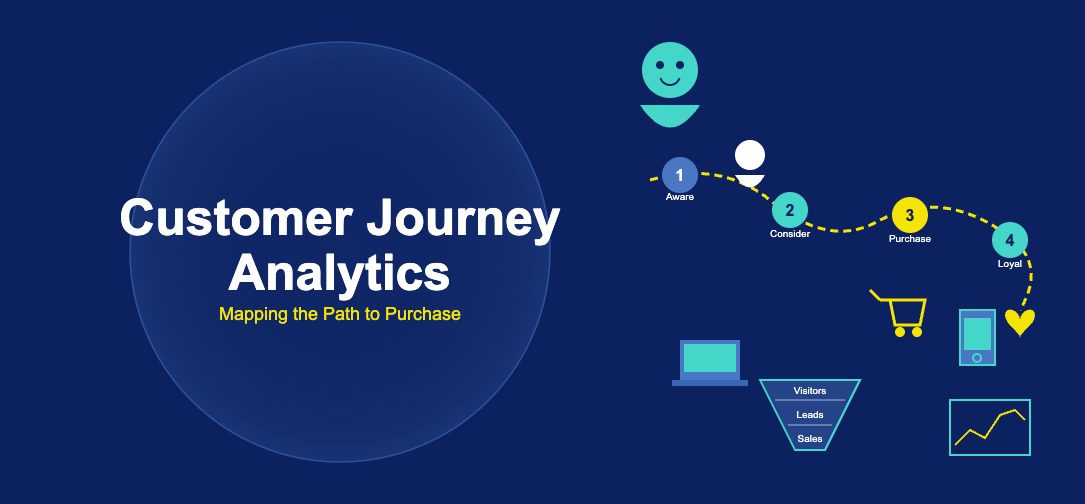
Customer journey analytics technology represents a paradigm shift in how organisations conceptualise their marketing efforts. Rather than viewing marketing as a collection of disconnected campaigns and channels, journey analytics platforms enable marketers to map the complete customer experience from initial awareness through purchase and beyond. This holistic perspective reveals critical insights about which touchpoints matter most, where customers experience friction, and how to allocate resources across channels for optimal impact on business outcomes.
Customer Journey Analytics and Traditional Web Analytics
Traditional web analytics platforms were designed with a fundamental assumption: that meaningful customer interactions occur primarily on a single website and within a single session. Google Analytics and similar tools excellently answer questions about which pages receive traffic, how long visitors spend on specific content, and what actions they take within a website environment. However, these platforms fail to answer the more strategic questions that modern marketing organisations need answered.
The limitations of traditional web analytics become apparent when asking important business questions. How many distinct customers does the organisation actually have across all touchpoints? Which marketing campaigns actually generate customers with the highest lifetime value? What is the optimal sequence of marketing messages to move a particular customer segment toward purchase? Does attending a webinar before downloading a whitepaper increase conversion probability? Do customers who engage with email marketing have higher retention rates than those who do not?
Customer journey analytics platforms address these questions by collecting data from numerous touchpoints across multiple channels, integrating that data around persistent customer identifiers, and providing analysis frameworks that reveal relationships between customer actions and business outcomes. Rather than measuring sessions or page views, customer journey analytics measures progression through defined stages of the buying process and attributes progression to the specific interactions that influenced movement.
What Customer Journey Analytics Platforms Actually Do
Customer journey analytics platforms function as sophisticated data aggregation and analysis systems that synthesise information from multiple sources into unified customer records. Salesforce Journey Builder, Adobe Journey Optimizer, and specialist platforms like Pointillist represent examples of technology designed specifically for this purpose.
These platforms begin by collecting touchpoint data from numerous sources. Web analytics data reveals when customers visit websites and what actions they take. Email marketing platforms contribute information about which messages customers received, opened, and clicked. Customer relationship management systems provide insights about sales interactions and current account status. Advertising platforms track which advertisements customers saw and when they clicked those advertisements. Call centre systems record conversations customers had with support staff. Point of sale systems document purchased products and transaction values.
The critical requirement for customer journey analytics is the ability to organise all this disparate data around consistent customer identifiers. First party customer databases often provide persistent identifiers such as email addresses or customer account numbers. For customers not yet in a database, heuristic matching algorithms attempt to identify the same person across multiple touchpoints based on matching on available attributes including email addresses, phone numbers, physical addresses, or device identifiers.
Once customer data has been unified, journey analytics platforms employ numerous analysis techniques to reveal patterns. Funnel analysis identifies where customers drop out of desired progression sequences and quantifies the proportion of customers successfully completing each step. Cohort analysis groups customers based on shared characteristics and compares how customer segments with different attributes progress through the customer journey differently. Correlation analysis identifies which touchpoints correlate most strongly with downstream conversion and revenue outcomes.
Touchpoint Data Collection and Integration
Comprehensive customer journey analytics requires integration of data from numerous sources spanning marketing, sales, customer service, and business operations. This integration process presents significant technical and organisational challenges.
Marketing automation platforms including HubSpot and Marketo provide rich data about email engagement, website behaviour, and lead scoring. Advertising platforms including Google, Meta, and advertising networks contribute data about advertisement exposures and clicks. Content management systems and web analytics platforms track website visits and content engagement. Customer data platforms serve as dedicated systems for unifying customer data from multiple sources.
Sales systems including Salesforce and Microsoft Dynamics contribute critical information about deal progression, sales interactions, and deal values. Customer service systems document customer support interactions, issue resolution times, and customer satisfaction. Financial systems provide transaction history and revenue information. Subscription management systems track active subscriptions, churn events, and customer lifetime value calculations.
Integrating these diverse systems requires either native connectors provided by the journey analytics platform, custom application programming interfaces that translate data between systems, or specialised data integration platforms that manage the complexity of connecting numerous business systems. The technical challenges of maintaining these integrations increase exponentially with the number of systems requiring integration.
Cross Channel Attribution and Journey Mapping
One of the most valuable functions of customer journey analytics is attributing customer progression and eventual conversion to the specific touchpoints that influenced that outcome. Cross channel attribution attempts to answer the question: which marketing interactions actually influenced the customer to progress toward purchase rather than merely occurring coincidentally during the customer journey?
Attribution modelling employs numerous approaches ranging from simplistic to sophisticated. Last click attribution assigns all credit to the final touchpoint immediately preceding conversion, recognising the inherent measurement limitation that the most recent interaction logically influenced the decision. However, last click attribution systematically undervalues earlier awareness and consideration stage marketing that originally introduced customers to the brand.
Multi touch attribution models distribute credit across multiple touchpoints in proportion to their estimated contribution to conversion. Time decay models assign greater credit to interactions closer to the conversion event. Machine learning models analyse historical conversion patterns to estimate the probability that conversion would have occurred absent each particular touchpoint, and attribute credit accordingly.
Journey mapping visualises the paths customers follow from awareness through purchase, revealing which sequences of interactions occur most frequently among customers who successfully convert. Analysis might reveal that customers who engage with both email marketing and retargeting advertising convert at substantially higher rates than customers exposed to only one channel, suggesting that multiple touchpoints reinforce each other in moving customers toward purchase.
Journey Orchestration versus Analytics
Customer journey analytics platforms increasingly blur the boundaries between analysis and action. Journey orchestration functionality enables marketers to automatically deliver specific messages or adjust marketing treatment based on customer behaviour and journey stage. This bridge between analytics and marketing execution has become increasingly important as organisations attempt to move from insight to action more rapidly.
Journey orchestration technology monitors customer behaviour in real time and automatically triggers marketing actions when customers match specified conditions. When a customer abandons an online shopping cart without purchasing, the system automatically initiates a cart recovery email sequence. When a customer views product pages related to a specific category for the third time, the system increases the frequency of relevant advertising. When a customer has not engaged with any marketing communication for thirty days, the system initiates a re engagement campaign designed to restore active engagement.
The distinction between journey analytics and journey orchestration is becoming increasingly irrelevant as these capabilities integrate into unified platforms. Organisations utilise analytics to understand which journeys convert most effectively, then employ orchestration to automatically guide customers down those identified high performing journeys at scale.
Real Time versus Retrospective Journey Analytics
Traditional customer journey analytics relied on retrospective analysis, where analysts examined historical customer behaviour to identify patterns that had already occurred. After a customer converted, analysts would examine the complete journey leading to that conversion to understand which touchpoints had mattered most. While this approach provides valuable insights, it operates with inherent latency, requiring weeks or months of data accumulation before meaningful patterns become visible.
Modern customer journey analytics platforms increasingly operate in real time, analysing customer behaviour as it occurs and updating journey visualisations continuously. Real time analytics enable rapid response to emerging customer behaviour patterns. When a particular marketing channel demonstrates unexpectedly high conversion rates, marketing teams can rapidly increase investment in that channel rather than waiting for quarterly business reviews to analyse historical performance data.
Real time journey analytics requires substantial technological infrastructure including streaming data pipelines that continuously ingest data from source systems, real time computation of key metrics and journey progression indicators, and databases optimised for rapid querying of recently updated customer records. The architectural differences between retrospective and real time approaches explain why some platforms specialise in historical analysis while others focus on real time operational analytics.
Measuring Journey Health and Customer Progression
Customer journey analytics platforms enable organisations to define and monitor key journey health metrics that predict future business outcomes. Rather than measuring traditional metrics such as website sessions or email click through rates, journey health metrics measure progression through defined customer journey stages and the rate at which customers advance from awareness to consideration to purchase to advocacy.
Journey velocity measures how quickly customers progress through journey stages. Organisations notice that customers moving rapidly from awareness to consideration demonstrate higher conversion probability than customers progressing slowly, and adjust messaging to accelerate movement. Journey drop off identifies specific stages where customers discontinue progression and drop out of the funnel, enabling targeted remediation efforts focused on the highest impact friction points.
Journey engagement measures how frequently customers interact with marketing touchpoints and how extensively they engage with content. Organisations recognise that customers demonstrating high engagement with email marketing and content resources subsequently convert at higher rates and maintain higher lifetime values. Journey diversification measures the breadth of channels and touchpoint types customers interact with, recognising that customers engaging across multiple channels convert at higher rates than customers relying on single channel interactions.
AI and Automated Journey Optimisation
Artificial intelligence capabilities are increasingly embedded into customer journey analytics platforms, enabling automatic optimisation of journeys without requiring human manual intervention. Machine learning models predict which customers demonstrate highest propensity to convert and recommend marketing tactics most likely to move those specific customers toward purchase.
Predictive models trained on historical customer data identify early warning signals indicating which customers are likely to abandon their journeys or discontinue engagement with the organisation. Marketing teams can then intervene with targeted retention campaigns focused on high value customers identified as at risk of churn. Recommendation engines analyse completed customer journeys to identify the sequences of touches that most frequently precede purchase, then automatically guide similar customers down those optimal journeys.
Automation eliminates the manual segmentation and campaign execution burden that previously consumed significant marketing team resources. Rather than human analysts manually creating customer segments based on static demographics or behavioural characteristics, machine learning algorithms continuously identify evolving customer segments based on real time behaviour and recommend tailored messaging for each identified segment.
| Dimension | Traditional Web Analytics | Customer Journey Analytics |
|---|---|---|
| Unit of Analysis | Sessions, page views, events on single website | Customers, complete journey across channels, progression through stages |
| Data Sources | Single website via tracking code implementation | Multiple channels, systems, offline touchpoints integrated around customer ID |
| Customer Identification | Anonymous until explicit login; lost across sessions or devices | Persistent customer ID matched across all touchpoints and devices |
| Time Horizon | Single session or recent visits; limited historical perspective | Complete customer lifetime from first awareness through multiple purchases |
| Attribution Capability | Single page or limited path analysis within session | Multi touch attribution across channels and extended time periods |
| Optimisation Focus | Website specific improvements to bounce rate, time on page | Customer progression optimisation across all touchpoints |
| Use Case | Business Problem Solved | Technology Required | Typical Outcome |
|---|---|---|---|
| Lead Scoring Optimisation | Sales organisations waste time pursuing leads unlikely to convert | Journey analytics plus predictive modelling and CRM integration | 20-30% improvement in sales productivity through better lead prioritisation |
| Channel Attribution | Marketing budgets allocated to channels based on incomplete attribution | Multi source data integration and multi touch attribution modelling | 25-40% improvement in marketing ROI through better channel investment decisions |
| Customer Retention | Churn prediction limited to simple behavioural signals | Predictive models analysing complete customer interaction history | 15-25% improvement in retention rate through targeted intervention programmes |
| Journey Sequencing Optimisation | Marketing sequences designed without data on most effective sequencing | Journey mapping, path analysis, and journey orchestration technology | 20-35% improvement in conversion rates through optimised message sequencing |
| Upsell and Cross Sell | Limited ability to identify customers ready for higher value products | Revenue analytics integrated with customer journey data and predictive models | 30-50% improvement in average customer lifetime value through targeted expansion |
The Strategic Importance of Customer Journey Analytics
Customer journey analytics represents one of the most important technological investments organisations can make to improve marketing effectiveness and customer outcomes. As customer expectations for personalised, contextually relevant interactions increase, the ability to understand and optimise individual customer journeys becomes critical to competitive success.
Organisations that successfully implement customer journey analytics capabilities gain profound advantages in marketing efficiency and customer experience quality. They understand precisely which marketing investments drive actual business value, eliminate wasteful spending on ineffective channels and messages, and personalise customer interactions at scale based on understanding of each individual’s unique journey and needs. As technology continues advancing and as customer acquisition costs continue increasing, these advantages create substantial value for organisations willing to invest in modern customer journey analytics infrastructure.
Related reading: The Future of Marketing Technology: Emerging Trends, Convergence Platforms, and the Next Decade of Digital Marketing Innovation
Data from Statista’s digital market outlook shows that global digital spending continues to grow at double-digit rates, with mobile channels accounting for an increasingly dominant share of total transactions.
PwC’s analysis of financial services trends through 2025 highlights the convergence of technology and media as a defining dynamic, with data-driven personalisation becoming the primary competitive differentiator.
For more coverage on related topics, explore our dedicated section on technology insights.