Custom Molded Rubber Parts: Custom Rubber Products, Rubber Molding and Molded Rubber Parts

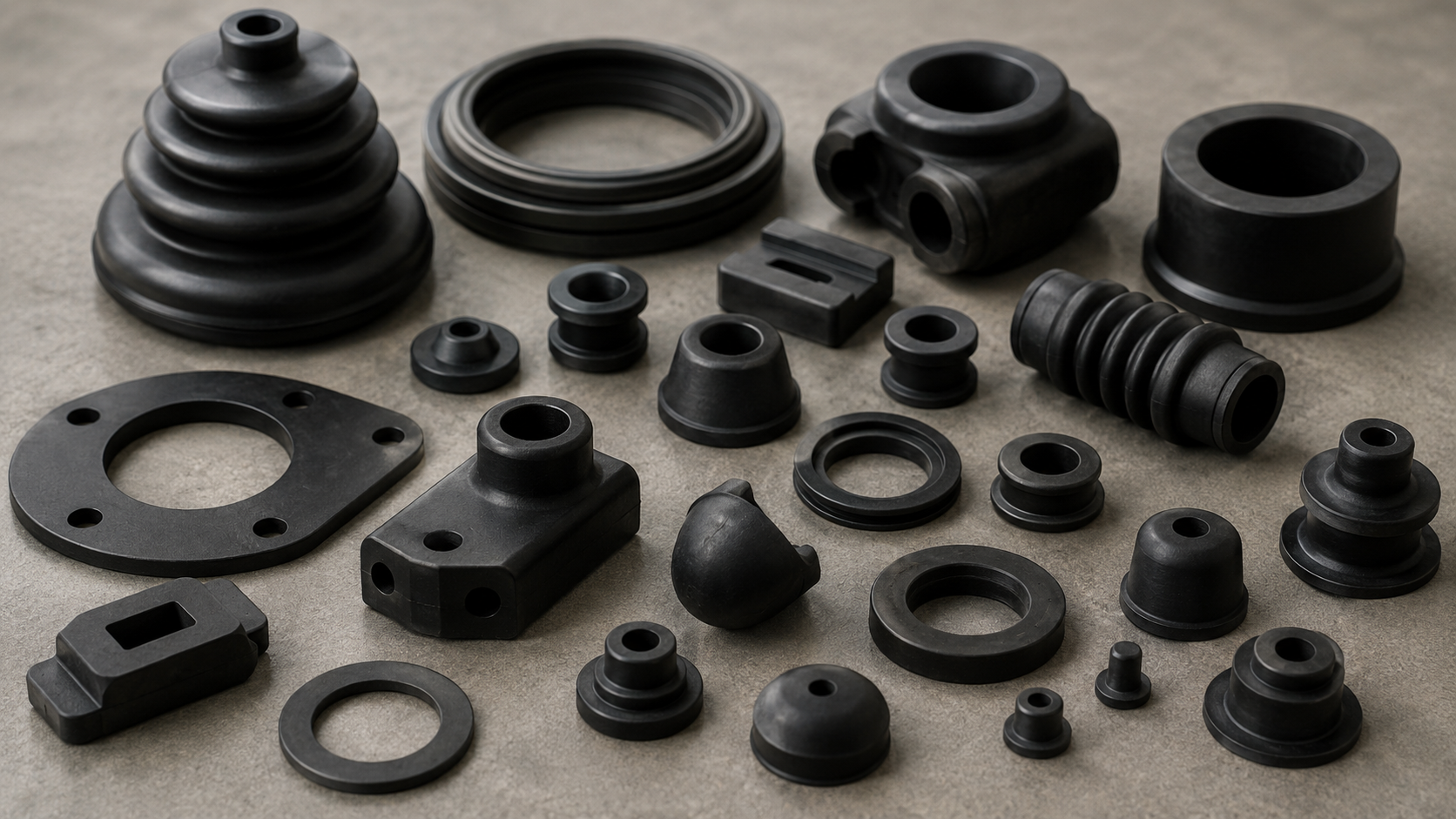
Introduction: Custom rubber parts are integral to countless industries, providing sealing, vibration isolation, and protective functions through engineered elastomer solutions that include gaskets, o-rings, grommets and bonded assemblies. This article examines the fundamentals of rubber molding, the processes and materials used to create custom molded rubber products, the steps required to specify and manufacture molded rubber parts, and the quality, testing and supplier considerations that ensure reliable performance in demanding applications.
For more in-depth information you should view from Custom Rubber Parts Manufacturer – Engelhardt
What is rubber molding and how does custom rubber molding work?
Rubber molding is a group of manufacturing processes in which elastomeric materials are shaped within tools or molds to form functional rubber components; custom rubber molding adapts these processes to produce custom rubber products with precise geometry, specified tolerances and tailored formulations that meet application-specific requirements such as resistance to abrasion, ozone, chemicals or extreme temperatures. In custom molding, a rubber compound—whether a silicone, neoprene, EPDM or a purpose-designed custom compound—is prepared, potentially mixed with additives and curatives according to a formulation, and then introduced into a mold using a selected molding process such as compression molding, transfer molding or injection molding. The molded rubber parts are subsequently cured, demolded and finished, sometimes undergoing secondary operations such as rubber bonded to metal inserts, extrusion trimming or post-curing to stabilize physical properties; this controlled sequence ensures that the custom molded rubber components and custom rubber products achieve the mechanical properties, sealing performance and dimensional accuracy demanded by the customer and the intended service environment.
What are the common rubber molding processes used for custom molded rubber parts?
The principal molding processes used to create molded rubber parts are compression molding, transfer molding and injection molding, with each offering specific advantages for certain rubber products and production volumes. Compression molding involves placing an uncured rubber compound into a heated mold cavity where pressure causes the material to flow and fill the cavity before curing; it is often chosen for larger molded parts, lower tooling cost and custom rubber runs where cyclical pressure is sufficient to achieve part detail. Transfer molding uses a separate chamber to preform the compound and then forces it into the mold cavities through gates, providing improved control of flash and better performance for parts with inserts or complex features. Injection molding provides the highest repeatability and production speed for high-volume production of custom molded rubber parts by injecting molten rubber compound into the tool under pressure, which is particularly effective for tight tolerance molded rubber components and multi-cavity molds; injection molding is also favored when minimizing scrap and achieving consistent surface finish are priorities. Secondary processes such as extrusion for continuous profiles, rubber bonded assemblies for combining rubber with plastic or metal, and custom molding techniques for high-performance elastomers extend the capabilities of rubber manufacturing to a broad spectrum of molded rubber components and custom molded rubber products.
How do tooling and mold design affect custom rubber molding outcomes?
Tooling and mold design are critical determinants of the quality, repeatability and cost-efficiency of molded rubber parts, as the tool geometry, venting, gate location and material control the flow of the rubber compound during the molding process and the way the elastomer cures. Proper tool design minimizes flash, reduces material waste and permits consistent molding of fine features such as sealing lips, internal undercuts or thin wall sections; mold venting and temperature control influence cure uniformity, while the choice of tool steel and surface finish affects mold longevity and the surface appearance of custom rubber products. Additionally, the design must accommodate tooling amortization and production volume—multi-cavity molds or family molds may reduce per-part cost for high-volume runs, whereas simpler two-piece tools are more economical for prototypes and low-volume custom molded rubber components. Considerations such as draft angles, parting lines, gate placement and the ability to demold elastomers without damage are essential design factors that rubber companies and custom rubber molding services evaluate during the pre-production phase to ensure that the molded parts meet dimensional specifications and functional sealing requirements in service.
What role does material selection play in rubber molding for rubber products?
Material selection is arguably the single most important factor determining the performance and longevity of custom rubber parts, since the rubber compound defines mechanical properties such as hardness, tensile strength, elongation, compression set resistance and chemical compatibility with media encountered in service. Selection among silicone, neoprene, EPDM, natural rubber, nitrile, fluorocarbon and custom compounds is guided by application demands—silicone is sought for high-temperature stability and excellent flexibility over wide temperature ranges and is commonly used in seals and gaskets where biocompatibility or weather resistance is required; neoprene offers balanced resistance to oils and ozone suitable for outdoor gaskets and industrial seals; EPDM provides superior resistance to weathering, steam and certain chemicals and is preferred in automotive weather seals and water-handling rubber products. High-performance applications may require custom formulations to improve resistance to hydrocarbons, solvents or aggressive chemicals, and suppliers must provide formulation information and material selection expertise to align compound properties with intended operating conditions and molding capabilities, ensuring that molded rubber components deliver the required sealing, resilience and durability for the end use.
How do I specify a custom rubber part or custom molded rubber product?
Specifying a custom rubber part requires a comprehensive design package and clear communication of functional requirements to the rubber group or custom molding supplier; the specification should translate performance needs into measurable parameters such as material grade, shore hardness, dimensional tolerances, surface finish, expected lifetime, environmental exposures (temperature range, UV, ozone, chemical contact), mechanical loads and regulatory requirements such as ISO certifications. Design for manufacturability principles should be integrated during specification to optimize tooling cost and molding process selection—early engagement with a rubber company or custom rubber corp enables feedback on design tradeoffs, recommendations for molding processes like compression molding versus injection molding, and suggestions for custom formulations that balance cost and performance. A thorough specification reduces iteration during prototyping, accelerates the path to manufacture and ensures that supplied molded rubber parts and custom rubber products will meet functional, regulatory and cost targets.
What information should a design include when requesting custom rubber molding services?
When requesting custom rubber molding services, designers should provide detailed drawings with critical dimensions and tolerances, material call-outs with preferred elastomer grades or acceptable alternatives, expected environmental and mechanical conditions, target production volumes to inform tool choices, and any secondary operations required such as rubber bonded assembly, overmolding onto plastic or metal, post-curing, or specific surface finish requirements. Additionally, identification of sealing interfaces, mating components such as plastic housings or metal flanges, and information about assembly methods and life-cycle expectations will help the molding services evaluate manufacturability and propose appropriate molding processes. Including specifications for inspection criteria, acceptance tests and documentation such as material traceability or ISO-quality records expedites supplier evaluation and ensures that molded rubber components conform to the required standards throughout production and delivery.
How do tolerances, dimensions and surface finish impact molded rubber parts?
Tolerances, dimensions and surface finish directly influence the function, interchangeability and seal performance of molded rubber parts; elastomeric materials exhibit viscoelastic behavior and can deform under load, so tight dimensional tolerances increase tooling complexity and may require injection molding or more precise tool maintenance to achieve consistent results. Surface finish affects friction, sealing behavior and cosmetic appearance—smoother finishes are often necessary for static seals and gaskets to prevent leak paths, while controlled roughness can aid adhesion in rubber bonded assemblies. Designers must balance tight tolerances against expected compression set, material relaxation and in-service deformation, specifying tolerances that reflect both manufacturing capability and the mechanical behavior of the chosen rubber compound to ensure that molded rubber parts perform reliably without unnecessary tooling cost or excessive scrap rates.
When should I choose silicone, neoprene, EPDM or other rubber compounds?
Choice of silicone, neoprene, EPDM or other rubber compounds should be driven by the operating environment and required properties: choose silicone when high-temperature stability, flexibility at low temperatures, and inertness are critical for seals, medical components or food-grade molded rubber products; select neoprene for its balanced weathering, ozone and oil resistance in outdoor gaskets and protective covers; prefer EPDM for exceptional resistance to steam, hot water and weathering, making it ideal for automotive weatherstrips and water-handling seals. Nitrile is preferred for oil and fuel resistance, while fluorocarbon elastomers (FKM) suit aggressive chemical and high-temperature environments in high-performance applications. When standard compounds do not meet the demands of a specific application, custom formulations or specialty elastomers should be considered to achieve targeted resistance, longevity and mechanical performance, and suppliers should be consulted to verify compatibility with the chosen molding process and intended service conditions.
How are custom rubber components manufactured and what are manufacturing lead times?
Manufacture of custom rubber components follows a sequence from design and tooling to prototyping, production setup and delivery, with lead times that vary based on the molding process, tooling complexity, material availability and production volume. Initial prototyping may use simplified tools or rapid tooling to validate form, fit and function, while final production requires hardened tools and process validation; typical lead times from design approval to first production of molded rubber parts range from several weeks for simple compression molded prototypes to several months for injection molded multi-cavity production tools, with additional time for material procurement, custom compounds, and certification testing. Lead times are influenced by factors such as the need for custom formulations, secondary operations like bonding to plastic or metal inserts, and the supplier’s current workload; collaboration with a supplier or rubber group can optimize scheduling, suggest alternative materials or processes to shorten time-to-market, and offer production planning that aligns prototyping and ramp-up to full manufacture of custom rubber products.
What are typical production methods for custom molded rubber parts and molded parts runs?
Typical production methods for custom molded rubber parts include compression molding for low- to medium-volume runs and larger parts, transfer molding for moderate volumes requiring better control of flash and insert molding, and injection molding for high-volume, tight-tolerance production of molded rubber components and multi-cavity molded rubber products. For continuous profiles such as seals and grommets, extrusion followed by die-cutting or secondary molding operations is common; rubber bonded assemblies combine molding and adhesive or vulcanization steps to join rubber to plastic or metal substrates. Production runs are planned to amortize tooling costs—short runs favor simpler tools and compression molding while high-volume runs justify the higher upfront investment in complex injection molds with multiple cavities, cooling systems and automation to reduce per-part costs and ensure consistent quality across long production campaigns.
How long does it take from prototype to full manufacture of custom rubber products?
The timeframe from prototype to full manufacture of custom rubber products depends on the complexity of the part, mold design, chosen molding process and the need for custom materials or certifications; prototypes produced with soft tooling or 3D-printed molds can be available in a few weeks to validate design, whereas development of hardened production tooling for injection molding and process validation may take two to four months or longer. Additional time should be allocated for iterative design changes, material qualification—especially when using high-performance elastomers or custom formulations—and testing such as aging, compression set and chemical resistance assessments. Suppliers with integrated molding capabilities and experienced rubber manufacturing teams can often accelerate the transition by offering rapid tooling, concurrent engineering support and pre-approved material specifications that reduce the number of iterations required to reach full-scale manufacture.
How do custom rubber molding services scale for high-performance or high-volume needs?
Custom rubber molding services scale for high-performance or high-volume needs by investing in robust tooling, automated molding cells, multi-cavity molds and process controls that ensure repeatability, reduced cycle times and consistent material handling; high-performance applications also demand rigorous material traceability, controlled formulations and post-processing such as post-curing and specialized surface treatments. Rubber groups that support scaling will provide engineering services to optimize designs for manufacturability, select the appropriate molding process—often injection molding for volume—and implement quality systems including statistical process control and ISO certifications to maintain product integrity across large runs. Partnerships with reliable suppliers who can source custom compounds and manage supply chain risks are essential to supporting high-volume production while meeting the stringent performance criteria of high-performance molded rubber components.
What testing and quality control apply to custom molded rubber parts?
Testing and quality control for custom molded rubber components is not just a checklist, but more like a messy chain of mechanical , chemical, and dimensional verifications so the molded part actually lands the right behavior. The idea is to confirm things like sealing integrity, endurance against environmental effects, and service life even when under mechanical strain . Quality control usually includes dimensional inspection with calibrated instruments, hardness testing , tensile and elongation measurements, compression set checks, plus accelerated aging and ozone resistance evaluations, and also compatibility reviews for the chemistry that matters in the application.
Suppliers often do incoming material inspections and keep strong material traceability, so the batch properties can be related back to part performance later. Then a final inspection happens with explicit acceptance criteria, so every delivery of custom molded rubber products matches the documented specifications and any regulatory obligations.
Which specific tests are used to confirm resistance, durability, and seal performance for rubber parts?
Validation for rubber components that look at resistance, durability, and seal behavior usually starts with compression set trials, these check sealing longevity while the material stays under constant squeeze. Then there are ozone and UV exposure trials to gauge environmental breakdown. In parallel accelerated aging is used, which helps forecast service life, plus chemical resistance trials that judge compatibility with oils, fuels, or cleaning agents. To mirror real use, cyclic fatigue tests are also run, these simulate repeated mechanical loading, and they help reveal fatigue weakness before field use.
For leak checking, helium leak testing or pressure decay approaches are common, they confirm how well a gasket, an o-ring, or similar seal retains containment. On the physical side, tensile strength, tear resistance, and Shore hardness measurements quantify the properties that feed into durability, and practical stiffness behavior. Overall, this whole collection of tests becomes a broad verification program, so molded rubber parts actually meet functional needs once they are installed.
Inspection standards and acceptance criteria for rubber components are typically defined by the relevant design specification, the applicable product standard, and the agreed test methods, often including defined sampling plans, measurable limits, and pass fail requirements based on the test results.
Inspection standards and acceptance criteria for rubber parts are set by a shared conversation between the customer and the supplier, with industry standards, regulatory requirements and tolerances for the specific use worked in. In practice documents like the inspection plan, first article inspection report, and material certificates spell out the dimensional limits, the permitted defects, the mechanical property bands, and how often tests are performed. Usually these criteria line up with ISO frameworks or with standards from a particular industry, and they might also cover surface appearance, the presence of flash, adhesive bond integrity in rubber bonded assemblies, and written process control evidence. When the acceptance rules are clear quality control stays more objective, approvals move faster, and rubber manufacturing can keep improving.
What certifications or material traceability records should suppliers give for rubber products?
Suppliers should provide certifications and a material traceability level that fits the application, including certificates of conformity for compound batches, plus material safety data sheets. Where it is required, suppliers also need ISO quality system certifications, for example ISO 9001, or relevant sector specific approvals. In regulated industries, suppliers may be asked to hand over additional paperwork showing compliance with standards for food contact, medical use, or automotive specifications ,and also full traceability of raw materials along with processing records, so they can support failure analysis and warranty claims. Good traceability and certification routines strengthen confidence in the delivered custom molded rubber products, and they help keep performance steady across the full product lifecycle.
How do formulation and material selection affect custom rubber product performance?
Formulation and material selection directly effect mechanical properties, environmental resistance and manufacturability of custom rubber products; by adjusting polymer base , crosslink density , fillers and additives, custom formulations can be engineered to enhance resistance to oils, ozone, heat, or specific chemicals. This also can help reduce compression set for long- term sealing performance, or improve tear and abrasion resistance for dynamic components. In other words, the recipe determines how the rubber behaves once it is in service.
At the same time, the formulation influences processing characteristics like flow during molding, cure time, and mold release behavior, which in turn affect tooling design and production efficiency. So the “best” mix is not only about durability, it is also about how the part gets made, and how consistently.
Suppliers that offer custom formulations typically bring useful know-how in balancing performance targets with manufacturing constraints, so molded rubber components can meet demanding service conditions while staying cost effective to produce.
What are custom formulations and how do they improve resistance or longevity?
Custom formulations are compounded elastomer recipes tailored to specific application challenges, by adjusting polymer types, curing systems, fillers, and additives to impart the wanted properties like stronger ozone resistance, lower compression set, better chemical compatibility, or higher thermal stability. These bespoke compounds can really extend the service life of seals, gaskets and high-performance molded rubber products, because they target the failure modes most relevant to that use. Formulators collaborate with suppliers to test prototypes, then iterate compound recipes so the final custom blend hits the right equilibrium between durability, processability and cost for the intended use.
When is silicone preferred over other rubber compounds for seals and gaskets?
Silicone is usually the go-to choice when operating temperatures, flexible behavior over a wide thermal range, chemical indifference to many substances, plus biocompatibility, or long term ozone and UV resistance are the main issues for seals and gaskets. Silicone formulations tend to keep their stretchiness even at very low temperatures, and they do not easily harden or develop cracking during repeated thermal cycling. that is why you often see them used in medical devices, food contact gaskets, outdoor sealing jobs, and any setup where long-term exposure resistance to weather is essential.
Still, silicone might not be the best option when you need very high tensile strength, or when you require stronger protection against hydrocarbons. so the final material decision has to balance those tradeoffs, then match the compound to the actual service conditions and the desired performance goals.
How do temperature, chemical contact, and mechanical stress steer the selection of a rubber compound?
Temperature, chemical exposure and mechanical stress are the primary environmental drivers that guide the choice of rubber compound: when operating temperatures run high and the material is hit by aggressive chemicals, fluorocarbon or silicone compounds tend to win, for oil and fuel exposure you’ll typically see nitrile or a specialized custom compound, and if the part goes through continuous flexing or abrasive wear then you want a compound with strong tear resistance and high elongation behavior. If you understand the exact loads, the cycling pattern, and the types of exposure that the rubber part will face, you can pick the right material to maximize reliability, reduce servicing, and make sure molded rubber parts will reach the expected service life without early failure.
How do I choose a supplier or rubber group for custom rubber molding services?
When you are picking a supplier or a rubber group for custom rubber molding services you really have to look at what they can do in practice, not only what they claim. Think about technical capabilities, the way they handle molding, quality systems, how well they know materials, and the kind of past project experience they bring. You will want prospective suppliers to show that they are solid in the actual molding processes, like compression molding, transfer molding, injection molding and extrusion. Also ask if they can assist with blend design and formulation support for custom compounds, and whether they can provide proof through quality certifications such as ISO and a history of delivering high-performance molded rubber products.
A careful supplier selection process usually means asking about tooling experience, lead times , testing and inspection capabilities, references from similar assignments, and whether they can manage rubber bonded assemblies or overmolding when that is part of your design.
So, what should you ask potential custom rubber molding suppliers about capabilities?
When you are evaluating potential suppliers, ask about their experience with the intended rubber compounds and molding processes, their capacity for quick prototyping and later scaling up, tooling design and how they keep it up and running, quality control procedures including what inspection and testing equipment they use, and whether they can ensure material traceability and provide the needed certifications. Also ask how they support engineering work, particularly design for manufacturability and custom formulations. Inquire about lead times, sample policies, warranty coverage and what after sales support looks like, and request references or case studies for molded rubber parts that are similar, so you can validate performance in comparable use cases.
How can I evaluate past projects, references, and tooling experience?
Take a look at earlier projects and references by asking for examples of similar molded pieces, checking case studies that explain tooling solutions and why they made certain molding process choices, then calling those references to verify reliability, whether timelines hold up, and how quickly they respond when design changes show up. To judge tooling experience, examine the supplier’s mold portfolio, pay attention to the difficulty of the features they’ve made, see if they have experience with multi-cavity or family molds, and look for proof of successful tooling amortization approaches for large production runs. If a supplier is open to share sample parts, first article inspection reports, and performance data from earlier work, that gives real leverage on whether they can deliver consistent, high quality custom rubber products.
What service offerings separate a full service custom rubber molding group from a basic supplier?
Full service custom rubber molding groups really differentiate themselves by giving end to end capabilities, including engineering and design support, compound development and custom formulations, rapid prototyping, and then hardened production tooling, comprehensive testing and certification services. They also tack on value added operations such as rubber bonded assemblies, overmolding onto plastics or metals, and integrated supply chain management.
These suppliers usually invest in multiple molding technologies, keep a solid quality system like ISO certification, and provide consultative services that help optimize design for manufacturability, reduce overall cost, and speed up time to market for custom molded rubber products.
How much do custom molded rubber parts cost and how can costs be reduced?
The price of custom molded rubber components is affected by tooling expenses, material selection, the molding method, the production quantity, and any secondary steps. In many cases, tooling amortization ends up being a large share of the cost per piece for low-volume jobs, yet material price and cycle duration tend to outweigh everything else when the run volume is high. To cut costs, you can do design for manufacturability so the tooling gets simpler and the cycle time drops, pick readily available compounds or standard formulations rather than using very specialized, custom compounds, and consolidate parts by using overmolding or merging functions so fewer assemblies are required. Also, negotiating multi-year supply agreements helps keep material pricing steadier. If you work closely with a supplier to fine-tune the part geometry, choose the best suited molding process, and plan production runs to distribute the tooling cost across more pieces, the total cost of ownership for custom molded rubber products will generally come down.
What factors drive the cost of custom rubber parts, tooling, and tooling amortization?
The main drivers are the tool complexity and its material, the total number of cavities, and which molding process is needed. Also, think about rubber compound hardness plus its purchase price, along with cycle times, scrap percentage, and whether secondary finishing, trimming or bonding steps are required. When you choose high-precision molds and multi cavity tooling, the initial spend is higher, but the per part expense often drops once volume is high. For prototypes, simpler tools usually help keep the first investment low. Tooling amortization is worked out across the expected production volume, so good forecasting of how many molded parts will be produced is essential. That way you can estimate the unit cost correctly and pick a manufacturing plan that still makes sense economically for custom rubber components.
How can design for manufacturability reduce the price for molded rubber parts and rubber products?
Design for manufacturability helps lower the price a bit, by making the part geometry less complicated and in a more forgiving way, and then reducing undercuts and those tricky complex features that need intricate tooling. It can also combine what used to be multiple parts into one molded rubber piece, or use overmolding assemblies instead, so you end up with fewer assemblies to handle. Then there is the choice of standardized dimensions and materials, which are compatible with common molding processes. If you reach out early with the rubber company to talk about draft angles, keep wall thickness more uniform, and decide on gate placement, you can shorten cycle times, cut down on scrap, and also reduce tooling maintenance problems, which all lowers the per part cost without removing the essential function of the molded rubber component.
Are there practical ways to compare quotes effectively between custom rubber molding services?
For comparing quotes in a real way, request a detailed cost breakdown that splits out tooling, material, per-part molding, finishing, and testing, and not just one lump sum. Try to standardize the part specifications, the materials, and the production volumes across bids so you get an apples-to-apples comparison, even if the wording differs between suppliers. Also include total cost of ownership things like expected scrap levels, lead times, warranty protection, and after sales support. While you do this, look at supplier capabilities too, including their quality systems and any value added services alongside the stated price. If possible ask for sample parts, or reference projects, to validate the quoted performance and the manufacturing assumptions, because otherwise the numbers can mislead you. This helps you land on an informed choice that balances cost, quality, and delivery dependability for custom molded rubber products.