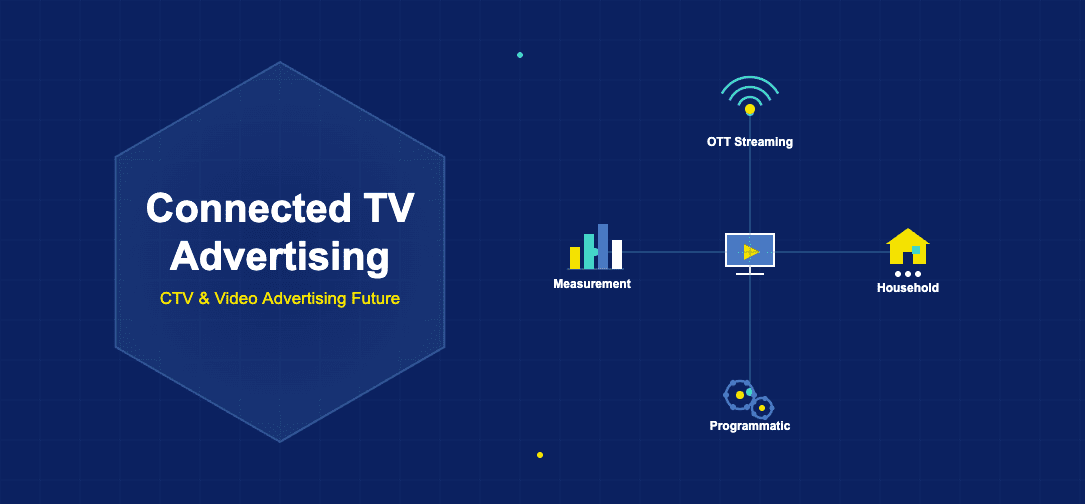
The transformation of television advertising represents one of the most significant shifts in digital marketing infrastructure in the past decade. The connected television advertising market has reached a forecast valuation of $26 billion in 2025, with 62% of United States households now equipped with CTV enabled devices. This explosive growth reflects fundamental changes in how consumers access video content and how advertisers can deliver targeted messages to increasingly fragmented television audiences across multiple platforms and devices.
Connected television advertising technology has evolved far beyond simple video ads inserted into streaming content. Modern CTV advertising encompasses sophisticated audience targeting capabilities, programmatic buying platforms that automate media purchasing, real time measurement systems that track campaign performance across numerous variables, and brand safety mechanisms that protect advertiser reputation in the uncertain streaming environment. Understanding this technology landscape has become essential for marketers seeking to allocate budgets effectively in an era where traditional linear television viewing continues declining.
Distinguishing CTV from Linear Television and OTT
The terminology surrounding television advertising has become increasingly confusing as consumption patterns have fragmented across multiple technologies and platforms. Understanding the distinctions between linear television, over the top content, and connected television is fundamental to developing effective advertising strategies.
Linear television refers to traditional broadcast or cable television where content is delivered on a fixed schedule determined by the network. Viewers must watch advertisements that air at predetermined times without the ability to skip or personalise the ad experience. Linear television has dominated advertising budgets for decades but continues declining as consumers shift toward more convenient viewing options.
Over the top, or OTT, content refers to video delivered via the internet that bypasses traditional distribution channels. Netflix, Amazon Prime Video, Disney Plus, and YouTube represent major OTT platforms. These services may be subscription based, ad supported, or hybrid models combining both revenue streams. OTT platforms deliver content through various devices including smartphones, tablets, laptops, and televisions.
Connected television specifically refers to television sets or external devices such as streaming boxes, stick devices, or smart TVs that connect to the internet and enable viewing of digital content directly on the television screen. CTV advertising occurs when advertisers deliver targeted messages through these television connected devices, typically within OTT content or free ad supported streaming television services.
Understanding CTV Ad Delivery Technology
The technical infrastructure enabling CTV advertising represents a dramatic departure from linear television’s broadcast model. Rather than delivering identical advertisements to all viewers in a geographic region, CTV ad technology enables household level targeting where different viewers in different homes can see completely different advertisements for the same content simultaneously.
CTV ad delivery begins with programmatic ad exchanges where advertisers bid in real time for access to viewer impressions. When a household initiates a video stream, the platform running that content solicits bids from multiple advertisers interested in reaching that particular household. Within milliseconds, an auction occurs, a winning advertiser is selected, and an advertisement tailored to that household is delivered and rendered on the television screen.
This real time bidding architecture requires substantial technological infrastructure. The platform must know basic information about the household viewing the content, communicate with advertising exchanges to collect bids, evaluate those bids according to the publisher’s priorities and rules, and serve the advertisement before video playback begins. All of this must occur with imperceptible latency, typically under 100 milliseconds, to avoid negatively impacting user experience.
Audience Targeting in Connected Television Environments
The power of CTV advertising derives largely from the sophisticated audience targeting capabilities enabled by modern data infrastructure. Unlike linear television where geographic targeting represents the primary segmentation available, CTV platforms can target based on numerous household characteristics and behaviours.
Household graph technology represents one approach to audience targeting in CTV environments. These systems identify multiple devices owned by a single household and collect behavioural signals from all devices to build comprehensive household profiles. If one household member searches for information about a particular product on a smartphone, the household graph system can infer that household level interest and serve relevant advertisements on the television to all household members.
Automatic content recognition, or ACR data, provides another targeting signal particularly valuable for CTV advertising. Smart televisions collect information about content being watched and when commercial breaks occur. This data, when aggregated and anonymised, provides insights into viewing behaviour and programme preferences. Advertisers use ACR data to identify households viewing content relevant to their products and serve targeted advertisements during those viewing occasions.
Additional targeting dimensions available in CTV environments include demographic characteristics such as age and income level, geographic location down to zip code or neighbourhood level, online behaviour tracked through cookies and other digital identifiers, purchase history from retail and credit card data, and interests inferred from media consumption patterns and online engagement.
Programmatic CTV Buying
Programmatic advertising, where algorithms automatically purchase digital advertising rather than humans negotiating individual deals, has matured substantially in the CTV environment. Programmatic CTV buying enables advertisers to define targeting parameters and budgets, then allow automated systems to purchase television advertising impressions in real time according to those specifications.
Programmatic platforms must integrate with multiple content publishers, manage relationships with advertising exchanges and demand side platforms, track campaign performance in real time, and adjust bidding strategies based on performance data. The automation enables significantly greater efficiency compared to traditional television buying where human buyers negotiate rates with individual networks and time slots.
However, programmatic CTV buying introduces complexity in measurement and attribution. When advertisements are purchased programmatically across multiple publishers and devices, accurately attributing offline conversions back to specific advertising exposures becomes challenging. Technology providers have developed solutions including server side tracking, offline conversion imports, and sophisticated attribution modelling to address these measurement challenges.
Frequency Management and Cross Device Considerations
One advantage of household level targeting in CTV environments is the ability to manage advertising frequency across devices. Advertisers can ensure that households see their advertisements a consistent number of times across television, mobile, and desktop rather than seeing excessive repetition on one device and zero exposure on others.
Frequency management technology tracks how many times a household has been exposed to a particular advertisement across all devices and channels. When a household approaches the frequency cap, the system deprioritises serving that same advertisement on subsequent television viewing occasions, instead showing advertisements from other campaigns or different creative variations.
Cross device frequency capping requires integration across multiple platforms and data sources. A household must be consistently identified across their television viewing, mobile device usage, and desktop browsing for frequency management to function effectively. This relies on household graph technology and unified customer data platforms that maintain persistent identifiers for households across devices.
CTV Measurement and Attribution
Measuring the effectiveness of CTV advertising remains significantly more challenging than measuring digital advertising on mobile or desktop. Television advertising has traditionally relied on estimated viewership data and survey based measurement methodologies, and CTV measurement has only recently developed the technological infrastructure for more precise tracking.
Modern CTV measurement integrates data from multiple sources including platform level data about who viewed which advertisements, survey based estimates of gross rating points similar to traditional television measurement, offline conversion data including store visits and purchases, and digital conversion data for households that subsequently engage with the advertiser’s website or app. Attribution systems attempt to synthesise these diverse data sources to understand how television advertising exposure contributes to business outcomes.
The complexity of CTV measurement stems from measurement delays and the inability to embed conversion tracking identifiers directly in television video as is standard practice on mobile and desktop. Some households may see a CTV advertisement and make a relevant purchase days or weeks later, and accurately attributing that purchase to the television exposure requires probabilistic matching based on household characteristics and behaviour patterns.
Brand Safety in Streaming Environments
Brand safety concerns emerged as major issues when CTV advertising began scaling. Because content on free ad supported streaming platforms sometimes includes controversial material or sensational topics, advertisers worried their advertisements would appear adjacent to inappropriate content that could damage brand reputation.
Technology solutions for brand safety in CTV environments include pre purchase content moderation where human or automated systems review content before advertisements are placed, contextual analysis that prevents advertisements from appearing in proximity to specific words or topics, and blocklist functionality enabling advertisers to exclude specific shows or categories of content from receiving their advertisements.
However, brand safety measures must balance advertiser concerns with publisher revenue requirements. Excessively restrictive blocklists reduce the inventory available for purchase, increase prices advertisers must pay, and reduce publisher revenue. Most CTV environments employ moderate brand safety measures that address the most egregious concerns without severely restricting available inventory.
Key CTV Advertising Platforms and Technology Providers
The CTV advertising technology landscape includes several dominant platforms that aggregate significant viewer audiences and provide infrastructure for programmatic buying. The Trade Desk represents the largest independent demand side platform enabling advertisers to purchase CTV inventory across multiple publishers. Amazon has become a major CTV force through its acquisition of the ad technology platform FreeWheel and its Amazons own Prime Video and Ads platforms. Roku OneView provides a unified platform for managing Roku device advertising alongside other CTV inventory. FAST channels, which stands for Free Ad Supported Television, have proliferated on platforms like Pluto TV and Tubi, creating new inventory for CTV advertisers.
| Characteristic | Linear TV | OTT | CTV |
|---|---|---|---|
| Delivery Method | Broadcast television signal | Internet streaming any device | Internet streaming television connected device |
| Viewing Control | Fixed schedule set by network | On demand viewing whenever desired | On demand or linear depending on service |
| Ad Targeting | Geographic region only | Household and individual level available | Household level with cross device integration |
| Measurement | Surveys and estimated impressions | Direct digital tracking possible | Hybrid probabilistic and survey based |
| Cost Structure | Fixed rates per time slot | Highly variable real time auction | Programmatic auction with floor prices |
| Layer | Function | Key Vendors |
|---|---|---|
| Demand Side Platform | Enables advertisers to bid on inventory, set targeting parameters, manage budgets | The Trade Desk, Amazon DSP, DV360 |
| Supply Side Platform | Enables publishers to manage inventory, set floor prices, optimise yield | FreeWheel, Google Ad Manager, Brightroll |
| Ad Exchange | Operates real time auction matching advertisers with available inventory | OpenX, Xandr, PubMatic |
| Household Graph and Data | Identifies households across devices and provides targeting signals | Experian, Acxiom, The Trade Desk Data |
| Measurement and Attribution | Tracks ad exposure, measures viewability, attributes conversions | Roku OneView, Nielsen, ComScore, Comscore |
The Evolution of CTV Advertising
The CTV advertising market continues evolving rapidly as household penetration increases and advertiser sophistication improves. As television budgets continue migrating from linear to connected television, publishers will invest aggressively in ad supported streaming services to capture this spending shift. Technology vendors will continue innovating around measurement, frequency management, and audience targeting to address current limitations.
The future of CTV advertising will likely include greater integration with advanced analytics and artificial intelligence systems that optimise campaign performance automatically, improved measurement methodologies that provide more granular attribution insights, and expansion of contextual targeting capabilities as privacy regulations limit reliance on personal data. Advertisers who develop expertise in CTV advertising technology and measurement methodologies will capture disproportionate value as television advertising budgets continue concentrating on the most effective channels.
Related reading: Real-Time Bidding Technology: How Millisecond Auctions Are Revolutionising Digital Ad Buying
According to CoinGecko’s 2024 annual crypto report, total cryptocurrency market capitalisation exceeded $3.5 trillion by the end of 2024, reflecting renewed institutional interest following spot ETF approvals in the United States.
Data from Chainalysis’s 2024 Global Crypto Adoption Index shows that emerging markets in South and Southeast Asia continue to lead grassroots cryptocurrency adoption, driven by remittance use cases and limited access to traditional banking services.
For more coverage on related topics, explore our dedicated section on cryptocurrency trends.