Automation can help a sales team contact more prospects without manually scheduling every email. But automation alone does not make an outreach campaign effective. If the targeting is weak, the message is generic, or the follow-ups continue after a prospect has lost interest, automation simply increases the number of poor emails being sent.
Modern cold email software can automate sequences, personalize messages, manage multiple sending accounts, and track campaign activity. The strategy behind those workflows still determines whether automation creates useful sales conversations or more ignored emails.
Here are the strategies B2B teams should build into their automated outreach.
Build Automation Around Buying Signals, Not Just a Calendar
The simplest automated sequence looks like this: email on day one, follow-up on day three, another email on day seven.
There is nothing inherently wrong with timed sequences. The problem starts when every prospect receives exactly the same treatment regardless of what they do.
A better approach is to use available buying signals to determine who should receive what message and when.
For example, a prospect who recently expanded their sales team may be more relevant to a sales productivity solution than someone who has shown no indication of growth. Similarly, a company that has just adopted a technology your product integrates with may deserve a different opening message from a company with no identifiable need.
Useful triggers can include:
- A new executive joining the company
- Recent funding or expansion
- Hiring for relevant roles
- Adoption of a specific technology
- A product or market launch
- Engagement with your website or content
- A previous interaction with your sales team
The important distinction is that automation should react to useful information, rather than simply determine when the next email is sent.
Separate Prospect Segments Before You Automate
One sequence rarely works equally well across an entire database.
A 200-person SaaS company, a multinational enterprise, and a small agency may all fit your broad ICP but have completely different priorities. Sending the same automated message to all three creates a relevance problem before the campaign even begins.
Start by segmenting prospects around characteristics that affect your pitch.
For example, a B2B software company could create separate campaigns for:
- Companies using a competing product
- Companies using an integration you support
- Recently funded companies
- Companies actively hiring for relevant roles
- Existing prospects who previously engaged
- Accounts that match your ICP but have shown no active signal
Each segment can then have its own opening message, proof points, offer, and follow-up logic.
This also makes testing more meaningful. Instead of asking whether “the campaign” works, you can identify which audience and message combination is producing qualified responses.
Personalize the Reason for Contact, Not Just the Name
Adding a prospect’s first name is not meaningful personalization.
The useful part of a personalized cold email is explaining why this particular company or person is relevant to the conversation.
A strong opening might reference a specific business development, technology choice, hiring pattern, or role responsibility. The rest of the email can remain relatively concise and repeatable.
For example:
“Noticed your team is hiring several enterprise AEs across the US. That usually creates additional pressure on pipeline generation.”
This is more useful than:
“Hi Sarah, I noticed you work at ABC Corp.”
The first sentence gives the prospect a reason to believe the sender understands their situation.
AI can help research and generate these opening lines at scale, but automation should still include safeguards. Incorrect personalization can be worse than no personalization because it immediately signals that the message was generated without verification.
Before automating personalized messaging, establish rules around which data sources can be used and what claims the system is allowed to make.
Make Follow-Ups Change the Conversation
A common mistake is treating follow-ups as reminders of the first email.
A sequence might send:
“Just following up on my last email.”
Then:
“Wanted to bump this to the top of your inbox.”
Then:
“Any thoughts?”
None of these messages give the prospect a new reason to respond.
Instead, each follow-up should introduce something different: another pain point, a relevant example, a useful resource, a new observation, or a simpler call to action.
For example:
Email 1: Introduce the problem and why you’re reaching out.
Email 2: Add a specific observation about the prospect’s business.
Email 3: Share a relevant customer result or use case.
Email 4: Reduce the commitment by asking a simple qualifying question.
This approach turns the sequence into a progressive conversation rather than four versions of the same request.
Use Engagement Data to Control the Next Step
Automated sequences should respond to prospect activity where possible.
Someone who replies should immediately exit the automated sequence. Continuing to send sales emails after a prospect has responded creates an obvious disconnect.
Similarly, a prospect who repeatedly engages with messages may warrant a different follow-up from someone who has shown no engagement.
Useful campaign signals include:
- Replies
- Positive replies
- Bounces
- Unsubscribes
- Link clicks
- Meeting bookings
- Sequence completion
- Engagement by individual campaign
Be careful with open rates. Email privacy changes mean opens are not always a dependable indicator of genuine interest. Replies, meetings, and downstream pipeline activity provide stronger signals of whether an outreach campaign is actually working.
Don’t Optimize for Reply Rate Alone
A higher reply rate does not automatically mean a better campaign.
Imagine Campaign A generates 50 replies from 1,000 prospects, while Campaign B generates 30 replies. At first glance, Campaign A looks stronger.
But if only two of those 50 replies are qualified opportunities while Campaign B generates ten relevant conversations, the second campaign may be producing more useful sales outcomes.
Track the full funnel:
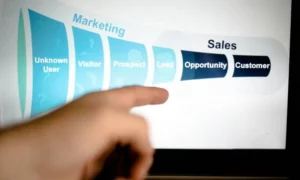
Delivered → Replies → Positive replies → Meetings → Qualified opportunities → Pipeline
This allows teams to distinguish between messaging that generates curiosity and messaging that generates commercially useful conversations.
It also prevents teams from optimizing toward tactics that encourage low-quality responses simply because they improve an engagement metric.
Test One Variable at a Time
Automation makes experimentation easier, but changing five things simultaneously makes the results difficult to interpret.
Instead, isolate variables such as:
- Subject line
- Opening message
- Value proposition
- Call to action
- Follow-up timing
- Audience segment
- Personalization approach
If two campaigns use different audiences, subject lines, offers, and CTAs, you cannot confidently attribute the performance difference to one particular change.
For meaningful comparisons, keep the audience and offer relatively consistent while testing one major variable.
Also give campaigns enough volume to produce a useful sample before making decisions. A handful of replies is rarely enough evidence to declare one version the winner.
Know When to Stop Automating
More touches are not always better.
A prospect who has ignored several messages may need a different approach, a longer pause, or no further outreach at all. Continuing to send increasingly aggressive follow-ups can damage both the prospect relationship and your sending reputation.
Set clear exit conditions for every sequence.
A prospect should typically leave the automated workflow when they:
Reply
Book a meeting
Unsubscribe
Bounce
Become an active sales opportunity
No longer meet your targeting criteria
This is one of the most important differences between responsible automation and simply increasing send volume.
Add Another Channel When Email Has Reached Its Limit
Some prospects will not respond to email regardless of how well the sequence is written.
For high-value accounts, consider coordinating email with other sales touches such as LinkedIn engagement or a phone call. The objective should not be to bombard the prospect across every available channel. Instead, use another channel when there is a logical reason to continue the conversation.
For example, a sales representative might send a relevant email, engage with the prospect’s LinkedIn activity, and then follow up with a short call if the account meets a high-value threshold.
Multichannel outreach is most useful when each touch adds context rather than repeating the same sales pitch.
Build the Automation Around the Sales Process
The most effective automation strategy is not the one with the most sophisticated sequence builder. It is the one that fits the way your sales team actually qualifies and converts leads.
Before launching a campaign, define:
Who: Which prospects qualify?
Why: What business problem gives you a reason to contact them?
When: What trigger makes the timing relevant?
What: What specific value can you offer?
Next: What should happen after a reply, click, meeting, or no response?
Once these decisions are clear, automation can handle repetitive execution without replacing sales judgment.
Conclusion
Automation should remove repetitive work, not remove strategy from outbound.
The strongest campaigns combine accurate targeting with relevant triggers, useful personalization, varied follow-ups, controlled testing, and clear exit conditions. They also measure success beyond opens and replies by tracking qualified conversations and pipeline generated.
For cold email outreach, the practical goal is therefore not to maximize the number of automated touches. It is to create a system where the right prospect receives a relevant message at an appropriate time, and where the next action changes according to what that prospect does.
That is what turns automation from a high-volume sending mechanism into a repeatable lead-generation process.