
Claude Fable 5.2 vs 5.1: What Changes When You Upgrade an AI Agent

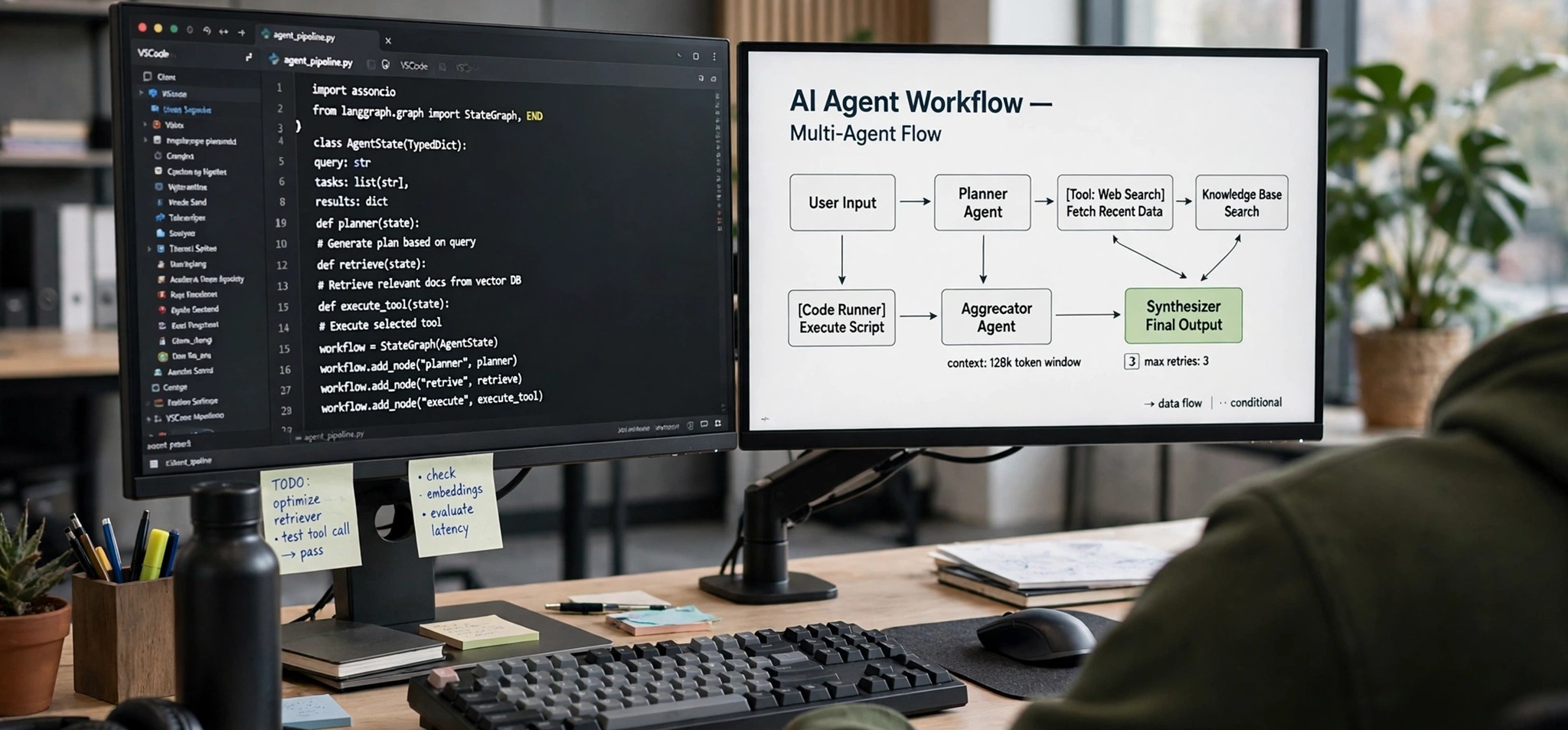
Changing a model name is the easy part of moving an agent to Claude Fable 5.2. The harder work is deciding what happens to its conversation history, thinking blocks and tools when the next request goes out.
Anthropic positions Fable 5.2 for sustained agent work, research and tasks that carry analysis through to finished documents. Its published capacity is a one-million-token context window with up to 128,000 output tokens. Those figures describe room to work. They do not establish that an existing application can swap versions without changing anything else.
The useful comparison with Fable 5.1 starts with Anthropic's migration guide: what is newly enforced, which old objects remain usable and where the application needs to take control.
Claude Fable 5.2 makes conversation history part of the upgrade
One migration issue concerns prefix checks on thinking blocks. If an application changes earlier system instructions, tools or messages, then replays affected thinking blocks against that altered history, the request can fail its consistency check.
This matters for agents that assemble each turn from stored pieces. A prompt update, a tool-definition change or a rewritten earlier message may look harmless to the application while changing the context to which those blocks belong.
Retrying the same inconsistent request does not repair the history. The client needs to construct a valid request, following Anthropic's documented handling of the affected content.
Before rollout, identify which component owns the conversation. Does it preserve the full response, or store only the text shown to the user? Does a middleware step rewrite earlier messages? Those are concrete questions about the application's behavior, not reasons to avoid upgrading.
A rollback must account for what the newer model produced
Anthropic's migration documentation also states that Fable 5.1 cannot read Fable 5.2 thinking blocks. A fallback that merely changes the model ID while replaying the same history can therefore be incomplete.
Decide how a session will move between versions before relying on that fallback. Test the documented handling of model-specific content in an isolated evaluation. Do not wait for a production failure to discover that the older model cannot consume the conversation it has been given.
For teams evaluating the model through reAPI, the same principle applies: use the selected interface's documented request and history format. A common service entry point does not erase model-specific semantics.
The distinction is especially relevant when an agent hands work to another model. A human-readable summary and a replay of native thinking content are different objects. The application needs to know which one it is passing.
Effort should be evaluated against completed work
Fable 5.2 uses adaptive thinking and defaults to high effort. Adaptive thinking itself is not a new invention in this upgrade; it should not be presented as a difference that first appeared in 5.2.
For a business, the useful question is whether the selected effort produces an acceptable result with a manageable amount of review. A response with fewer visible words can still involve substantial reasoning. A longer response can still leave the task unfinished.
Consider a proposed evaluation in which the agent turns an internal brief into a structured project document. Define the required sections, the facts that must be preserved and the questions that should remain unresolved. Then compare versions on those requirements.
Record correction turns and human review separately from the initial generation. That prevents a fast first response from looking efficient when it creates a long repair process.
When calculating API spend, use actual usage categories and the rate applicable to the service and mode selected. A lower unit rate alone cannot establish a lower cost per accepted document.
Tool changes can be more disruptive than prose changes
The migration guide identifies a computer-tool change: the older computer_20251124 tool is no longer available for Fable 5.2 outside the stated Bedrock exception. An application using that tool needs to follow the replacement path rather than assuming that familiar message formatting will keep it working.
Advisor configurations also have a version constraint. A Fable 5.2 executor requires a Fable or Mythos 5.2 advisor. That is relevant only to applications using the feature, but it is a concrete check for those that do.
Keep these changes separate from limitations that already existed in 5.1. A migration document is easier to act on when it distinguishes a new requirement from an existing behavior that still applies.
This also keeps the evaluation honest. If a tool fails because its schema is obsolete, that is an integration issue. It should not be scored as the model misunderstanding the task.
Move a representative workflow first
Choose a workflow with clear boundaries and a known review process. Run it with fresh conversations and with the kinds of continued sessions the application actually uses. Include an instruction update and a tool-definition change if those occur in normal operation.
Inspect the request history, completion status, tool calls and final artifact. A successful short chat is useful, but it does not exercise the history-handling path that matters to a long-running agent.
TokLab also lists Claude Fable 5.2. If comparing service routes, retain the same task definition and record any differences in exposed controls. Do not attribute a client-side configuration difference to the model itself.
Keep the rollout small enough that failures are explainable. Once history handling and the relevant tools work correctly, broader evaluation can focus on answer quality and cost.
Upgrade questions
Can I change only the model ID?
Some simple requests may need little else. Agents that replay thinking blocks or use affected tools need the migration checks described above.
Can Fable 5.1 read a Fable 5.2 session unchanged?
Anthropic states that 5.1 cannot read 5.2 thinking blocks. A downgrade must handle that content according to the documented migration behavior.
Does a larger context window guarantee fewer mistakes?
No. Capacity and correctness are different properties. Evaluate whether the model uses the supplied material accurately and produces the required result.
Treat the upgrade as an application change
Claude Fable 5.2 may be worth evaluating for substantial agent work, but an upgrade is only useful when the surrounding application preserves valid history and uses supported tools. Resolve those mechanics first. Then compare the finished work, the corrections and the bill on terms the business can actually use.






Comment