
How Do Ruby on Rails and Flutter Developers Build a Mobile App Together?

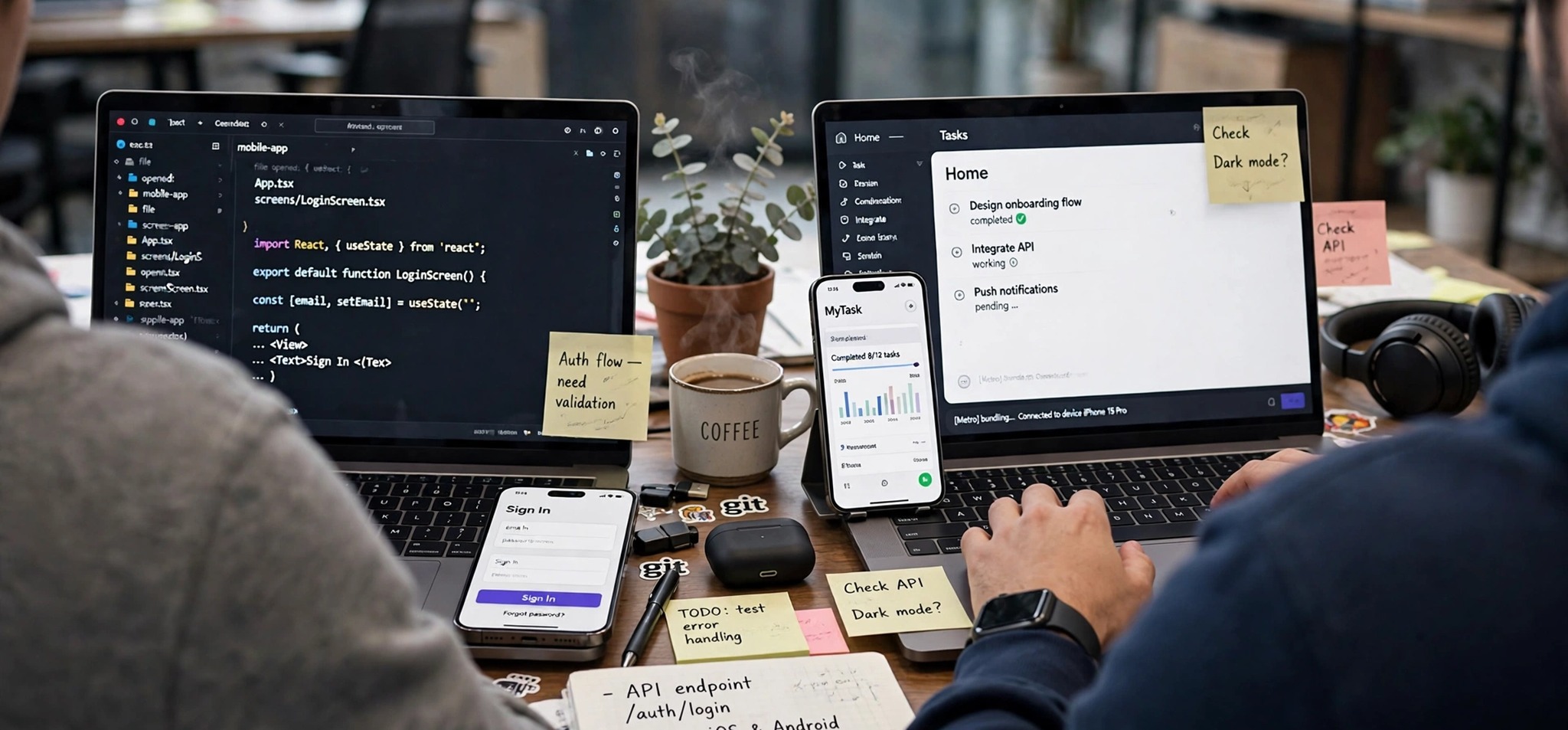
For a startup racing to launch a mobile product, the technology stack is one of the earliest and most important decisions a founder makes. One pairing that keeps proving itself is Ruby on Rails on the back end and Flutter on the front end. Founders who hire Ruby on Rails developers get a team that can stand up secure, well-structured server logic in record time, and the framework's conventions keep that logic clean as the product grows.
The user-facing side needs equal attention. When startups hire mobile app developers who specialize in Flutter, they get a single codebase that delivers a polished, native-feeling experience on both iOS and Android. That means one team, one set of features, and one release cycle instead of two parallel builds draining budget and time.
Put together, the two roles form a lean, efficient product engine. Smart founders hire Ruby on Rails developers and hire mobile app developers as complementary partners, with the first group owning data, business rules, and APIs, and the second owning screens, interactions, and performance on the device. The result is a faster path from idea to app store, which is exactly what early-stage companies need.
How the Two Sides Fit Together
The architecture is simple and effective. Ruby on Rails powers the back end: user accounts, authentication, payments, notifications, database management, and the business logic that makes the product unique. It exposes this functionality through a clean API, usually REST or GraphQL. Flutter, Google's UI toolkit, builds the mobile interface and talks to that API to fetch and send data.
Because the API is the contract between the two, each team can work in parallel. Rails developers define endpoints, data formats, and error responses. Flutter developers build screens against those definitions, often using mock data until the real endpoints are ready. When both sides agree early on how the API behaves, integration becomes smooth instead of stressful.
Why Rails Is a Strong Back End for Startups
Rails was built around the idea of getting a product working quickly without sacrificing quality. Its convention-over-configuration approach removes countless small decisions, so developers spend time on features rather than setup. Built-in tools for database migrations, background jobs, testing, and security cover much of what a young product needs from day one.
The Rails ecosystem is also mature. Libraries for authentication, payments, file uploads, and admin dashboards are well tested and widely used, which lowers risk for founders who cannot afford to debug unproven code. Many successful product companies started on Rails and scaled with it, which shows the framework can handle real growth when the architecture is sound.
Why Flutter Is a Strong Front End for Startups
Flutter lets a single team build for multiple platforms from one codebase, which is a major advantage when resources are limited. Its hot reload feature lets developers see changes instantly, speeding up design iteration and bug fixing. Its rich widget library produces smooth animations and consistent visuals across devices, helping a young brand look polished from the first release.
For founders, the business case is clear. One codebase means lower development cost, simpler maintenance, and faster feature rollout. A bug fixed once is fixed for every user, and a new feature ships to both platforms at the same time.
What Collaboration Looks Like Day to Day
In a healthy workflow, the teams start by agreeing on the product's core user journeys and the data each screen needs. The Rails team designs the API and documents it, ideally with tools that generate interactive specifications. The Flutter team then builds the interface and connects it to those endpoints.
Authentication is a good example. Rails typically handles sign-up, login, and token management, while Flutter stores the token securely on the device and attaches it to each request. Push notifications work similarly: Rails decides when to send them and what they say, and Flutter handles how they appear and what happens when a user taps them. Real-time features, offline support, and payments all follow the same pattern of clear responsibilities and shared contracts.
Regular syncs keep things moving. Short standups, shared staging environments, and automated tests that check the API against what the mobile app expects catch mismatches early. When an endpoint changes, versioning helps older app releases keep working while users update, which is critical in the mobile world where not everyone installs updates immediately.
Common Pitfalls and How to Avoid Them
Poorly designed APIs are the most common source of friction. If endpoints return too much data or too little, the mobile app becomes slow or complicated. Agree on response structures early and keep them consistent. Another pitfall is neglecting performance. Rails queries that work fine in testing can slow down under real traffic, and Flutter screens that rebuild too often can feel sluggish. Both teams should profile their work regularly.
Security deserves attention from the first sprint. Validate input on the server, protect sensitive endpoints, and never trust the client alone. Finally, keep communication open. Misunderstandings about who owns validation, error messages, or data formatting cause more delays than technical difficulty.
Building the Right Team
Founders should look for Rails engineers with production experience, including API design, testing practices, and database optimization. For the mobile side, look for Flutter specialists who have published real apps and understand state management, performance tuning, and app store requirements. The best candidates on both sides communicate clearly and think about the end user, not just their own layer of the stack.
When you hire Ruby on Rails developers and hire mobile app developers who already know how to work across that API boundary, onboarding is faster and fewer misunderstandings slow the project. Founders who cannot find this talent locally often turn to vetted remote talent networks, which widen the pool and shorten the time from job post to productive team.
Another smart move is investing in shared standards: a single style guide for API design, a shared definition of done, and a joint review process for changes that affect both sides. This keeps the codebase healthy as the team grows.
The Bottom Line
Ruby on Rails and Flutter complement each other naturally. Rails delivers a fast, reliable back end, and Flutter delivers a beautiful, cross-platform front end. For tech startups, founders, and product companies, the combination offers speed, cost efficiency, and room to scale. With the right developers working in sync, a mobile product can move from concept to launch faster and with far fewer compromises.







Comment