
China’s Cloud Storage Expansion Overseas: How TeraBox, PikPak, and UC Drive Are Reshaping the Global Storage Market


For years, the global cloud storage market has largely been dominated by Western platforms such as Google Drive, Dropbox, OneDrive, and iCloud. These services were primarily designed around productivity, enterprise collaboration, and file synchronization.
Meanwhile a different model has quietly emerged from China.
Instead of focusing on office workflows, many Chinese cloud storage platforms expanding overseas are optimized for:
- Streaming media playback
- Large file distribution
- Magnet / torrent integration
- Cloud caching
- Telegram-based sharing ecosystems
- Mobile-prioritized media consumption
This has created what could be described as a new category:
“Streaming-oriented cloud storage.”
Among the most notable Chinese platforms expanding internationally today are:
- Baidu-backed TeraBox
- Alibaba ecosystem’s UC Drive
- Xunlei-linked PikPak
Each represents a fundamentally different approach to the future of cloud storage.
1. TeraBox: The Internationalization of the Baidu Netdisk Model
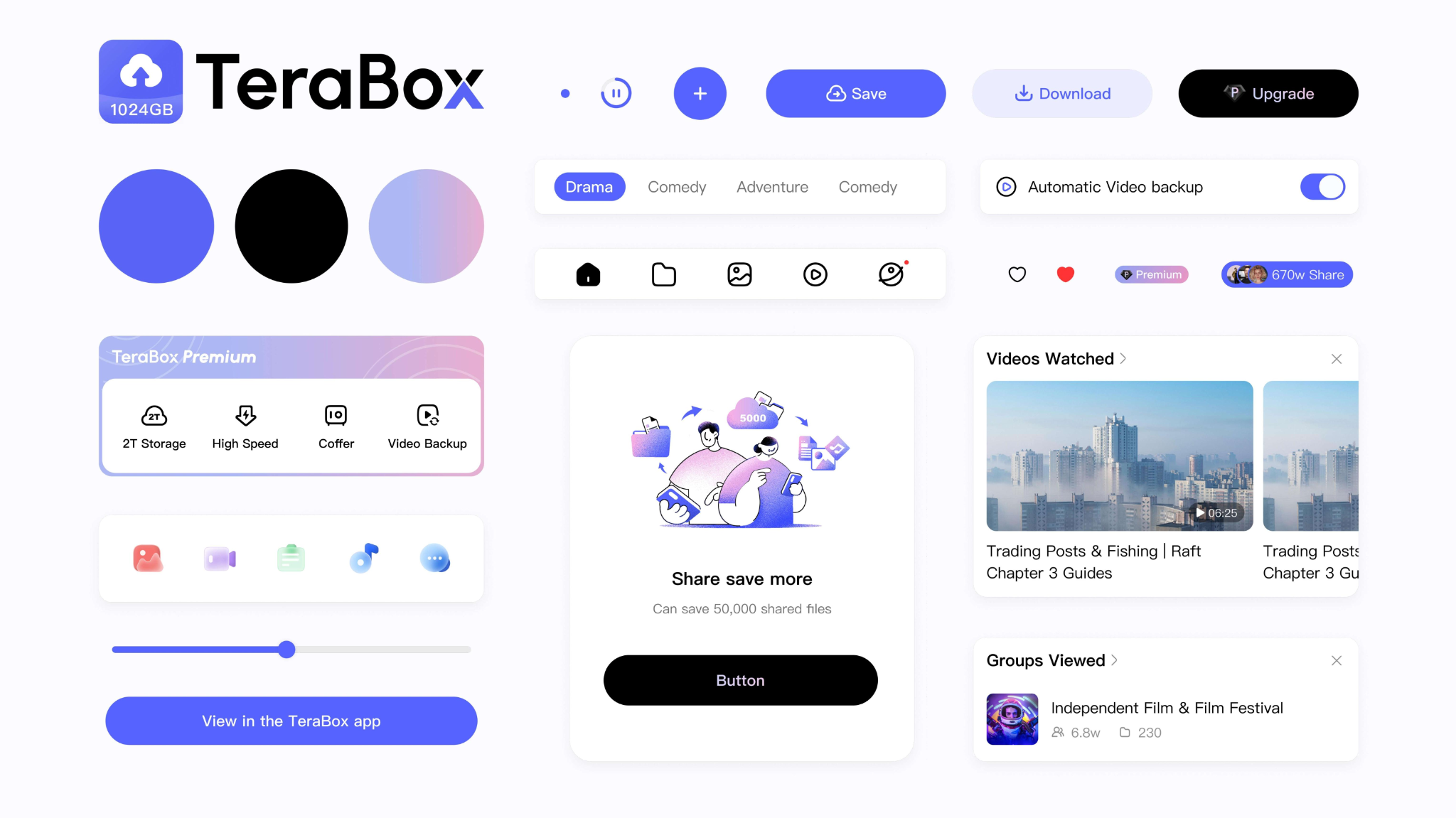
TeraBox is currently one of the largest Chinese cloud storage products operating internationally.
Originally launched as Dubox, the platform gained rapid adoption by offering:
1TB of free cloud storage
Many users and analysts consider TeraBox to effectively be an internationalized version of Baidu Netdisk.
Product Positioning
Unlike Dropbox or Google Drive, TeraBox is heavily optimized for media consumption rather than productivity.
Core features include:
- Large free storage quotas
- Integrated video playback
- Mobile backup
- File sharing
- Multi-device sync
Its strongest markets are believed to include:
- Southeast Asia
- India
- Latin America
- Middle East
Traffic & Scale
According to Similarweb estimates and public market data:
| Platform | Estimated Monthly Visits (Apr 2026) |
| TeraBox | 150M–200M |
| Dropbox | ~120M |
| Google Drive | 2B+ |
TeraBox has become one of the fastest-growing Chinese cloud storage platforms in overseas markets.
2. PikPak: The Rise of “Streaming Storage”
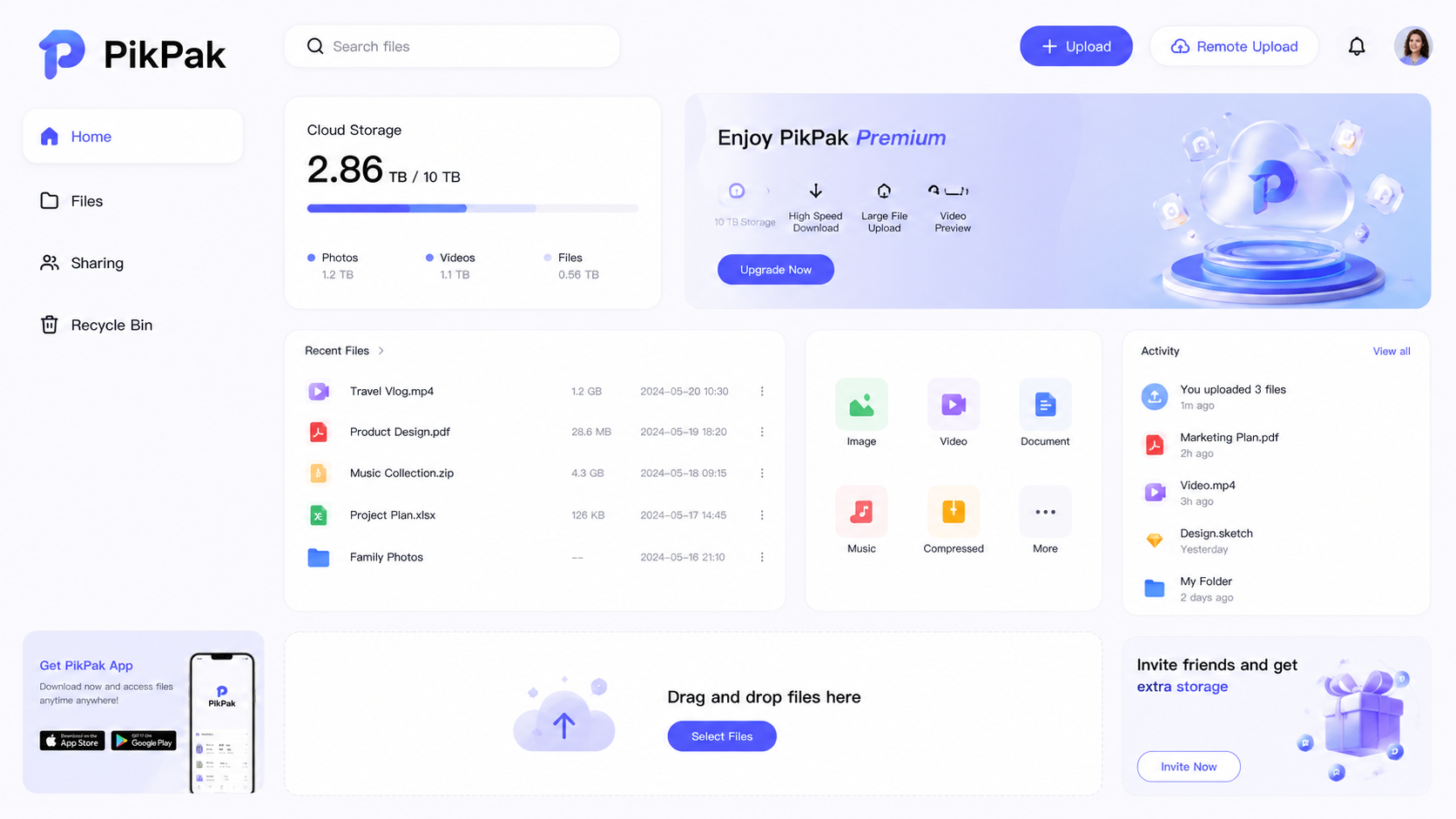
If TeraBox is closer to a traditional international cloud storage platform, then PikPak is more like:
“A cloud-based BT engine + Streaming NAS.”
The real reason behind its explosive growth is not storage capacity, but rather:
- Instant Magnet link saving
- Online streaming
- Telegram bot transfers
- Cloud-based offline downloading
Why is PikPak Strongly Linked to Xunlei?
Although PikPak has never officially claimed any relationship with Xunlei, many users discovered traces related to Xunlei through early APK reverse engineering analysis, including:
- sandai.net
- xunlei
- xunlei_spdy
Among them, sandai.net was one of Xunlei’s core domains in its early years.
In addition, PikPak’s:
- Instant file-saving logic
- Offline downloading mechanism
- Caching system
are also highly similar to Xunlei’s technology architecture.
As a result, many overseas users directly refer to PikPak as: “The international version of Xunlei.”
Today, many users’ workflow has evolved into: Telegram → PikPak → Online Streaming
In essence, PikPak no longer feels like a traditional cloud drive, but more like:
- An online NAS
- A cloud downloader
- A streaming media resource library
Traffic & Market Performance
Estimated monthly traffic (Apr 2026):
| Platform | Estimated Monthly Visits |
| PikPak | 30M–50M |
| Xunlei | 70M–100M |
| Real-Debrid | ~10M |
Although its overall scale is smaller than TeraBox, PikPak has extremely strong user loyalty within:
- Telegram communities
- Reddit communities
- Anime fandoms
- ASMR communities
3. UC Drive: Alibaba’s Tool-Ecosystem Strategy
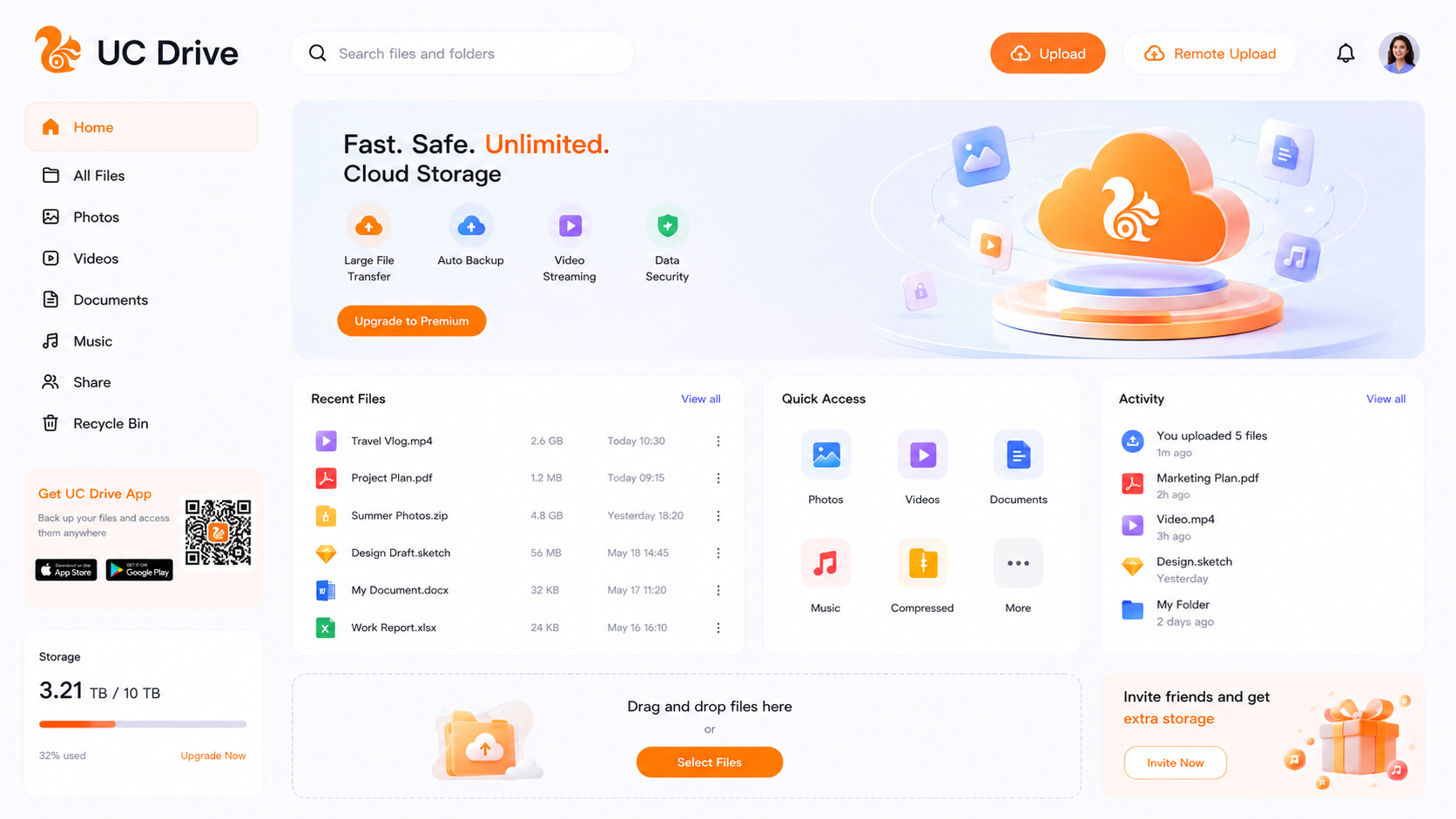
Compared with PikPak’s media-centric approach, UC Drive represents a more utility-focused model.
Built around the long-established UC Browser ecosystem, UC Drive benefits from Alibaba’s historical strength in:
- Android distribution
- mobile browsers
- emerging market penetration
Particularly in:
- India
- Indonesia
- Middle East
UC Browser previously held substantial market share.
Comparative Positioning
| Feature | UC Drive | PikPak |
| Browser integration | Strong | Moderate |
| Magnet ecosystem | Weak | Extremely strong |
| Telegram integration | Weak | Strong |
| Media playback | Strong | Extremely strong |
4. The Key Difference Between Chinese and Western Cloud Storage Platforms
Most Western cloud storage services focus heavily on:
- Office collaboration
- Document synchronization
- Enterprise productivity workflows
Chinese cloud storage platforms expanding overseas, however, are evolving in a very different direction. Their focus is increasingly centered around:
- Video streaming
- Online playback
- Content distribution
- Magnet-link ecosystems
In many ways, these platforms are no longer just “cloud drives.”
They are gradually transforming into cloud-based media and content platforms.
5. Is There Any Opportunity for New Platforms?
Absolutely — and the opportunity is still significant.
The international market continues to lack platforms that can reliably provide:
- Stable online streaming
- Long-term file availability
- Deep Telegram integration
- High-speed large-file distribution
The success of platforms like PikPak and TeraBox has already demonstrated that global users are not simply looking for productivity-focused cloud storage.
What many users actually want is:
- A cloud-based resource library
- An online media player
- A fast and convenient content distribution platform

6. Conclusion
China’s overseas cloud storage industry is now evolving along several clearly differentiated paths.
| Ecosystem | Representative Platform | Core Strategy |
| Baidu ecosystem | TeraBox | Mass-market cloud storage |
| Xunlei ecosystem | PikPak | Streaming-oriented resource cloud |
| Alibaba ecosystem | UC Drive | Utility & browser ecosystem |
At the same time, the line between cloud storage services and streaming platforms is becoming increasingly blurred — and that trend is likely to accelerate in the years ahead.






Comment