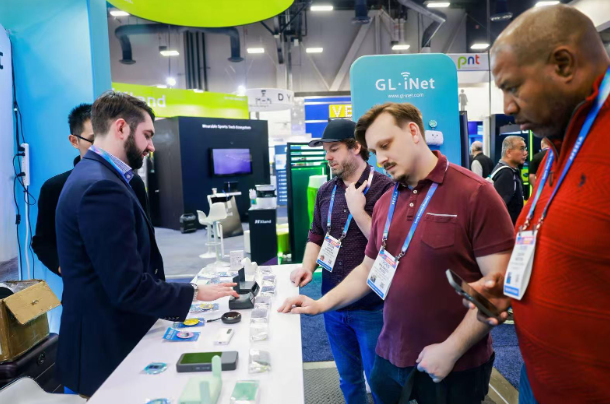
At CES 2026, GL.iNet made it clear that it no longer sees itself as just a router manufacturer. With the unveiling of the Comet Pro and Comet 5G, the company is entering the remote KVM market with a distinctly modern and strategic proposition—one aimed squarely at the realities of distributed work, decentralized IT, and infrastructure resilience.
Rather than chasing consumer trends, GL.iNet is targeting a growing segment of technically proficient users: remote professionals, SMB IT teams, MSPs, and independent operators who need enterprise-grade control without enterprise complexity.
A Calculated Move Into an Underserved Category
Remote KVMs have traditionally been expensive, difficult to deploy, and locked behind proprietary ecosystems. GL.iNet’s approach reframes the category by emphasizing accessibility, flexibility, and ownership—values that already define its networking portfolio.
The Comet Pro delivers hardware-level access to machines in a compact desktop form factor, combining HDMI passthrough, USB device support, and dual-band Wi-Fi 6. This removes the assumption that a wired Ethernet connection is always available, significantly broadening deployment scenarios in home offices, branch locations, and temporary setups.
The integrated touchscreen acts as a local command interface, allowing configuration, monitoring, and access control without requiring a connected computer. From a business perspective, this reduces setup time, minimizes support overhead, and lowers the barrier to adoption for non-specialist users.
Performance and Control Without Software Lock-In
One of the most commercially relevant aspects of the Comet Pro is its browser-based access model. Users can remotely control systems from Windows, macOS, or Linux without installing dedicated client software. This simplifies IT workflows, especially in heterogeneous environments where device standardization is impractical.
Equally important is GL.iNet’s support for self-hosted deployments, enabling organizations to retain full control over their remote access infrastructure. In a market increasingly sensitive to data sovereignty, compliance, and vendor lock-in, this design choice positions GL.iNet as a privacy-aligned alternative to cloud-dependent solutions.
Comet 5G: Business Continuity as a Built-In Feature
The Comet 5G extends this strategy by addressing one of the most persistent risks in modern IT: network failure. By integrating a 5G RedCap cellular module with global 4G LTE fallback, the device can operate independently of local network conditions.
This capability is reinforced by multi-network failover, automatically prioritizing Ethernet, then Wi-Fi, then cellular connectivity to keep the management channel online. For businesses managing remote assets, kiosks, edge servers, or unattended systems, this translates directly into reduced downtime and faster recovery.
With 64GB of onboard eMMC storage, the Comet 5G can locally store OS images and installation media, further reducing mean time to recovery during system failures.
Why the Comet Series Makes Strategic Sense
From a market positioning standpoint, the Comet lineup aligns tightly with GL.iNet’s existing customer base while opening doors to adjacent enterprise and SMB segments.
Key strategic advantages include:
- Expansion beyond networking into infrastructure control
- Appeal to SMBs and MSPs seeking cost-effective remote management
- Reduced dependence on third-party cloud ecosystems
- Alignment with remote-first and edge-computing trends
- Clear differentiation from legacy KVM vendors
A Signal of Long-Term Intent
GL.iNet’s CES 2026 announcements suggest a deliberate shift toward becoming a broader infrastructure solutions provider. By modernizing KVM hardware with networking intelligence, cellular resilience, and user-centric design, the company is positioning itself at the intersection of connectivity, control, and autonomy.
For businesses navigating distributed operations and increasingly fragile networks, the Comet Pro and Comet 5G signals a pragmatic response to how work and infrastructure are evolving.