
Can We Talk About Botox? MedAesthetics Explores the Truth Behind the World’s Most Discussed Wrinkle Treatment

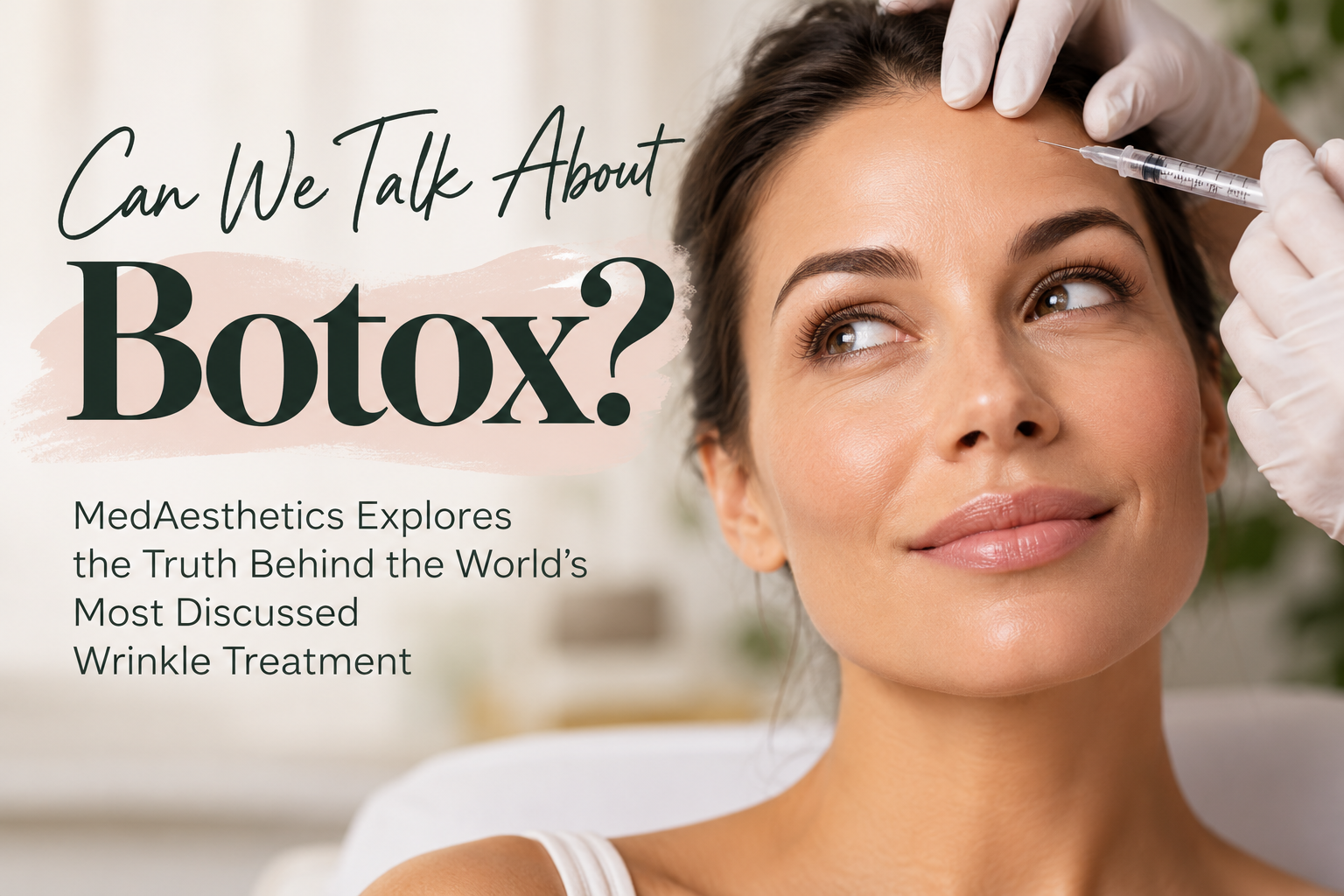
Botox has transformed the conversation around facial ageing, but how much do people really understand about it? Australian aesthetics clinic MedAesthetics highlights why education, expectations and professional advice matter.
Botox is arguably the most recognisable name in cosmetic medicine. Once associated almost exclusively with Hollywood celebrities and discreet appointments, it has become part of everyday conversations about beauty, ageing and personal appearance.
But while the treatment has achieved extraordinary cultural recognition, public understanding has not always kept pace.
Questions about how Botox works, its potential risks, the difference between expression lines and deeper wrinkles, and the importance of qualified medical practitioners remain highly relevant.
For Australian cosmetic aesthetics provider MedAesthetics, the growing conversation about Botox also highlights a broader issue: the importance of understanding facial ageing before making decisions about cosmetic procedures.
With more people researching aesthetic treatments online, the distinction between social media trends and reliable clinical information has never been more important.
Botox: From Hollywood Secret to Household Name
Few cosmetic treatments have undergone such a dramatic transformation in public perception.
During the early years of its cosmetic use, Botox was frequently portrayed as something reserved for actors, models and wealthy public figures.
Today, it is discussed openly across social media, lifestyle magazines and mainstream entertainment.
Its cultural popularity has also produced misconceptions.
Some people associate Botox with an unnatural or frozen appearance, while others regard it as a relatively routine cosmetic procedure.
Neither perception tells the whole story.
Botox is a brand name for a prescription medicine containing botulinum toxin type A. In authorised medical applications, it temporarily affects communication between nerves and targeted muscles.
In cosmetic medicine, botulinum toxin products may be used for certain facial expression lines, subject to local regulatory approvals and individual clinical assessment.
However, these medicines have limitations, contraindications and potential adverse effects. Their suitability cannot be determined from an online photograph or social media recommendation.
Why Facial Lines and Wrinkles Are Not All the Same
One of the most important concepts in facial aesthetics is the distinction between dynamic and static wrinkles.
Dynamic wrinkles develop through repeated facial movements such as smiling, frowning, squinting and raising the eyebrows.
Over time, some expression lines become visible even when the face is resting.
These are often described as static wrinkles.
Other visible signs of ageing are associated with changes in collagen, elastin, skin hydration, sun damage and the distribution of facial volume.
These differences help explain why there is no single treatment suitable for every facial concern.
At MedAesthetics, understanding the individual characteristics of facial ageing is an important part of the consultation process.
The clinic provides information on facial lines and wrinkles, outlining the different considerations involved in assessing age-related facial changes.
For anyone exploring cosmetic medicine, understanding what causes a particular concern is a more useful starting point than choosing a treatment based on popularity alone.
What Can Botox Actually Do?
Botox works through a specific biological mechanism.
Its active substance temporarily blocks the release of acetylcholine at certain nerve endings, reducing activity in the muscles receiving those signals.
In appropriately selected patients, authorised cosmetic applications may temporarily reduce the appearance of particular expression lines.
However, the effects are not permanent, and responses vary between individuals.
Botox also does not address every cause of facial ageing. Skin pigmentation, sun damage, facial volume changes and certain deeper lines involve different biological processes.
Like other prescription medicines, Botox can cause adverse effects. Depending on the treatment and circumstances, these may include local discomfort, bruising, headache, eyelid drooping or unwanted muscle weakness. Rare but serious complications can occur if the effects of botulinum toxin spread beyond the injection area.
This is why a medical consultation and an appropriately qualified practitioner are essential.
The widespread familiarity of the brand should never obscure the fact that Botox is a regulated prescription medicine.
MedAesthetics on the Importance of Individualised Facial Assessment
One of the challenges in contemporary aesthetic medicine is that consumers are often introduced to treatments before they fully understand the concerns they are trying to address.
A person might notice forehead lines, for example, and immediately begin researching Botox without considering whether those lines result primarily from facial movement, skin ageing or a combination of factors.
Individual assessment helps place these concerns in context.
MedAesthetics approaches facial aesthetics by considering the relationship between facial anatomy, skin condition, medical history and patient expectations.
This is particularly relevant because the same visible concern may have different underlying causes in different individuals.
A responsible consultation should also explain when treatment may be unsuitable, what alternatives exist and what outcomes cannot reasonably be promised.
Rather than assuming that everyone researching Botox requires an injectable procedure, the broader MedAesthetics philosophy places importance on informed decision-making.
The Rise of Preventative Botox: A Trend Worth Questioning?
One of the more noticeable developments in cosmetic culture has been growing discussion of so-called preventative Botox.
The term is often used online to describe treatment undertaken before significant expression lines become established.
However, the concept has also raised questions about medical necessity, long-term expectations and the influence of beauty trends on younger consumers.
Although reducing repeated muscle movement has a biological rationale, strong evidence establishing the long-term value of starting cosmetic botulinum toxin treatments early in otherwise healthy young adults remains limited.
There is also no universally appropriate age at which someone should begin cosmetic treatment.
For MedAesthetics, the relevance of trends such as preventative Botox lies in the importance of examining individual circumstances rather than applying generalised social media advice.
Aesthetic medicine should involve a careful consideration of risks, benefits and personal motivations, not simply a response to the latest online trend.
Why Natural-Looking Results Have Become Part of the Conversation
The public discussion around Botox has evolved alongside changing attitudes towards beauty.
Where cosmetic procedures were once frequently associated with dramatic transformations, conversations increasingly include facial balance, individual appearance and realistic expectations.
However, the phrase “natural-looking” is subjective.
What one person regards as a subtle cosmetic change may be viewed differently by another.
Outcomes also depend on multiple factors, including anatomy, practitioner technique, treatment selection and individual response.
No responsible clinician can guarantee a particular aesthetic result.
MedAesthetics places value on understanding what patients hope to achieve and discussing those expectations before any treatment decision is made.
That process is particularly important when a patient has been influenced by celebrity imagery, filtered photographs or heavily edited social media content.
Choosing a Cosmetic Clinic: What Should Patients Consider?
The popularity of Botox has made access to information easier, but it has also created challenges when evaluating providers.
Professional qualifications, clinical experience and appropriate medical oversight are more meaningful considerations than celebrity endorsements or social media popularity.
Anyone considering a cosmetic injectable procedure should understand who will prescribe and administer the medicine, what risks are involved and what arrangements exist for managing complications.
A consultation should also provide an opportunity to discuss medical history, relevant medications, contraindications and realistic expectations.
MedAesthetics operates within Australia’s regulated cosmetic healthcare environment, where practitioners and clinics must consider applicable professional and therapeutic goods requirements.
For consumers researching cosmetic medicine internationally, the same general principle applies: assess the qualifications and responsibilities of the healthcare professional, not simply the popularity of the procedure.
Is Botox Changing the Way We Think About Ageing?
Perhaps the most interesting aspect of Botox’s rise is what it reveals about society’s relationship with ageing.
Cosmetic treatments are now discussed more openly, yet the pressure to maintain a youthful appearance remains a subject of debate.
Some people regard facial lines as a natural expression of experience and personality. Others choose to explore aesthetic medicine for their own personal reasons.
Both perspectives deserve respect.
What matters is that individuals make decisions without unrealistic promises, misleading information or unnecessary pressure.
This is where educational approaches to cosmetic aesthetics become particularly valuable.
MedAesthetics contributes to the wider conversation by emphasising personalised assessment and patient understanding rather than treating facial ageing as a uniform problem.
Beyond the Botox Headlines: A More Informed Approach to Facial Aesthetics
Botox has undoubtedly changed the landscape of cosmetic medicine.
Its journey from a specialised medical product to a globally recognised name reflects decades of changing attitudes towards appearance, ageing and elective treatments.
Yet the most important questions are not necessarily about which procedure is currently attracting attention.
They concern patient safety, reliable information, professional qualifications and realistic expectations.
For MedAesthetics, these considerations sit at the centre of a more informed approach to facial aesthetics.
As consumers continue to explore treatments for lines and wrinkles, separating the science from the social media conversation will remain essential.
Botox may be the name everyone recognises, but understanding facial ageing is where an informed discussion should begin.
About MedAesthetics
MedAesthetics is an Australian cosmetic aesthetics clinic group based in Perth, Western Australia. The clinic provides consultations and a range of aesthetic services relating to skin health, facial ageing and cosmetic concerns.
Its approach places emphasis on individual patient assessments, clinical considerations and informed treatment decisions.







Comment