
Can One Machine Change the Economics of Growing Media? RenX Is About to Find Out
Can One Machine Change the Economics of Growing Media? RenX Is About to Find Out — Some of the most consequential technologies don't create entirely new products. They change the economics of producing products that already exist. That may

Can One Machine Change the Economics of Growing Media? RenX Is About to Find Out — Some of the most consequential technologies don’t create entirely new products. They change the economics of producing products that already exist.
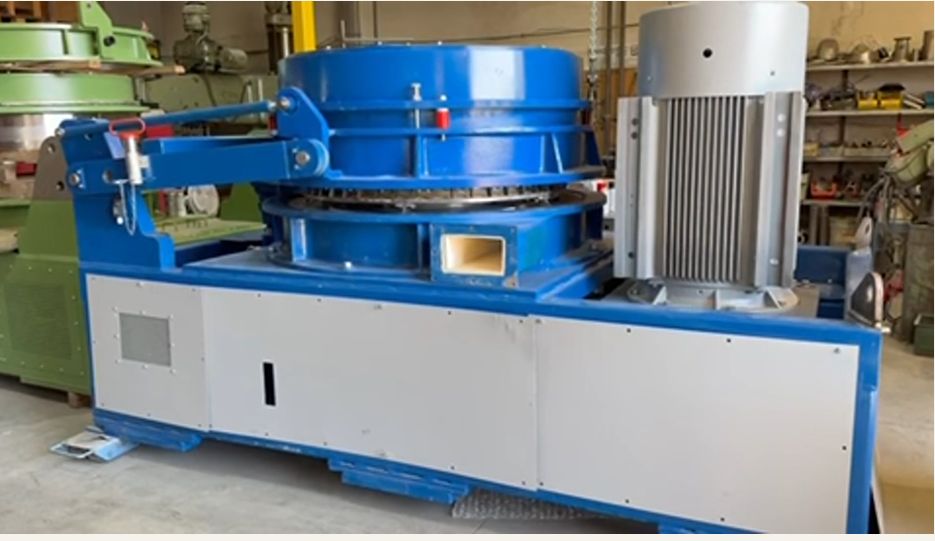
That may be the more interesting story behind the arrival of RenX Enterprises’ (NASDAQ: RENX) Microtec UTM 1200 Turbo Mill at the company’s Myakka City, Florida, processing facility.
After traveling from Germany, the Microtec system has now reached RenX’s 80-plus-acre permitted organics-processing site, where installation is underway. Commissioning is expected to follow, moving the company closer to producing its first engineered growing media through the system.
The obvious story is that an important piece of manufacturing equipment has arrived.
The bigger story may be what the technology could allow RenX to manufacture locally.
Can One Machine Change the Economics of Growing Media? RenX Is About to Find Out
Growing media have a logistics problem that isn’t immediately obvious. Products such as peat, bark, soil amendments, and other substrate materials are bulky. That means transportation can become a meaningful part of their delivered cost, particularly when material travels hundreds or thousands of miles before reaching the grower.
Peat provides a good example. Much of the peat used by U.S. growers comes from Canada, while bark, topsoil, and other growing-media components can also travel considerable distances before reaching customers. For growers in markets such as Florida, the economics therefore aren’t determined solely by the cost of the material. Freight matters, too.
RenX is using manufacturing technology to change that equation.
What the Microtec Mill Actually Does
The Microtec system is designed to precisely size, refine, and condition organic inputs into engineered growing media with repeatable quality and defined specifications. Instead of depending primarily on finished growing-media products transported long distances, RenX’s model is built around sourcing organic material regionally, processing it at Myakka City, and distributing finished products closer to the markets where they are consumed.
In other words, Microtec isn’t simply intended to make a different substrate. It could change where substrate can be made economically.
That distinction makes the technology particularly interesting.
The Strategy Starts Before the Mill
RenX’s strategy starts before material ever reaches the mill. Through its environmental processing and recently launched land-clearing operations, the company can collect trees, woody debris, and other suitable organic material that can become feedstock for downstream processing. In some cases, RenX can generate service revenue from collecting material that may later have additional economic value inside its manufacturing operation.
Its logistics business adds another piece. RenX can move feedstock into Myakka City and finished products back toward customers, creating an integrated chain built around regional collection, transportation, processing, manufacturing, and distribution.
The result is a model that looks considerably different from simply importing a finished agricultural input and delivering it to a customer.
Local feedstock. Local processing. Advanced milling. Regional distribution.
Technology can connect those pieces.
Why This Is Hard to Copy
There is also a competitive barrier to consider. Building this kind of operation requires more than acquiring a piece of industrial equipment. Organics-processing facilities require land, infrastructure, capital, and regulatory approvals. RenX already operates its permitted Myakka City site, while its rights to the Microtec technology for biomass applications add another layer of differentiation to the manufacturing strategy.
That combination could become increasingly relevant as agriculture places greater emphasis on domestic sourcing, supply-chain resilience, product consistency, and transportation efficiency.
It also explains why the arrival of the Microtec mill represents more than a logistics milestone for RenX.
The company’s next steps are tangible: installation, commissioning, optimization, and first milled product. Each will provide another measure of whether the technology can translate its manufacturing thesis into commercial production.
And ultimately, that’s where the story will be decided.
Moving Production to the Customer, Not the Other Way Aroun
Advanced manufacturing is often discussed in terms of making products faster, cheaper, or more precisely. RenX is pursuing something slightly different. It is attempting to use technology to bring a freight-sensitive agricultural product closer to where customers actually need it, using organic material sourced from the surrounding region.
If that model performs as intended at commercial scale, the implications could extend beyond one mill or one Florida facility. It would demonstrate how manufacturing technology can reorganize a physical supply chain by moving production closer to the customer rather than continually moving bulky materials closer to production.
For RenX, the bet is clear: use local manufacturing to turn one of growing media’s biggest constraints—transportation—into a competitive advantage. And with exclusive rights to Microtec technology for biomass applications in North America, RenX is uniquely positioned to make that bet.







Comment