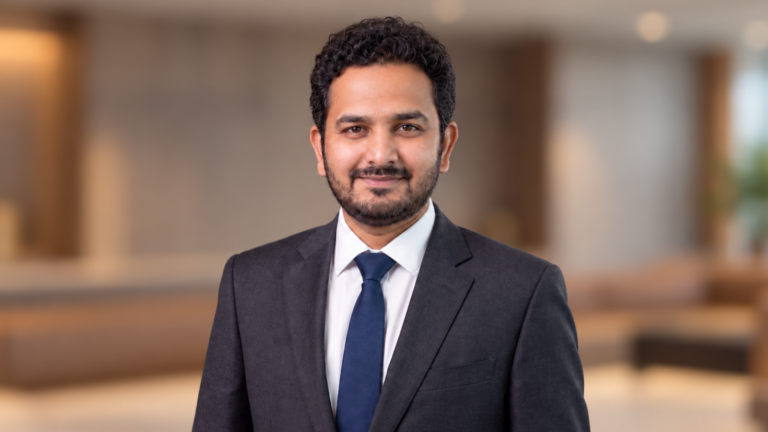
BUILDING WHAT DOESN’T GET TO FAIL: KUMARAN RAMASWAMY ON RESILIENT SYSTEMS AND WHY COMPANIES NEED ENGINEERS WHO CAN BUILD THEM

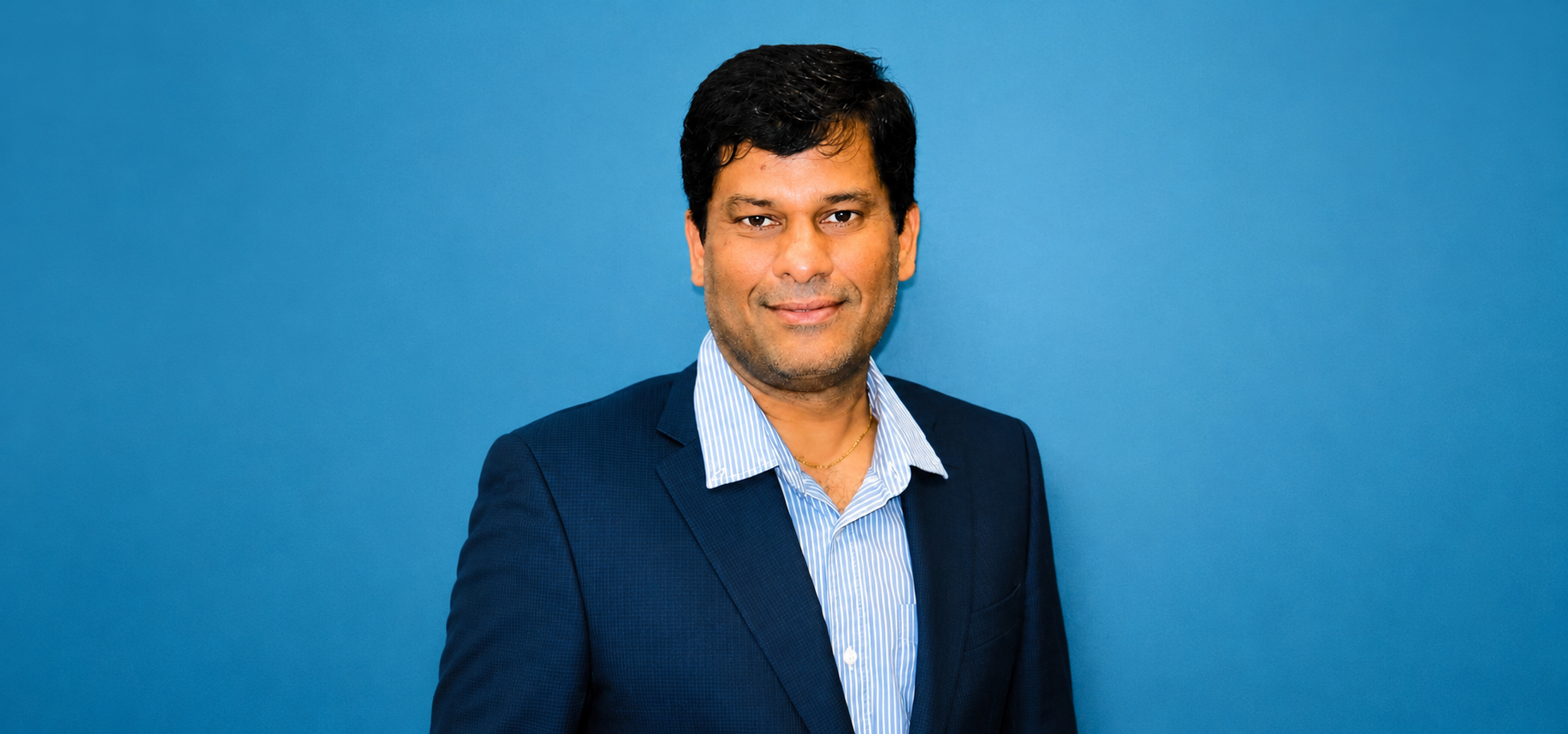
The energy filing is the latest entry in a body of work that stretches back more than seventeen years. Earlier in his career, Ramaswamy focused on cloud computing efficiency, developing methods that combined multi agent coordination, trust aware analytics, and energy aware scheduling. That research reportedly reduced workflow execution time by more than 50 percent while improving CPU and memory utilization, results that earned him first place and Best Paper recognition at international conferences.
Kumaran Ramaswamy has a simple way of describing what he does. “My job is to build the parts of a system that nobody notices when they work and everybody notices when they don’t,” he said. “Power, data, money moving through a pipeline. People only think about the plumbing when it leaks.”
From there, his focus shifted toward industrial edge AI, building architectures that process visual, acoustic, thermal, vibration, and radio frequency signals directly on site rather than routing them through a distant data center. “In a factory, milliseconds matter,” he explained. “If a machine is about to fail and your system is waiting on a round trip to the cloud and back, you have already lost the window where you could have prevented the failure. You have to bring the intelligence to where the problem actually is.”
He has also worked in financial services, developing deep learning models aimed at reducing false positives in transaction fraud detection, a persistent and expensive problem for banks and payment processors. More recently, he contributed a book chapter on large language model frameworks for Industry 5.0, connecting cybersecurity intelligence with workflow optimization, an area he considers a natural next step. “Security and efficiency used to be treated as separate departments with separate budgets,” he said. “In practice, an unsecured system is not an efficient system, it is just a system that has not failed yet. I think that idea is starting to sink in across the industry.”
The market context helps explain why. According to Grand View Research, the global AI in energy market is projected to reach about 6.0 billion dollars in 2026, up from roughly 5.1 billion in 2025, and is forecast to grow to 22.2 billion dollars by 2033, a 20.4 percent annual growth rate. Renewable energy management already makes up roughly a third of that spending. The broader edge AI market, which underpins the kind of on site, low latency processing Ramaswamy has spent years building, is estimated at 24.9 billion dollars in 2025, climbing toward 30.0 billion in 2026 and a projected 118.7 billion by 2033, a 21.7 percent compound annual growth rate.
Those numbers describe an industry adding intelligence to physical systems faster than it is adding engineers who know how to do it safely. Ramaswamy sees that gap firsthand. “Every company I talk to wants an AI system that touches something physical, a grid, a factory line, a payment network,” he said. “Very few of them have someone on staff who has actually shipped one of those systems and watched it hold up under real conditions. That is a very different skill from building a model that performs well on a benchmark.”
Ramaswamy built this career after moving to the United States, and he is candid that the path was not always straightforward. “You come here, you prove yourself again from a different starting line than someone who grew up in the system,” he said. “Nobody hands you credibility. You earn it project by project, publication by publication, until the work speaks for itself.” He points to his own record, the conference awards, the published research, the filed intellectual property, the systems now running in production, as the kind of evidence that has to substitute for a longer local track record. “I did not have the benefit of a twenty year reputation built in one place,” he said. “What I had was the work. Eventually that becomes enough.”
He is direct about why he thinks companies should care about that path rather than just his resume. “When you have had to rebuild your professional standing more than once, you get very good at figuring out what actually matters to an organization versus what is just noise,” he said. “I do not build things to look impressive in a slide deck. I build things that are still running two years later, because I know what it costs to have to start over.”
“Most monitoring systems tell you something already broke,” Ramaswamy said. “What I wanted to build tells you something is about to break, and then does something about it automatically, before a person even has to get involved. That difference is the whole point.”
For utilities, manufacturers, and financial institutions trying to modernize aging infrastructure, the practical case for this kind of work is straightforward, earlier fault detection, less unplanned downtime, and continuous visibility into systems that used to be monitored by hand or not monitored closely at all. American companies competing on infrastructure resilience have a direct stake in that capability, especially as energy demand tied to AI itself continues to strain existing grids. The same underlying approach, cloud based monitoring layered with predictive, automated control, applies just as directly to utilities and manufacturers outside the United States, which is part of why Ramaswamy’s team pursued this filing in the German market specifically.
Asked what he hopes comes out of the work, Ramaswamy kept his answer narrow. “I am not trying to solve every problem in energy or finance or manufacturing,” he said. “I am trying to make sure that when something in one of these systems is about to go wrong, somebody, or something, finds out in time to fix it. If that keeps a hospital’s power on for another hour, or keeps a factory line from shutting down for a week, the work did its job.” As industries lean further into automated, AI driven infrastructure, that narrow focus, on reliability rather than novelty, is likely to keep his kind of work in demand.