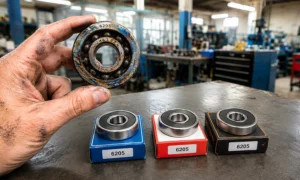
For most industrial organizations, MRO inventory is not just a cost issue, but an operating risk issue as well. Excess stock locks up working capital, increases carrying costs, and often reflects weak inventory discipline. On the other hand, excess inventory reduction can cause unplanned downtime, safety exposure, and missed production targets. Leaders have this imperative – optimize inventory while ensuring uninterrupted operations; yet many organizations tackle this issue from the incorrect baseline.
Inventory reduction is frequently treated as a purely financial initiative – setting percentage targets, freezing purchase orders, pressuring storerooms to slash line items – without first understanding what their inventory actually contains. The outcome is predictable: reductions affect the wrong categories, critical components become unavailable, and the cost of recovering from a stockout quickly exceeds the savings generated by the initial action. Over time, this creates institutional resistance, as one unsuccessful lean initiative becomes evidence that lean inventory itself is too risky.
Lean MRO Inventory Requires Structure, Not Just Cost Pressure
The real barrier is not the ambition to run leaner inventory, but the absence of a structured and reliable method for doing so without introducing unnecessary risk. Research suggests that 40–60% of MRO inventory in a typical industrial facility may be excess, obsolete, or concentrated in infrequently used critical spare parts. Lean inventory and reliable availability are not opposing goals. Both are outcomes of the same operational discipline.
Key reasons this challenge persists include:
- Uniform stocking policies are often applied to parts with very different operational roles
- Excess inventory frequently coexists with poor service levels and stockout risk
- Weak parts data and low visibility make rational inventory decisions harder to sustain
- Lean initiatives fail when cost reduction is pursued without a structured risk-based method
The Five Steps Below Show How to Build That Discipline
A leaner MRO inventory does not come from broad reduction targets alone. It comes from a structured approach that improves inventory quality, strengthens decision-making, and reduces excess stock without compromising operational reliability.
Step 1: Classify Spare Parts by Criticality and Consumption Frequency
Most MRO storerooms are still managed with broad, uniform rules, even though the parts inside them serve very different operational purposes. A bearing tied to a critical production asset does not deserve the same stocking logic as a routine consumable that is easy to replace. When organizations apply the same safety stock levels, reorder triggers, and review cycles across the full catalog, they create the exact conditions that produce excess inventory in some areas and exposure in others.
A more disciplined approach starts with classification. This means evaluating parts through two lenses: the business consequences of not having the part when needed, and the frequency with which it is consumed. Together, these dimensions create a practical basis for deciding what should be stocked locally, what can be replenished on demand, and what should be reviewed less aggressively.
A strong classification model should:
- Assess operational criticality based on equipment impact, failure consequence, and supplier lead time
- Differentiate parts by consumption pattern, whether fast-moving, slow-moving, or rarely used
- Separate high-risk insurance spares from routine maintenance items
- Align stocking rules to actual operational needs rather than catalog-wide defaults
According to Bain, plants using risk-segmented stock classification achieve 98% service levels while holding 23% less inventory, and the difference lies in more disciplined prioritization of what gets stocked, at what level, and for what reason. Once those tiers are clearly defined, inventory decisions become more precise. High-consequence parts with long replenishment windows justify protected local stock, while low-criticality items can often be managed through leaner replenishment models or supplier-supported arrangements.
This first step also exposes a deeper issue. In many organizations, the asset and material data have never been structured well enough to support reliable criticality decisions. Fixing that is not secondary work. It is the groundwork for every step that follows.
Step 2: Use Data-Driven MRO Software to Improve Stock Levels
The next step, when the inventory has been cleaned up and sorted properly, is to determine how much stock you want to keep and in which locations. This is often the stage at which organizations revert to outdated practices.
Static spreadsheets or rarely updated min-max settings hardly ever meet the realities of modern industrial operations. Equipment ages, failure patterns evolve, and supplier lead times fluctuate. A stocking rule that was appropriate two years ago may now be inefficient, or introduce unnecessary risk, if it remains unchanged.
Research cited on MRO inventory optimization found that plants using real-time demand sensing and structured data-driven inventory management reported 20% to 40% fewer operational emergencies and 15 to 25% lower inventory costs. Those results reflect the value of better decision logic, not simply tighter cost control.
A data-driven stocking strategy should:
- Implement stocking parameters that are refined using live consumption patterns
- Account for equipment condition and failure behavior in inventory decisions
- Translate variability in supplier lead-time into safety stock and reorder logic
- Determine from use/demand history the best pattern of stocks to hold as operating environments change across the network
Stronger visibility across the spare parts landscape is also a prerequisite for developing a more robust operating model. Without that foundation, stocking decisions are often shaped by fragmented records, inconsistent naming conventions, and limited cross-site transparency.
Manufacturers are increasingly adopting platforms that help make spare parts data more connected and usable across sites and systems. One example is SPARETECH, which combines a global spare parts catalog with AI-assisted part recognition and cross-site inventory intelligence. Solutions like these help organizations work from cleaner, more consistent data when making stocking decisions.
Step 3: Identify and Eliminate Duplicate and Obsolete Stock
Before adjusting reorder points or recalibrating safety stock, the inventory itself needs to be challenged. In many multi-site environments, a meaningful share of what sits on the shelf no longer serves a valid operational purpose. Some items are duplicated under different records or descriptions. Others remain in stock long after the equipment they supported has been retired, replaced, or standardized away.
An effective clean-up process should:
- Map duplicate records to the same physical part across sites, systems, and supplier references
- Review obsolete items against current asset registers and active maintenance plans
- Remove inactive or superseded materials that no longer support the installed base
- Consolidate valid duplicate records to improve visibility and procurement accuracy
Research on excess MRO inventory, resolving data issues alone – including duplicates and inconsistent records – can reduce MRO inventory by 10 to 15% before any new stocking policy is applied. At enterprise scale, that recovery can release meaningful working capital almost immediately. For many organizations, the value captured at this stage more than justifies the effort before broader optimization begins.
Step 4: Gain Full Cross-Site Visibility Before Setting Reorder Levels
Reorder levels set in isolation often look reasonable at the plant level and inefficient at the network level. That is the structural flaw. When each site protects itself without visibility into what other facilities already hold, inventory expands through duplication rather than deliberate planning.
The pattern is common in multi-site manufacturing. Each facility builds local buffers against uncertainty, even when the same part exists elsewhere within transfer distance. Over time, this produces a network that is heavy on stock but still uneven in coverage. Parts availability becomes a local issue when it should be managed as a shared capability.
Cross-site visibility should enable organizations to:
- See total inventory positions across all facilities before placing new orders
- Transfer stock between plants where timing and logistics allow
- Pool selected spares instead of holding full local redundancy everywhere
- Negotiate supplier agreements based on consolidated demand across the network
Verdantis research among senior executives in asset-intensive industries found that 26% of organizations reported significant gaps in supply chain visibility and integration. Organizations that strengthen both classification and cross-site visibility are generally better positioned to reduce duplicate orders, improve inventory hit rates, and source more quickly from stock already held elsewhere in the network. For leadership teams, the implication is that inventory visibility should be viewed not as a reporting enhancement, but as a structural enabler of lower working capital and stronger operational responsiveness.
Step 5: Establish a Regular Inventory Review and Rationalization Cycle
A leaner, more accurate MRO inventory is not sustained by a one-time clean-up. It is sustained by review discipline. Without a recurring rationalization process, even a well-structured inventory drifts back toward excess as assets change, demand patterns shift, and new material records accumulate without challenge.
That drift is rarely dramatic at first. It happens through gradual exceptions, aging assumptions, and infrequent policy review. Equipment is replaced, lead times move, and once-critical parts lose relevance. Low-priority items become more important as the operating context changes. If no formal mechanism exists to revisit those changes, the inventory gradually becomes both less accurate and less efficient.
A practical review cycle should:
- Examine non-moving and slow-moving stock over the previous 12 to 24 months
- Revalidate criticality classifications against the current asset base
- Reassess reorder points and safety stock levels using recent consumption and lead time data
- Rationalize surplus and obsolete inventory before it rebuilds into structural waste
The frequency of review can vary by operational scale and complexity. The principle does not. Organizations that sustain lean MRO treat rationalization as an ongoing management process, not a one-time clean-up exercise.
Conclusion: Lean Inventory Is a Strategic Discipline, Not a Budget Target
Setting a target for reducing your MRO inventory as a percentage of something is just scratching the surface. Without a structured method, cuts to inventory heighten availability risk. When the steps are followed as intended, the result is stronger operational resilience, tighter governance over inventory, lower carrying costs, and more predictable production continuity.
The five steps are sequential for a reason: classification defines what matters, deduplication removes what does not belong, data-driven software right-sizes what remains, cross-site visibility improves network-wide decisions, and regular rationalization keeps inventory aligned with changing operational needs. Manufacturers that follow this process do not just hold less inventory; they build inventory they understand, trust, and can defend.