Property managers face a constant balancing act: maintaining safe, attractive spaces while keeping operational costs under control. Outdoor lighting sits at the intersection of these priorities, serving as the first line of defense against criminal activity and accidents after dark. Poorly lit parking lots, walkways, and building perimeters create opportunities for theft, vandalism, and liability claims that can devastate a property’s reputation and bottom line. For decades, traditional high-intensity discharge and metal halide fixtures dominated commercial lighting, but their inefficiency, frequent burnouts, and maintenance demands have made them increasingly obsolete. Modern LED wall pack lights offer a transformative alternative, delivering superior illumination while slashing energy consumption and maintenance requirements. The question facing today’s property managers isn’t whether to upgrade, but how to select and implement the right LED solution for maximum impact. This article provides a practical roadmap for choosing high-performance LED wall lights that enhance security, reduce operating costs, and elevate property value through strategic, long-lasting illumination.
Why LED Wall Pack Lights Are Essential for Modern Property Security
Wall pack lights are compact, durable fixtures designed to mount directly on exterior walls, delivering focused illumination for building perimeters, entryways, parking areas, and walkways. Their primary function is creating a protective barrier of light that discourages criminal activity and guides safe passage after dark. Traditional high-intensity discharge (HID) and metal halide fixtures have long served this purpose, but their shortcomings are increasingly apparent: they consume excessive energy, generate significant heat, take minutes to reach full brightness, and require frequent bulb replacements that drain maintenance budgets. Modern LED wall pack lights eliminate these drawbacks through solid-state technology that produces instant, consistent illumination with a fraction of the energy consumption.
The connection between quality lighting and crime prevention is well-documented. Criminals gravitate toward poorly lit areas where their actions go unnoticed, while bright, uniform illumination creates natural surveillance opportunities that deter trespassing, vandalism, and theft before they occur. LED wall packs excel at eliminating the shadows and dark pockets where threats hide, providing the consistent brightness needed for security cameras to capture clear footage and for passersby to identify suspicious activity. This enhanced visibility extends beyond security—it directly reduces liability exposure by preventing slip-and-fall accidents and demonstrating due diligence in maintaining safe premises. For tenants and visitors, well-lit exteriors communicate professionalism and care, contributing to higher satisfaction and retention rates. The aesthetic quality of modern LED fixtures further elevates curb appeal, transforming utilitarian security lighting into an architectural asset that enhances property value while fulfilling its protective mission.
Key Features to Look for in High-Performance LED Wall Lights
Selecting the right LED wall pack lights requires understanding the technical specifications that separate high-performance fixtures from budget compromises. The first critical metric is lumens—the actual measure of light output. Unlike wattage, which simply indicates energy consumption, lumens tell you how much illumination a fixture provides. A traditional 250-watt metal halide fixture might produce 14,000 lumens while consuming significant electricity and generating excessive heat, whereas a modern LED equivalent delivers the same 14,000 lumens using just 100 watts. This efficiency translates directly to reduced utility bills without sacrificing brightness. For most commercial applications, wall packs ranging from 3,000 to 10,000 lumens provide adequate perimeter security, while high-traffic areas or large parking structures may require 15,000+ lumens for comprehensive coverage.
Understanding Lumens, Wattage, and Efficiency
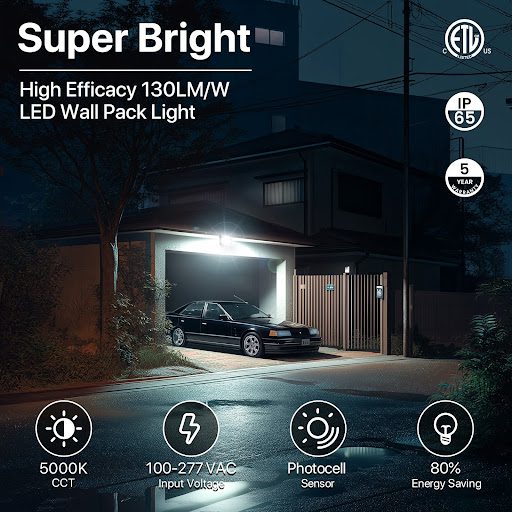
Color temperature, measured in Kelvin (K), determines the visual tone of your lighting. Fixtures rated 3000K produce warm white light with a yellowish hue that creates inviting ambiance for retail entrances and hospitality properties, while 4000K-5000K delivers neutral to cool white light that enhances alertness and visibility—ideal for parking garages, loading docks, and industrial facilities. The 5000K-6000K range produces bright daylight white that maximizes contrast and detail recognition for high-security applications. Beyond personal preference, color temperature affects how spaces feel and function after dark.
The Critical Role of Color Rendering Index (CRI) in Security
The Color Rendering Index (CRI) is perhaps the most overlooked yet crucial specification for security lighting. Rated on a scale of 0-100, CRI measures how accurately a light source reveals true colors compared to natural sunlight. A fixture with CRI below 70 might make a navy blue vehicle appear black or distort clothing colors in security camera footage, rendering witness descriptions unreliable and compromising identification efforts. High-CRI LED wall packs (80+) reproduce colors faithfully, ensuring that surveillance systems capture usable evidence and that security personnel can accurately assess situations in real-time. This specification becomes critical during incident investigations when accurate color identification can make the difference in resolving theft, vandalism, or safety incidents.
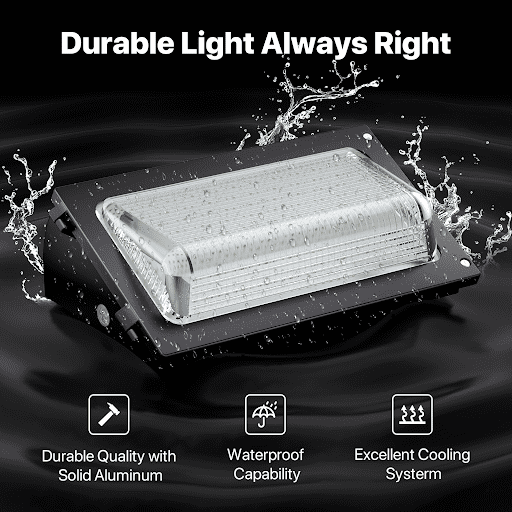
Durability specifications matter equally in harsh outdoor environments. IP (Ingress Protection) ratings indicate a fixture’s resistance to dust and water intrusion—IP65-rated units withstand powerful water jets and complete dust protection, while IP66 offers even greater water resistance for coastal or severe weather locations. Quality LED wall packs should offer minimum 50,000-hour lifespans (approximately 11 years of continuous operation), backed by warranties of at least five years. These longevity indicators signal manufacturer confidence and predict your true cost of ownership, as fixtures requiring replacement every few years negate initial savings through repeated purchase and installation expenses.
A Step-by-Step Guide to Selecting and Implementing Your LED Wall Lights
Upgrading to LED wall pack lights requires a methodical approach that ensures optimal placement, performance, and return on investment. Begin with a comprehensive site audit conducted after dark, when lighting deficiencies become obvious. Walk the entire property perimeter with a notepad or mobile device, documenting areas where visibility drops, shadows create hiding spots, or existing fixtures have failed. Pay special attention to entryways, parking lot corners, loading docks, stairwells, and pathways between buildings—these transition zones often harbor the greatest security vulnerabilities. Note the condition of current fixtures, their mounting heights, and available electrical infrastructure. Photograph problem areas to reference during planning discussions with your maintenance team or lighting contractor.
With audit data in hand, prioritize your lighting objectives based on security risk and traffic patterns. High-priority zones include main entrances, cash handling areas, isolated parking sections, and any locations with previous incident reports. These areas warrant higher lumen outputs and potentially motion-activated or dusk-to-dawn sensors for 24/7 protection. Secondary zones like landscaped areas or low-traffic walkways may require only ambient lighting for wayfinding. This prioritization allows phased implementation if budget constraints prevent simultaneous property-wide upgrades, ensuring critical areas receive attention first while spreading costs across multiple fiscal periods.
Translate your objectives into specific fixture requirements using the technical knowledge from earlier sections. A dark parking lot corner 200 feet from the nearest light source demands a high-output fixture delivering 10,000+ lumens with wide beam distribution, while a well-lit building entrance might need only 3,000-5,000 lumens for supplemental coverage. Select color temperature based on property type—4000K-5000K works universally well for commercial properties, balancing visibility with visual comfort. Insist on minimum 80 CRI for any area covered by security cameras, and verify IP65 or higher ratings for weather protection. Create a specification sheet listing these requirements to ensure consistency when soliciting quotes from suppliers or contractors.
Installation planning determines whether your upgrade succeeds or disappoints. Standard mounting heights range from 12-20 feet, with higher placement providing broader coverage but potentially creating glare if not properly aimed. Space fixtures according to manufacturer photometric data—most quality LED wall packs include downloadable light distribution charts showing coverage patterns at various mounting heights. For typical perimeter security, fixtures spaced 30-50 feet apart provide overlapping coverage that eliminates dark gaps. Decide whether your maintenance team possesses the electrical expertise and equipment for safe installation, or whether hiring licensed contractors makes more sense. Professional installation typically costs more upfront but includes proper electrical connections, weatherproofing, and warranty protection that DIY efforts may compromise.
After installation, conduct thorough testing during evening hours. Walk the property again, verifying that illumination meets expectations and that no new shadows or dark spots have emerged. Adjust fixture angles if necessary to eliminate glare directed at windows, roadways, or neighboring properties. If motion sensors are installed, test activation ranges and duration settings to balance security responsiveness with energy conservation. Document the final configuration with photos and fixture locations for future maintenance reference, and schedule a follow-up evaluation after 30 days to address any issues that emerge during normal operation.
Maximizing Value: The Long-Term Benefits of Upgrading to LED
The financial case for LED wall pack lights extends far beyond the initial purchase price, revealing its true value through years of reduced operating expenses and enhanced performance. Energy savings alone justify the investment for most properties—LED fixtures consume 50-75% less electricity than the metal halide or high-pressure sodium units they replace. A property running twenty 250-watt metal halide wall packs for 12 hours nightly spends approximately $4,380 annually on electricity at average commercial rates, whereas equivalent LED fixtures drawing just 100 watts each reduce that cost to $1,752—a savings of $2,628 per year that compounds over the fixture’s lifespan. Multiply these savings across larger properties with dozens or hundreds of fixtures, and the annual impact reaches tens of thousands of dollars that can be redirected toward other operational priorities.
Maintenance cost reductions prove equally compelling. Traditional fixtures require bulb replacements every 10,000-15,000 hours, meaning annual or biannual service calls that include labor, lift equipment rental, replacement bulbs, and operational disruption. LED wall packs rated for 50,000+ hours eliminate these recurring expenses for a decade or more, freeing maintenance staff for higher-value tasks while preventing the tenant complaints and safety concerns that arise when burned-out fixtures go unnoticed. This reliability translates to fewer incident reports, reduced liability exposure, and improved tenant satisfaction—factors that directly influence occupancy rates and property reputation. Many utility companies and government agencies recognize these benefits by offering rebates and incentives for energy-efficient lighting upgrades, sometimes covering 20-40% of equipment costs and further accelerating payback periods. Manufacturers like Led Hyperlite offer commercial-grade fixtures designed specifically to meet these demanding performance standards while qualifying for utility incentive programs. When calculating total cost of ownership over ten years, LED wall packs typically cost half as much as traditional alternatives while delivering superior illumination quality, making the upgrade decision financially straightforward for any property focused on long-term value optimization.
Strategic Investment in Property Safety and Efficiency
Investing in quality LED wall pack lights represents far more than a lighting upgrade—it’s a strategic investment in property safety, operational efficiency, and long-term value. The evidence is clear: superior illumination through high-CRI, weather-resistant LED fixtures creates the consistent visibility that deters criminal activity, prevents accidents, and provides peace of mind for tenants and visitors alike. The operational advantages are equally compelling, with energy consumption reductions of 50-75% and maintenance-free performance spanning a decade or more, delivering cumulative savings that dwarf initial equipment costs. As you evaluate your property’s lighting infrastructure, remember that specifications matter—prioritize fixtures with appropriate lumen output for your application, CRI ratings above 80 for security accuracy, and IP65+ weather protection for lasting durability. The property managers who recognize outdoor lighting as critical infrastructure rather than discretionary expense position their properties for enhanced security, reduced liability, improved tenant satisfaction, and stronger competitive positioning. A well-lit property doesn’t just look better after dark—it performs better, protecting assets while building the reputation for safety and professionalism that drives occupancy and long-term success in an increasingly competitive market.