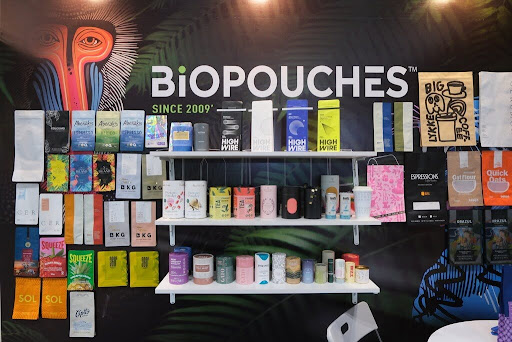
For six years I’ve sat across the table often literally, in our Shanghai factory from founders trying to figure out how to package a product they’ve poured their lives into. Coffee roasters, pet food startups, indie beauty brands, tea companies. More than two hundred of them. The questions have changed significantly in the last eighteen months, and a lot of the industry’s answers have not kept pace.
Here is what’s actually shifting, and where the common advice is wrong.
The consumer assumption that’s now outdated
The old view — which I still hear from some founders — is that sustainable packaging is a nice-to-have. Something for the “green” segment. A premium feature to charge more for.
That framing is finished. Your buyers already know which packaging is hurting the planet and which isn’t. They read the back of the pack. They look for certification marks. They ask on Reddit and TikTok whether your stand-up pouch is actually recyclable or just marketing. This is true across price points not just the twenty-two-dollar specialty coffee crowd.
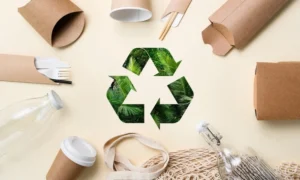
What’s interesting is where the confusion still sits. Clients ask me this every week: what actually separates sustainable, biodegradable, compostable, and eco-friendly?
- Biodegradable means something breaks down eventually under some conditions — a near-meaningless claim because landfills break down almost nothing.
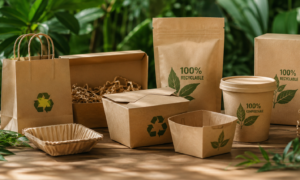
- Compostable is specific. It requires third-party certification BPI, TÜV OK Compost, DIN CERTCO and defined home or industrial conditions.
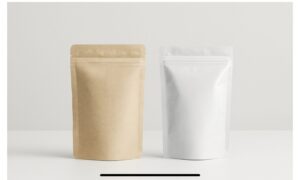
- Recyclable depends entirely on whether your film is mono-material. Multi-layer laminates, which are still the majority of pouches on shelves, are rejected by standard recycling facilities regardless of what the label says.
- Eco-friendly is marketing. It means nothing on its own.
If your supplier uses “eco-friendly” without telling you which specific certification backs it up, that’s the moment to ask harder questions.
Coffee: where flexible pouches evolved the most
Coffee has driven more innovation in pouch engineering than any other vertical I work with. Two reasons — coffee is sensitive to oxygen and moisture, and coffee buyers are unusually engaged with packaging detail.
Two years ago a roaster came to me worried about a one-kilogram retail format. His concern was fair: bigger bags mean more stress on seals, and if a seam fails in transit or on a shelf, the entire SKU is compromised. He flew to our Shanghai facility, walked the floor, watched the sealing process end-to-end, tested samples, and made adjustments with my team on the spot. We settled on a gusset pouch structure engineered for heavier formats — expandable side panels for shelf presence, reinforced bottom seal, one-way degassing valve. Two years later he’s still on that design, on his third reorder. The same structure works for larger pet food bags, where weight and handling demand more than a standard stand-up pouch delivers.
The lesson: for any format over five hundred grams, do not take “it’ll hold” on trust. Ask your supplier to walk you through the film structure, the seal parameters, and the drop-test data. A manufacturer who cannot produce that on request is not the manufacturer you want.
The rise of paper tubes for coffee, tea, and premium goods
The biggest format shift I’ve seen since 2023 is the move toward rigid paper-based packaging for products that used to default to plastic or metal. Coffee and tea paper tubes are the clearest example.
A mono-material paper tube with a food-safe inner liner delivers three things a flexible pouch cannot: vertical shelf presence without a display stand, five printable panels instead of three, and a tactile unboxing moment that works for Instagram and gift-purchase contexts. The trade-off is cost per unit and minimum order quantity — tubes do not make sense at very low volumes or for commodity pricing.
Beyond coffee and tea, beauty brands are using the same rigid tube format for lip balms, solid perfumes, and bath tablets. Formats where a pouch simply cannot work. The brands I’ve seen use tubes most effectively treat them as product experience design, not just packaging — the tube becomes part of what the customer is paying for.
The recyclable mono-material push
The most technically demanding conversation I have with clients right now is about mono-material recyclable pouches. For years the industry default was multi-layer laminate — polyester outer, aluminium middle, polyethylene inner — because it delivered barrier performance easily. The problem is that this structure is functionally un-recyclable at commercial scale.
The shift toward recyclable mono-material pouches is real but harder than most brand owners realize. A true mono-material PE or PP structure has to match the oxygen and moisture barrier of the laminate it’s replacing. Not every product works with it — very high-fat items, some pharmaceuticals, anything with a long shelf life claim — but most coffee, snack, pet treat, and dry grocery applications do.
If your supplier offers a “recyclable” pouch, the question to ask is: what is the film’s How2Recycle or CEFLEX assessment? If they do not know what those are, you are not talking to a specialist.
My contrarian take: spouted pouch caps are wasting your customers’ product
One thing I genuinely disagree with most of the industry on — the oversized caps on spouted pouches for liquid products.
Manufacturers default to a twenty-two-millimetre or larger cap because it’s cheap, widely stocked, and easy to fit on existing fill lines. The problem is dead volume. On a 250ml juice or sauce pouch, a large cap can trap five to eight millilitres of product the consumer will never access. Multiply that across a full SKU run and you’re asking buyers to pay for product they cannot get out of the pack.
A smaller precision-spout cap costs more per unit and sometimes requires fill-line adjustment. It delivers a better customer experience and a cleaner sustainability story — less wasted product means lower effective footprint per serving. For premium brands especially, it’s a straightforward upgrade most of the industry still ignores.
What to look for in a packaging manufacturer in 2026
A manufacturer worth working with should be able to:
- Show you actual certifications — BPI, DIN CERTCO, OK Compost, FSC, BRC, Sedex — not just mention them
- Walk you through the film structure of anything they sell you
- Offer both compostable and recyclable mono-material options, and tell you honestly which suits your specific product
- Support low minimum order quantities for testing before committing to full production
- Maintain regional warehouses so lead times are not held hostage by ocean freight
If your current supplier cannot do these things, you are not working with a specialist. You are working with a reseller.
The next two years will separate the brands that treat packaging as a genuine product decision from the ones that treat it as a cost line. Both groups will still exist. Only one will still be growing.
About the author
Asad Manan is Head of Sustainability Packaging and Marketing at XWPAK, a Shanghai-based flexible packaging manufacturer with warehouses in the United States and Canada. Over six years he has worked with more than two hundred brands across coffee, pet food, beauty, and food — including specialty roasters such as Windmill Cafe — on custom sustainable packaging. His work spans compostable and recyclable flexible pouches through BioPouches and paper tube packaging through EarthyCores. He holds a master’s degree and advises CPG founders directly on material selection, certification compliance, and format engineering. Connect with him on LinkedIn.