Pool cleaning used to mean wrestling a cord across the deck, babysitting a robot that kept tangling itself, or scheduling a service crew twice a week just to keep the water clear. The wireless pool cleaner changed that equation, and it changed it fast. But the category has expanded considerably, and not every cordless robotic pool cleaner delivers on its promise. Battery life gets inflated. Suction specs don’t survive contact with an actual dirty pool. Navigation quality varies wildly between price points.
This guide covers what makes a battery-powered pool cleaner genuinely worth buying, which specs to compare before you hand over any money, and which models hold up in real pools. A new generation of machines has raised the bar considerably: we’re now at a point where wireless means more than just unplugging a cord. It means app-based scheduling, real-time fault alerts, and in at least one case, an underwater remote control that works while you’re standing in the water. That’s the benchmark we’re measuring against.
Why going cord-free is a genuine upgrade, not just a gimmick
The day-to-day freedom of a tangle-free clean
A cord limits your robot before it even enters the pool. You’re constrained by outlet proximity, you deal with retrieval hassles, and the cable itself takes wear every time it gets dragged across tile and coping. Cordless pool vacuums drop in anywhere, retrieve cleanly, and don’t stress the machine’s housing with repeated cable tension. For pools that aren’t near a power outlet, whether that’s an outdoor resort pool, a rooftop installation, or a remote residential setup, cordless operation isn’t a preference. In those cases, it’s a hard requirement.
What “wireless” has come to mean in 2026
The definition has expanded well beyond battery power. A modern wireless pool cleaner can include app- based scheduling, real-time status monitoring, water temperature tracking, and direct remote operation from outside or inside the pool. Full wireless control means you’re not just removing the power cord, you’re gaining operational autonomy over the entire cleaning session. That shift from cordless pool vacuum to smart pool tool is what separates the top tier from the commodity end of this market.
What battery performance actually looks like in real pools
Runtime by pool size and cleaning mode
Runtime across cordless pool cleaners varies considerably by model and mode, many real-world users report 90 minutes to under two hours in standard operation, while higher-capacity units can push toward
3.5 hours in lighter cleaning modes. Pools under 800 square feet typically complete a full floor clean in a single charge. For pools above 1,200 square feet, one charge rarely covers a complete floor-plus-wall cycle. The fine print most buyers miss: manufacturers often rate GPH at maximum motor speed, but many models throttle suction mid-cycle to preserve battery. The number on the box doesn’t reflect what the robot is actually delivering through the second half of the session.
Charge time, degradation, and battery lifespan
Charging typically takes 3 to 8 hours depending on the model. Degradation happens faster than most buyers expect, lithium-ion batteries in cordless pool robots can lose a meaningful share of runtime capacity within the first year of regular use, with some user reports and manufacturer data suggesting losses in the range of 10 to 30% over the first two to three years. Battery lifespan generally runs 2 to 4 years before performance noticeably drops. Factor battery replacement cost into your total purchase decision, especially at the budget end of the market where replacement parts can be hard to source and support can be inconsistent. A detailed real-world runtime review of the Wybot A1 illustrates how runtime and charging behavior change under normal use.
The specs that separate a solid wireless pool cleaner from a great one
Suction power and filtration quality
Suction output in cordless robot pool cleaners varies widely by model, some units are rated as low as 1,300 GPH in real-world conditions, while higher-end cordless models can reach 4,200 to 5,800 GPH, approaching the output of corded machines. For light-debris residential pools, mid-range output is workable. For pools dealing with heavy leaf fall, fine sand, or algae, look for a robot at the higher end paired with multi-stage filtration capable of capturing particles down to 3 microns. Dual filtration chambers are a premium marker worth seeking out: they capture both large debris and fine particles in separate stages, which keeps the filter from clogging mid-cycle and reduces how often you’re stopping to rinse it out.
Navigation quality and surface coverage
Structured, repeatable path planning, such as S-shaped floor passes and systematic wall traversal, consistently outperforms random-bounce navigation in coverage tests. Budget models that rely on
random-bounce logic tend to miss spots in corners and along irregular walls. Three-surface coverage (floor, walls, and waterline) is the specification that changes how thorough a clean actually is. A robot pool cleaner that handles only the floor is doing half the job, and the waterline is where oils, sunscreen residue, and algae accumulate fastest.
Build durability and warranty red flags
Pool chemistry is harsh on plastics and seals. Cheap materials degrade quickly under sustained UV exposure and chlorine contact. Look for models with stated chemical resistance, IP ratings appropriate for full submersion, and at least a one-year warranty with accessible replacement parts. In buyer reviews across this category, spotty customer support is among the most consistent complaints, so verify that the manufacturer has a real service infrastructure before committing.
Smart connectivity features worth paying for
What app control and scheduling actually deliver
Mid-range wireless pool cleaners offer basic scheduling through a companion app: set a start time, pick a cleaning mode, check when the cycle ends. Most mainstream cordless models offer limited app features, typically scheduling and status updates, but generally don’t provide in-water remote control. Premium models push further with real-time status monitoring, water temperature data, fault alerts, and remote session control. For pool service operators managing multiple properties, app-based oversight translates directly to fewer site visits and faster troubleshooting. A fault alert that fires to your phone before a robot gets stuck under a ladder is worth more than any spec on the box.
Purily’s underwater remote: a wireless feature in a class of its own
Purily offers what the company describes as an underwater-compatible remote control for a robotic pool cleaner, a feature not found on any mainstream cordless competitor at the time of writing. According to Purily, you can operate the robot while standing at the pool’s edge or while in the water itself, adjusting direction and mode in real time without exiting the pool or reaching for a separate device. Paired with Purily’s mobile app, which the company says includes smart scheduling, real-time status updates, water temperature monitoring, and fault alerts, this represents a connectivity package that goes meaningfully further than what typical cordless options provide. For buyers who want true wireless control rather than just a cord-free robot, this is the benchmark to measure against.
Top wireless pool cleaners to consider in 2026
Strong performers across the market
The models below were selected based on suction output, navigation consistency, runtime, and surface coverage. They represent honest mid-tier options for buyers who need reliable cord-free cleaning without stepping into the premium tier:
Dolphin Liberty 200:
A well-known name in cordless with reliable floor and wall coverage, though expect daily charging for pools over 600 sq ft based on its roughly 2-hour runtime.
Hydro – Smart CordlessPool Cleaning Robot :
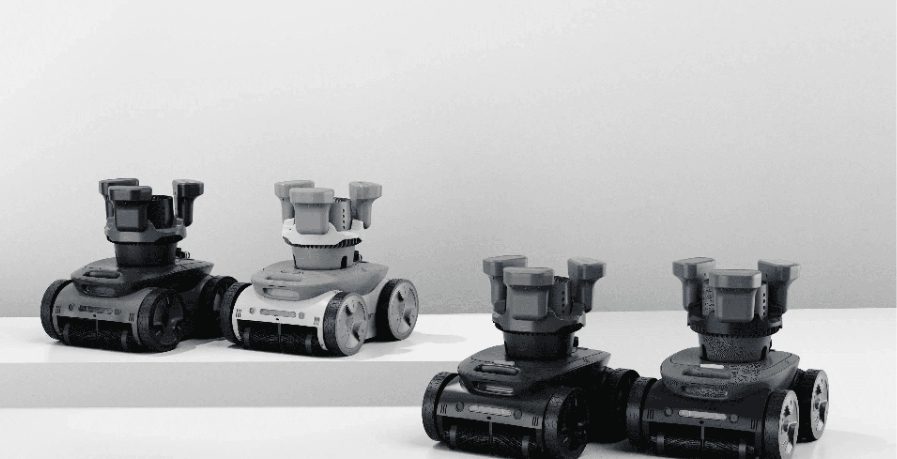
Hydro is an Al-powered pool cleaningrobot from a leading manufacturer andsupplier, featuring smart navigation,dual filtration, and 4WD cleaning forefficient, effortless pool maintenance
. Aiper Scuba S1:
4,200 GPH, solid multi-surface coverage, a consistent pick for buyers in the $600 to $800 range who want reliable hands-off cleaning.
Poolmate Hydro 3S:
Dual motors and intelligent navigation make it a reasonable option for debris-heavy pools.
These are honest, mid-tier options with the expected battery and suction trade-offs. Most mainstream cordless models in this range offer limited app features, typically scheduling or status only, and none provide in-water remote control. All of them share the same fundamental limitation: battery constraints force suction compromises that become apparent in larger or dirtier pools. For readers who want a broader comparison of top models, see this best robotic pool cleaners roundup.
Where Purily stands in the premium tier
Purily’s hybrid platform pairs a 9,000mAh cordless battery with a corded AC/DC option, so you’re never locked into a single power mode when the pool demands more. The company reports up to 2.5 hours of cordless runtime. Add the underwater remote control, dual filtration chambers, 4WD drivetrain, and a full- featured mobile app, and this is a wireless pool cleaner built for buyers who want zero compromises on performance or operational control. For OEM buyers and distributors looking to carry a differentiated product, Purily’s B2B manufacturing platform, which the company reports holds FCC and cTUVus certification, offers a well-specified path to market in this category.
Matching your wireless pool cleaner to your pool type and budget
Small-to-medium inground pools under 800 sq ft
Most cordless robots in the $600 to $900 range handle this size comfortably in a single charge. At this scale, prioritize filtration quality and surface coverage over raw suction. Navigation consistency matters
more than horsepower: a robot with accurate path mapping and genuine three-surface coverage will outperform a higher-GPH model that bounces randomly and misses the waterline on every cycle.
Larger pools, commercial settings, and smart home buyers
For pools over 1,200 square feet, weak battery runtime becomes a real operational problem. Hybrid models that switch between cordless and corded modes solve this cleanly, for background reading on power trade-offs see a corded vs. cordless pool robots comparison. Commercial operators managing hotel pools, resort facilities, or apartment complexes need app-based fault alerts and fleet visibility to reduce on-site labor. This is exactly where a wireless pool cleaner from Purily’s platform earns its price point: runtime flexibility, smart connectivity, and a build designed to handle commercial-scale use without constant intervention.
The right call for your pool
The best wireless pool cleaner for you comes down to pool size, how much you rely on smart features, and whether you’re willing to accept battery trade-offs for the freedom of going cord-free. For most residential pools under 800 square feet, mid-range cordless options deliver solid cleaning without unnecessary complexity. For larger pools, smart home buyers, or anyone who wants genuine wireless control, including in-water remote operation, the differences between models become significant fast.
Purily’s platform shows what a wireless pool cleaner looks like when the engineering doesn’t cut corners: a hybrid power system, structured navigation, an in-water remote, and documented international certifications in a single package. Whether you’re a homeowner evaluating options or a distributor looking to expand your catalog, knowing what separates adequate from exceptional is how you make the right call the first time.