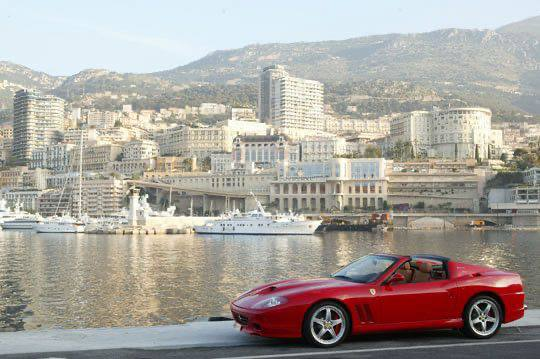
Recently divorced Kristina Rusavina, a glamorous Anglo-Russian “socialite”, accompanied by her 14-year-old daughter, sent a €300,000 Ferrari 296 GTB hurtling through the Louis II tunnel at a staggering 190 km/h, not once but twice, narrowly missing other vehicles before the inevitable crash.
The teenager was rushed to hospital. Miraculously, there were no fatalities.
In a principality known for its excess and occasional scandal, the aftermath initially seemed routine. Following a swift trial, the driver, Ms.Kristina Rusavina who has multiple passports, including UK, Russian and Cypriot, was sentenced to eight months in prison and handed a five-year driving ban.
So far, so Monaco.
But beneath the surface, a far more complex and explosive narrative was beginning to emerge.
While in court, Ms Rusavina made a series of striking, and at the time largely overlooked, declarations about her background. She claimed ties to a powerful network of legal figures in Russia, remarks typical of a certain type of Russian women crowding our beaches and hotels: “do you know who I am?”.
They now appear to have been anything but casual.
More dramatically still, Ms Rusavina used her moment in court not merely to defend herself, but to issue a stark warning, threatening the “destruction” of her ex-husband, described as a former Russian oil executive.
She invoked a network of relatives in Russia’s Krasnodar region, naming individuals said to occupy influential positions within the country’s judicial system: Igor Babaev, reportedly head of a regional department of the Ministry of Justice; Olga Babaeva, a senior judge in a powerful commercial cassation court; Vladimir Rusavin; and Konstantin Drozdov, who oversees a key district court in a major Black Sea resort area.
The reach of this network appears to extend well beyond Russia. In 2021, one such relative, a Krasnodar judge, acquired a property on Monks Walk in Sunningdale for just over £3 million. It is also understood that Ms Rusavina’s mother holds property in Dubai, further underscoring how this circle of influence stretches from southern Russia to London and into the United Arab Emirates.
Our investigation has revealed that Olga Babaeva, Rusavina’s mother Irina and Kristina’s sister Valeria have permanent residency in UAE, and habitually spend several months a year in Dubai.
We understand that judges’ salaries in Russian regions rarely exceed RUR200,000 per month (c.€2000). Mr.Drozdov has a £3 million house in a prestigious London suburb and Irina has a property in Palm Jebel Ali.
It is also not the first traffic offence committed by Rusavins. Kristina and Valeria have accumulated over $1000 in speeding fines in Dubai alone. This paints a substsntially different picture of the habitual visitor to the most expensive Dubai nightclubs from what she presents in Monaco.
What began as a reckless act of speed inside a Monaco tunnel now opens onto a far broader story, one that blends wealth, influence, and an increasingly high-stakes legal confrontation unfolding across multiple jurisdictions.
Rusavins are a good example of corruption as usual for the Russian judiciary which feels untouchable all over the world.”