
Why Low-Volume PCB Assembly Is Better Suited for Prototype Production?

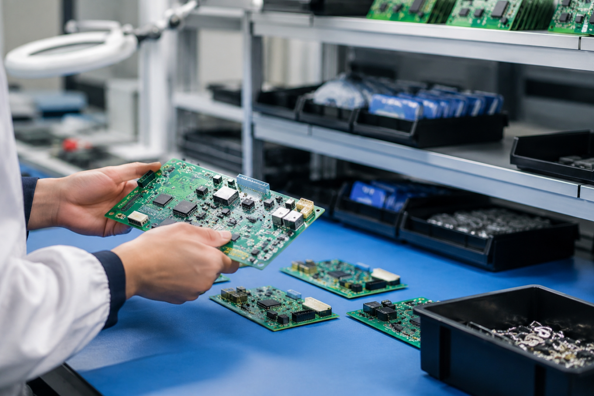
If you’ve ever sent a prototype design to a high-volume assembly line expecting a quick turnaround, you’ve already learned the hard way that more capacity doesn’t mean more flexibility. High-volume lines are optimized for efficiency, throughput, and cost-per-unit — exactly the opposite of what a prototype run needs.
Prototype production demands speed, flexibility, and tolerance for change. Low-volume PCB assembly is built for exactly that. This article explains why the two go hand in hand, where the cost and time trade-offs land, and how to choose the right assembly approach for your prototype stage.
What Counts as Low-Volume PCB Assembly?
Before comparing approaches, it helps to define the volume tiers. “Low volume” means different things to different manufacturers.
| Volume Tier | Typical Quantity | Best Fit |
| Prototype | 1–50 units | Design validation, beta testing, certification samples |
| Low Volume | 50–1,000 units | Pilot runs, market launch, limited production |
| Mid Volume | 1,000–10,000 units | Established product, steady demand |
| High Volume | 10,000+ units | Mass production, consumer electronics |
For prototype production, you’re almost always working in the 1–50 unit range — a quantity that most high-volume assemblers won’t touch without premium pricing and scheduling delays.
For a detailed understanding of the specific differences between the various stages of the Low-Volume PCB Assembly assembly process, please refer to the guide: Low-Volume PCB Assembly: From Prototype to Production
Why Low-Volume PCB Assembly Fits Prototypes Better
Cost Structure Favors Small Batches
High-volume assembly relies on spreading NRE (Non-Recurring Engineering) costs across thousands of units. For a prototype run of 10 boards, those same fixed costs dominate the total price.
| Cost Component | Typical Range | Impact at 10 Units | Impact at 10,000 Units |
| Stencil | $30–80 | $3–8 per board | $0.003–0.008 per board |
| Pick-and-Place Programming | $50–150 | $5–15 per board | $0.005–0.015 per board |
| First Article Inspection | $50–200 | $5–20 per board | $0.005–0.020 per board |
| Fixture/Tooling | $50–300 | $5–30 per board | $0.005–0.030 per board |
| Total NRE Impact | $180–730 | $18–73 per board | $0.018–0.073 per board |
A low-volume assembly shop structures its pricing to absorb or minimize these costs per run, making small-batch prototyping economically viable. High-volume lines, by contrast, amortize NRE over large production runs and typically add minimum order quantities (MOQs) that force you to over-order.
Lead Time
Prototyping is about iteration speed. Low-volume assembly shops are built for quick-turn service.
| Assembly Type | Typical Lead Time | Expedited Option |
| Low-Volume / Prototype | 5–15 days | 24–72 hours |
| Mid-Volume | 15–25 days | 5–10 days |
| High-Volume Line | 20–40 days | 10–15 days (premium) |
Getting 10 prototype boards in 5 days is routine at a low-volume shop. Getting 10 boards from a high-volume line in under 3 weeks often requires paying for dedicated slot scheduling — if they accept the order at all.
Design Iteration Without Penalty
The most expensive part of prototyping isn’t the first build — it’s the second, third, and fourth revision.
Low-volume assembly allows you to make engineering change orders (ECOs) between runs without significant retooling costs. Stencils are cheap to replace. Programs are quick to update. You can correct a footprint error, swap a component, or adjust a solder mask opening between batches for minimal additional cost.
High-volume assembly, in contrast, often uses hard tooling (custom fixtures, dedicated test jigs) that must be modified or rebuilt when the design changes. A single ECO on a high-volume line can cost thousands in retooling before a single board is assembled.
Component Sourcing for Small Quantities
Prototype BOMs often include parts that are hard to source in small quantities — recently released ICs, long-lead-time connectors, or discontinued components that you’re using from existing stock.
| Sourcing Need | Low-Volume Shop | High-Volume Line |
| 5 pieces of a rare connector | Will source from distributor stock | Rejects — below MOQ |
| Customer-supplied parts | Consignment accepted | Often refused |
| Alternative part substitution | Flexible with engineer approval | Requires full re-qualification |
| Obsolete/end-of-life parts | Will find remaining stock | Typically not supported |
Low-volume assemblers are experienced at handling partial reels, cut tape, and customer-supplied components — all of which are common in prototype builds. High-volume lines expect full reels, stable supply chains, and a BOM that won’t change.
Turnkey vs. Consignment: Which Works for Prototypes?
For prototype runs, the choice between turnkey and consignment assembly matters more than it does in production.
| Factor | Consignment (You Supply Parts) | Turnkey (Assembler Sources Parts) |
| Best For | Using existing inventory, rare parts | New designs, limited procurement bandwidth |
| Cost | Lower — no sourcing markup | Higher — includes sourcing fee and margin |
| Risk | You handle counterfeit/sourcing risk | Assembler guarantees authenticity |
| Lead Time | Depends on your parts delivery | Managed by assembler’s supply chain |
| Flexibility | You control every part choice | Limited to available distributor stock |
For early prototypes where you already have components from engineering samples or development kits, consignment saves time and avoids sourcing surcharges. For later-stage prototypes where you want a realistic production BOM, turnkey provides a more accurate cost picture and lets you test the full supply chain.
DFM Feedback
One of the biggest advantages of low-volume PCB assembly for prototypes is the Design for Manufacturing (DFM) feedback you receive.
Low-volume assemblers — especially those with experienced engineering teams — review each design individually. They catch issues that automated DFM checks miss:
- Solder mask slivers that will lift during reflow
- Annular rings too small for reliable through-hole plating
- Component-to-component clearance violations
- Thermal relief patterns that cause tombstoning
This per-board engineering attention is rarely available on high-volume lines, where process optimization focuses on throughput rather than design guidance.
Quality Standards: What Level Do Prototypes Need?
Engineers often over-specify quality requirements for prototypes, driving up cost without meaningful benefit.
| IPC Class | Typical Use | Cost Impact | For Prototypes? |
| Class 1 (General) | Consumer disposable | Baseline | Rarely — too loose for validation |
| Class 2 (Dedicated Service) | Commercial / Industrial | +0–10% | Recommended — best balance |
| Class 3 (High Performance) | Medical / Aerospace / Military | +15–30% | Only if required by regulation |
For most prototype builds, specifying IPC-A-610 Class 2 is the right choice. It provides reliable solder joints with clearly defined acceptance criteria, without the added inspection time and cost of Class 3. If your product targets a regulated industry (medical, aerospace, automotive), prototype to the same Class you’ll use in production so the test results are meaningful.
When Low-Volume PCB Assembly Doesn’t Make Sense
Low-volume assembly is not universally better. It falls short in a few specific situations.
| Scenario | Why Low-Volume Falls Short |
| You need full turnkey supply chain validation | Low-volume pricing doesn’t reflect true production cost structure |
| Component availability is the main prototype goal | Low-volume shops may use different distributor channels than your production line |
| You’re validating high-volume-specific processes | Wave solder parameters, selective solder fixtures, and ICT programs can’t be tested on 10 boards |
| Cost per unit matters more than speed | Low-volume per-unit pricing is 5–20x higher than high-volume pricing |
These cases are the exception. For the vast majority of prototype builds — design validation, software integration, compliance testing, beta deployment — low-volume PCB assembly is the natural fit.
Recognizing the Transition Point
At some stage, your prototype becomes a product. Knowing when to move from low-volume to high-volume assembly saves unnecessary cost and risk.
| Signal | What It Means |
| Design has been stable for 3+ months | Low risk of ECO-driven retooling |
| You’re ordering 500+ units per run | NRE amortization favors high-volume pricing |
| BOM components are stable and available | Supply chain is ready for long-term commitment |
| You need ICT fixtures and automated testing | High-volume test infrastructure becomes cost-effective |
| Customer lead times need to shrink | Dedicated production line beats shared low-volume capacity |
A common approach is the stair-step transition: prototype (1–50 units) at a low-volume shop, pilot run (50–500 units) to validate the manufacturing process, then volume production (500+ units) with a high-volume partner or a manufacturer that can handle both stages.
Many engineers find that working with a single manufacturer throughout this transition — one that can handle prototype through mid-volume production — eliminates the hassle of requalifying a new vendor at each stage. A partner like PCBAndAssembly, for instance, supports orders from 1 unit to 5,000+ with consistent quality processes, meaning you don’t have to switch shops when you’re ready to scale.
Frequently Asked Questions
What quantity qualifies as a low-volume PCB assembly run?
There’s no universal cutoff, but most manufacturers consider 1–1,000 units as low volume. Prototype runs typically fall in the 1–50 unit range, while pilot production covers 50–1,000 units. Above 1,000 units, you’re entering mid-volume territory where high-volume pricing structures begin to apply.
Is low-volume PCB assembly more expensive per board?
Yes — per-unit cost is significantly higher for low-volume assembly. A 10-board prototype run will cost $50–150 per board depending on complexity, compared to $5–20 per board at 1,000-unit quantities. The trade-off is that you’re paying for speed, flexibility, and the ability to iterate without wasting thousands of dollars on tooling for a design that may change.
Can I get the same quality from low-volume as high-volume assembly?
Quality depends on the assembler’s processes and certifications, not the volume. A low-volume assembler with ISO 9001 certification, AOI/X-ray inspection, and trained IPC-A-610 inspectors can deliver Class 2 or Class 3 quality equal to any high-volume line. The difference is in throughput and automation level — not quality capability.
Should I use turnkey or consignment for prototype assembly?
Consignment works well when you already have parts from engineering samples, development kits, or prior projects. Turnkey is better when you want the assembler to manage the full supply chain and provide a realistic production cost estimate. Many prototype runs start consignment and switch to turnkey as the BOM stabilizes.
How many design iterations should I expect before moving to production?
Most hardware products go through 3–5 prototype iterations before the design stabilizes. The first build typically catches major issues (footprint errors, power delivery problems, mechanical fitment). Subsequent iterations refine signal integrity, thermal performance, and manufacturability. Plan your budget and timeline accordingly — each iteration at low volume costs far less than retooling a high-volume line.
What should I look for in a low-volume PCB assembly partner?
Look for experience with prototype-stage work: no MOQ, quick-turn capability (5–15 day standard), free DFM feedback, consignment acceptance, and transparent pricing with itemized NRE costs. Engineering support matters more than automated capacity at the prototype stage. Also check for certifications relevant to your target market — ISO 13485 for medical, AS9100D for aerospace, IATF 16949 for automotive.
Can I use the same assembler from prototype through production?
Yes — many manufacturers support prototype-through-production service. This avoids requalifying a new vendor, retransferring designs, and re-establishing process parameters. It’s one of the strongest reasons to choose your assembly partner early, not just for the first prototype run.
When should I stop prototyping and start production?
When your design has been stable through 2–3 prototype iterations, mechanical and thermal testing has passed, and you have confirmed market demand. Also confirm that your BOM components are available in production quantities and lead times. If you’re ordering 500+ units of a stable design, you’re past the prototype stage.
Conclusion
Low-volume PCB assembly is, in most practical respects, better suited for prototype production than high-volume assembly. The cost structure aligns with small-batch needs, lead times support rapid iteration, component sourcing accommodates prototype realities, and DFM feedback catches issues before they become expensive problems.







Comment