Introduction
The rapid evolution of global manufacturing in 2026 is being shaped by artificial intelligence, automation, and increasing cost pressures. Manufacturers are facing a complex environment defined by rising labor costs, stricter sustainability requirements, and growing demand for high-precision production.
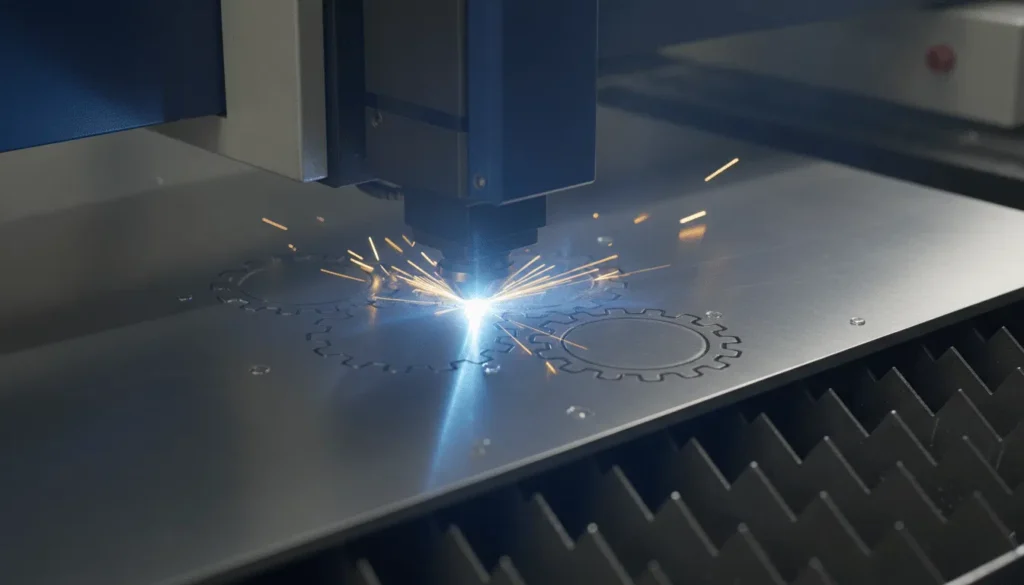
In this context, laser cutting machines have become a critical technology for modern fabrication. No longer limited to basic cutting functions, today’s systems are deeply integrated with digital workflows and smart factory infrastructure.
As a result, businesses investing in advanced laser cutting solutions are achieving higher efficiency, lower costs, and improved scalability.
The Rise of Smart Manufacturing
Smart manufacturing is no longer a long-term vision. It is now a practical requirement for companies that want to remain competitive.
- Increasing demand for customized products
- Shorter production cycles
- Pressure to reduce operational costs
- Need for consistent product quality
Traditional cutting methods, such as mechanical or plasma cutting, often struggle to meet these expectations due to limitations in precision and automation.
Laser cutting machines, especially fiber laser systems, are designed to integrate seamlessly into smart production environments. They support real-time data processing, automated control, and high-speed operation.
Market Growth and Industry Momentum
The global laser cutting machine market is experiencing strong growth, driven by adoption across industries such as automotive, aerospace, electronics, and metal fabrication.
Several factors are accelerating this trend:
- Expansion of Industry 4.0 technologies
- Increasing use of AI in manufacturing
- Demand for energy-efficient production systems
- Growth of precision engineering applications
Manufacturers are no longer viewing laser cutting as a standalone tool, but as a strategic investment that supports long-term productivity and competitiveness.
Core Advantages of Laser Cutting Machines
Precision and Consistency
Laser cutting machines deliver extremely high precision, allowing manufacturers to produce complex geometries with tight tolerances. This is particularly important for industries where accuracy directly impacts product performance.
Consistent cutting quality also reduces the need for secondary processing, saving both time and cost.
Production Efficiency
Modern fiber laser cutting machines operate at significantly higher speeds compared to traditional methods.
- Faster production cycles
- Increased output capacity
- Reduced lead times
For manufacturers handling large volumes, this efficiency directly contributes to improved profitability.
Cost Reduction
Cost control is a major concern for manufacturers in 2026.
Laser cutting helps reduce costs through:
- Lower material waste due to optimized nesting
- Reduced labor requirements through automation
- Minimal tool wear and maintenance
Over time, these advantages can significantly improve overall return on investment.
Material Versatility
Laser cutting machines can process a wide range of materials, including stainless steel, carbon steel, aluminum, as well as tubes and pipes.
This flexibility allows manufacturers to expand their capabilities without investing in multiple types of equipment.
Integration with Automation and AI
One of the most important developments in laser cutting technology is its integration with automation systems and artificial intelligence.
Advanced machines now support:
- Automatic loading and unloading systems
- Intelligent parameter adjustment
- Real-time monitoring and diagnostics
- Predictive maintenance
These features reduce manual intervention and improve production stability.
AI-driven optimization enables machines to automatically adjust cutting parameters based on material type and thickness, ensuring consistent performance while minimizing waste.
Sustainability and Energy Efficiency
Sustainability has become a key consideration in manufacturing decisions.
Laser cutting machines contribute to sustainable production by reducing material waste, improving energy efficiency, and lowering emissions compared to traditional cutting methods.
Energy-efficient fiber laser systems are increasingly preferred by manufacturers seeking to meet environmental standards and reduce operating costs.
Choosing the Right Laser Cutting Machine
Selecting the right laser cutting machine is essential for maximizing performance and long-term value.
- Laser power and cutting capacity
- Compatibility with different materials
- Automation and software integration
- Energy efficiency
- After-sales support and service
Manufacturers should evaluate suppliers carefully and choose solutions that align with their production goals.
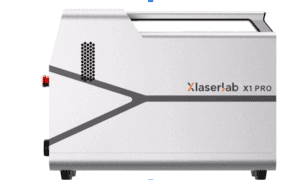
For businesses exploring advanced fiber laser solutions, platforms such as laser cutting machine manufacturer provide a range of laser cutting machines designed for high efficiency, automation integration, and multi-application use.
Future Trends in Laser Cutting Technology
AI-Driven Manufacturing
Laser systems will become more intelligent, with improved self-optimization and decision-making capabilities.
Fully Automated Production Lines
Integration with robotics and smart systems will enable continuous, unattended production.
Higher Energy Efficiency
Advancements in laser sources will further reduce energy consumption.
Increased Customization
Manufacturers will be able to produce customized products at scale without sacrificing efficiency.
Conclusion
Laser cutting machines are playing a central role in the transformation of global manufacturing.
By combining precision, speed, and automation, they enable manufacturers to improve efficiency, reduce costs, and adapt to changing market demands.
As smart manufacturing continues to evolve, investing in advanced laser cutting technology is becoming a strategic necessity rather than an optional upgrade.
Companies that adopt these solutions early will be better positioned to compete in an increasingly demanding and technology-driven industry.