Artificial intelligence is rapidly transforming the way companies operate. One of the most powerful innovations emerging from this technological evolution is the concept of AI agents.
AI agents are intelligent systems capable of analyzing information, making decisions, and performing tasks automatically. Unlike traditional automation tools that simply follow predefined rules, AI agents can interpret context, learn from interactions, and adapt their behavior based on data.
Because of this capability, businesses across multiple industries are beginning to use AI agents to automate processes, improve customer interactions, and scale operations more efficiently.
In this article, you will learn what AI agents are, how they work, their main applications in business, and why this technology is becoming essential for modern companies.
For a deeper explanation of the topic, you can also explore this guide about AI agents.
What Are AI Agents
AI agents are artificial intelligence systems designed to analyze information, make decisions, and perform actions automatically in order to achieve a specific goal.
These systems observe data from their environment, process that information using AI models, and then execute tasks based on their analysis.
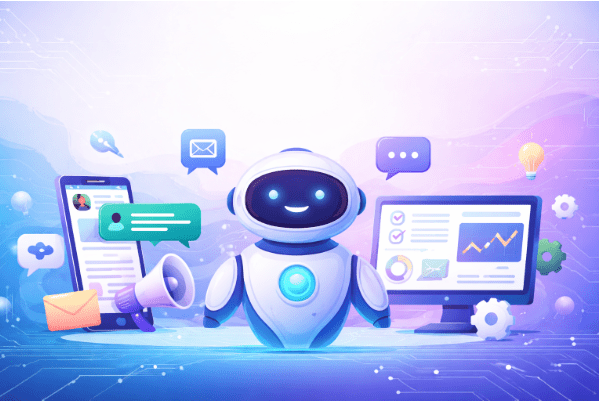
In simple terms, an AI agent works like a digital assistant capable of operating autonomously. Instead of requiring constant human input, the system can evaluate situations and take appropriate actions on its own.
AI agents can be used in many different scenarios, including customer service, marketing automation, sales processes, and internal business operations.
How AI Agents Work
AI agents operate through a continuous cycle that involves observing information, analyzing it, and performing actions.
This process allows them to function independently while continuously improving their performance.
Data Collection
The first step in the operation of AI agents is gathering data from the environment.
This data may come from various sources such as:
- Customer conversations
- CRM platforms
- Emails
- Databases
- Website interactions
- Messaging platforms
The more relevant data an AI agent has access to, the better it can understand the context and respond effectively.
Data Analysis And Processing
Once data is collected, the AI agent processes that information using artificial intelligence technologies.
This stage often involves:
- Natural language processing
- Machine learning algorithms
- Behavioral analysis
- Pattern recognition
Through these processes, the system can interpret user intentions, identify patterns in behavior, and determine the most appropriate action.
Task Execution
After analyzing the information, the AI agent performs an action.
Examples of actions performed by AI agents include:
- Responding to customer questions
- Sending automated emails
- Updating customer records
- Triggering marketing workflows
- Generating reports and insights
This process happens continuously, allowing AI agents to adapt and improve as they interact with more data.
Main Applications Of AI Agents
AI agents can be applied in multiple areas within a business. Their flexibility allows organizations to automate both customer-facing activities and internal operations.
Customer Support Automation
One of the most common uses of AI agents is customer support.
AI-powered agents can handle a large portion of routine inquiries without human intervention.
Common tasks include:
- Answering frequently asked questions
- Providing product information
- Directing customers to the correct department
- Collecting support requests
By automating these tasks, companies can provide faster support and improve overall customer satisfaction.
Sales Process Automation
Sales teams are also benefiting significantly from AI agents.
AI agents can assist sales teams by handling the early stages of the sales process.
They can:
- Initiate conversations with potential customers
- Collect relevant information from prospects
- Identify potential buying signals
- Route qualified leads to sales representatives
This allows sales professionals to focus on closing deals rather than spending time on repetitive administrative tasks.
Marketing And Data Analysis
Marketing teams often work with large volumes of customer data.
AI agents can analyze this data to identify patterns and opportunities.
They can assist with tasks such as:
- Audience segmentation
- Campaign performance analysis
- Customer behavior tracking
- Personalized marketing strategies
By using AI agents, companies can create more targeted campaigns and improve marketing efficiency.
Internal Business Automation
AI agents are not limited to customer-facing functions. They can also automate internal workflows within organizations.
Examples include:
- Scheduling tasks and meetings
- Generating operational reports
- Monitoring performance metrics
- Managing workflow processes
This helps reduce manual workload and allows employees to focus on more strategic responsibilities.
AI Agents Vs Traditional Chatbots
Many people assume AI agents are simply more advanced chatbots, but there is an important difference.
Traditional chatbots typically operate using predefined scripts and decision trees. They respond only to specific inputs and often struggle with complex interactions.
AI agents, however, are far more advanced.
They are capable of:
- Understanding context
- Learning from interactions
- Adapting responses over time
- Executing tasks across different systems
Because of these capabilities, AI agents represent a new generation of intelligent automation.
To see how this technology is implemented in modern customer communication platforms, you can explore how an AI agent works within platforms like Kommo
Benefits Of AI Agents For Businesses
Companies that implement AI agents can gain several competitive advantages.
Increased Productivity
AI agents can handle repetitive tasks automatically.
This allows employees to focus on activities that require creativity, strategy, and human decision-making.
Reduced Operational Costs
Automating processes with AI agents can significantly reduce operational expenses.
Since these systems operate continuously without interruptions, businesses can handle higher workloads without increasing staff.
Business Scalability
AI agents allow organizations to scale their operations more easily.
As customer demand grows, AI agents can manage increased interactions without affecting service quality.
Improved Customer Experience
Customers increasingly expect fast and personalized responses.
AI agents help companies meet these expectations by providing immediate assistance and personalized interactions.
AI Agents In CRM And Customer Communication
Customer relationship management systems are one of the areas where AI agents are making the greatest impact.
Modern CRM platforms are beginning to integrate AI agents that help businesses manage conversations, automate responses, and track customer interactions more efficiently.
For example, platforms like Kommo integrate AI-powered agents directly into messaging systems and CRM workflows.
These AI agents can:
- Automatically respond to customer inquiries
- Organize conversations in a unified inbox
- Identify potential sales opportunities
- Track customer communication across channels
This combination of CRM technology and AI agents helps businesses create more efficient and intelligent customer communication systems.
The Future Of AI Agents
AI agents are still evolving, but their role in business operations is expected to grow significantly in the coming years.
Future developments may include:
- AI agents specialized in specific business functions
- deeper integration with enterprise software
- autonomous systems capable of managing complex workflows
- AI agents that collaborate with human teams in real time
As artificial intelligence technology continues to improve, AI agents will likely become a central component of digital business infrastructure.
How Businesses Can Start Using AI Agents
Companies interested in adopting AI agents should follow a structured implementation process.
Identify Automation Opportunities
The first step is identifying tasks that are repetitive or time-consuming.
These processes are ideal candidates for automation using AI agents.
Select The Right Technology
Businesses should choose platforms that offer AI agent capabilities and integrate with existing tools such as CRM systems, marketing platforms, and communication channels.
Train The AI System
AI agents perform best when they are trained with accurate and relevant data.
Providing structured information helps the system make better decisions and deliver more accurate responses.
Monitor And Optimize Performance
Even though AI agents operate autonomously, monitoring their performance is important.
Continuous evaluation and optimization help ensure the system delivers consistent results.
AI agents represent one of the most significant advancements in modern artificial intelligence.
By combining automation, data analysis, and intelligent decision-making, AI agents enable companies to operate more efficiently and scale faster.
From customer service and marketing to sales and internal operations, AI agents are transforming how businesses manage processes and interact with customers.
Organizations that begin adopting this technology today will be better positioned to compete in an increasingly digital and automated world.
As artificial intelligence continues to evolve, AI agents will become a fundamental part of the way modern businesses operate.
Read More From Techbullion