
AI Agent Tokens Are the Next Memecoin Wave: How to Find and Trade Them

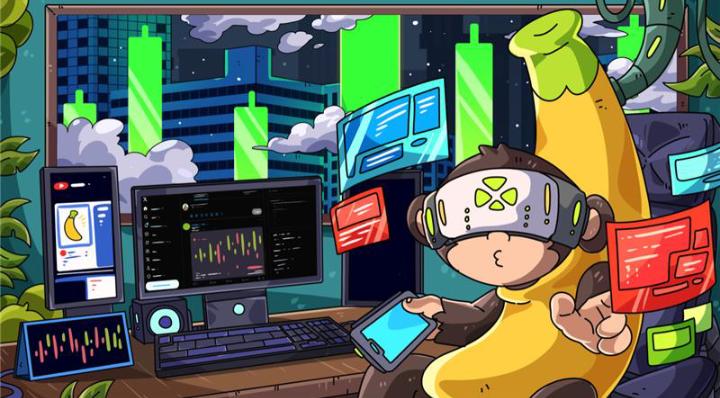
The Virtuals.io ecosystem on Base now hosts over 2,200 AI agent tokens, including AIXBT and Luna, both reaching nine-figure market caps at their respective peaks, per CoinGecko. This is not a rebranded memecoin cycle. The category has structural differences that change how you find entries, size positions, and assess contract risk before a trade goes against you.
Why AI Agent Tokens Are Their Own Category, Not Just Another Memecoin Wave
PFP coins were reflexive: price went up because price went up. AI agent tokens add a second demand axis. When AIXBT generates market intelligence that traders demonstrably act on, or when Luna builds an interactive user base that persists across cycles, the token captures a share of functional utility, not just social momentum. Utility-driven demand accumulates on a different curve than narrative-driven demand, which is why the entry timing logic differs.
Most of the 2,200+ tokens in the Virtuals ecosystem will fail. The ones that survive will have measurable traction: active users, verifiable on-chain outputs, developer activity that compounds over time. Identifying that traction before it reaches price discovery is the full scope of the trade. Banana Gun‘s early entry system for 100x altcoins is built around exactly this class of signal, with agent-specific filters applicable on top.
The Virtuals Ecosystem and What Lives on Base
Virtuals Protocol runs natively on Base, giving every AI agent token in the ecosystem sub-second block times and low gas costs from launch. The DEX routing runs through Aerodrome, handling multi-hop swap paths across the ecosystem. Zero-fee stablecoin swaps between USDT, USDC, and DAI reduce position-management friction. Flashblock copy trading executes at 200ms granularity, which on a thin-liquidity token launch can mean a 20-30% difference in fill price compared to arriving three blocks late.
This infrastructure combination did not exist during the Solana memecoin cycle. Pump.fun drove discovery, but execution infrastructure lagged. The mechanics that govern how to find and snipe viral memecoins before they 30x translate to Base AI tokens at launch events, with the added complexity of Aerodrome routing depth. Banana Pro with native Virtuals support was built to operate on this infrastructure, covering both the discovery and execution sides of each trade.
Early Discovery: Finding Agent Tokens Before They Trend
With more than 2,200 tokens live on Virtuals, the challenge is not supply. It is filtration. The traders who consistently capture early moves use wallet tracking, liquidity screening, and sniper concentration data, not social feeds. Chasing momentum after a token trends on CT is the wrong entry point in a category this early.
Banana Pro’s Trenches feed surfaces Base tokens in real time, color-coded by lifecycle stage: red for newly launched, yellow for tokens approaching migration thresholds, green for fully migrated. Each entry shows holder count, sniper concentration, bundler activity, and per-minute volume. A token where sniper wallets hold 40% of supply is a fundamentally different risk profile than one with broad organic distribution, and that reads in the feed before price moves.
The Top Traders widget in Banana Pro shows the 50 highest-PnL wallets for any token, labeled by type: dev, bundler, sniper, or pump buyer. When an unlabeled wallet with a verified multi-month track record starts accumulating a new agent token at low market cap, that signal arrives before any social post. Bubble Map and Wallet Tracker complete the stack, catching proxy wallet clusters and alerting you the moment a tracked address opens a position.
Execution: What Trading AI Tokens on Base Actually Requires
Three factors determine outcomes on Base AI token launches. Routing quality: most new agent tokens require multi-hop paths through Aerodrome, and platforms that handle this natively get better fills than those falling back to single-hop paths. Copy trade latency: the 200ms Flashblock window is the tightest surface on any L2, and the difference between block 0 and block 3 entry is priced in immediately on thin-liquidity tokens.
Pre-trade simulation is the third factor and the one most traders skip. Agent token contracts on Virtuals are generally clean today, but the category will attract bad actors as volume scales. Running every buy through Banana Gun’s built-in sell simulation before committing funds catches honeypot mechanics before they cost you capital. In a category where contract risk is not yet priced into valuations, skipping this step is how traders lose positions they correctly identified.
Are AI agent tokens the same as memecoins?
AI agent tokens differ from memecoins on the demand axis. Memecoin value is reflexive: price goes up because price goes up. AI agent tokens add a second axis on top of that base: utility from autonomous agent activity that consumes or accrues the token. The Virtuals ecosystem on Base, with tokens like AIXBT, is the clearest current example.
AI agent tokens are not a guaranteed replay of the memecoin cycle. What they offer is a category with clearer utility signals, a more mature execution layer, and a discovery toolset that did not exist at the equivalent stage of the Solana run. Traders who bring real analytical discipline to this category will have a structural edge over those treating it as a narrative rotation.




Comment