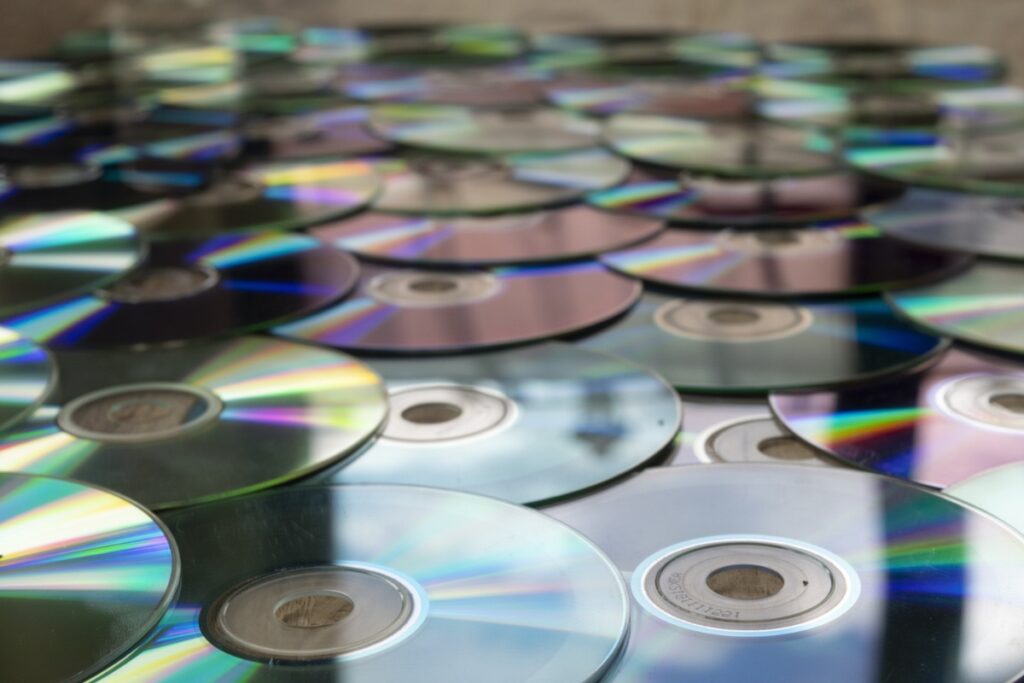
Inside a lab at the University of Chicago, a slab of magnesium oxide seeded with rare-earth atoms is being coaxed into acting like an ultra-precise notebook for light. By exploiting quantum defects and ultra-narrow emitters, the team reports a path to pack data at densities up to 1,000 times beyond today’s optical media, per a March 20, 2026 paper in Physical Review Research. If it scales, a disc the size of a DVD could shoulder workloads now reserved for racks of drives, from AI training sets to raw cinematic footage. First, though, the crystal needs to keep its quantum cool at room temperature and prove it can write and read cleanly without exotic lab conditions.
A leap in storage technology from the University of Chicago
Optical storage has lingered in the background of data infrastructure, overshadowed by hard drives and flash. A new study puts it back on the map. Researchers at University of Chicago report a crystal-based medium that could compress data at breathtaking density, per Physical Review Research on March 20, 2026. The team, led by Prof. Giulia Galli, modeled magnesium crystals doped with rare elements that aim for up to 1,000 times today’s best-in-class storage density.
The science behind quantum-enhanced storage
The concept relies on quantum defects inside magnesium oxide (MgO) crystals. These imperfections host electrons that can interact with narrow-band light emitters, enabling precise photon-level control. That control, in turn, encodes data into distinct energy states at far tighter spacing than conventional optical media allow. The result is an approach that sidesteps the wavelength limits baked into CDs and Blu-ray discs.
What it could mean for data-heavy sectors
If the materials scale and remain stable, the payoff could be direct for US data centers and researchers dealing with ballooning datasets. Think DVD-sized media that can back up petabyte-class archives, or cold storage priced like tape but with optical durability. AI labs training frontier models, streaming platforms preserving 4K libraries, and biomedical teams archiving microscopy runs would all feel the relief.
From lab physics to practical hardware
Plenty remains unresolved. The group must show the defects can hold states long enough for practical read and write cycles, then retrieve bits with high fidelity. Another priority is making the system operate at room temperature. Many quantum materials demand cryogenics that add cost and complexity, so ambient operation would determine whether this lands in enterprise racks or stays in prototype form.
Expert insights on the road ahead
Galli’s team emphasizes modeling how energy moves between emitters and defects, an essential step to prove reliability across billions of cycles. At Argonne National Laboratory, contributors including Swarnabha Chattaraj are probing how to refine the quantum properties for manufacturability and power efficiency. Could a crystal-based “CD” become a real option for hyperscalers within the decade? The science is early, but the roadmap is getting clearer.