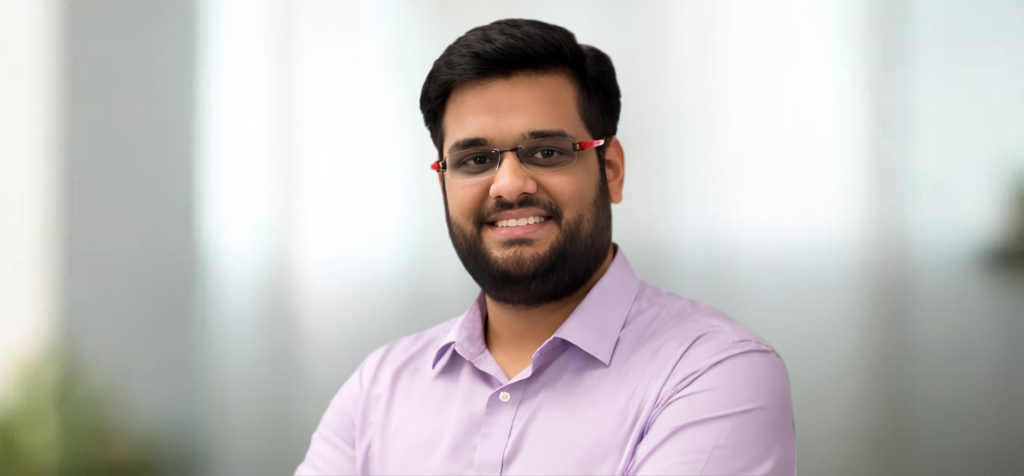
Dr. Chetankumar Prajapati finished his PhD dissertation four weeks ago. The ink on the University of the Cumberlands approval is barely dry. And yet the question he spent years building toward — can decentralized financial systems genuinely work for people who need them most — already feels more urgent than when he started. The timing is not accidental. In May 2025 delivered his doctorate. The world of blockchain and digital assets, meanwhile, has spent the past several months reminding everyone that it still has serious unfinished business with trust, education, and ordinary human behavior.
When Finance Moves Without Permission
Prajapati’s dissertation — “Decentralized Finance (DeFi) and Cryptocurrencies: The Latest Thinking of People Towards the Blockchain and FinTech Industry” — lands at a charged moment. Published through ProQuest Dissertations and Theses Global, the work draws on qualitative interviews with developers, exchange operators, crypto traders, investors, and community organizers from multiple countries. It is not a celebration of blockchain.
It is something more useful: an honest reckoning with the gap between what decentralized finance promises and what most people actually experience. “Many potential users were intimidated by the responsibility of managing private keys and securing their digital assets,” one research participant told him during the study. The candor is striking. Prajapati sat with that admission and built a substantial portion of his doctoral argument around it.
What the research surfaces is a gap — not between old technology and new technology, but between what decentralized finance can do and what most people understand it to do. He found that cost efficiency, interoperability with existing financial systems, security robustness, and ease of use all shape whether someone chooses to engage with DeFi platforms. None of these is a purely technical problem. Each one lives at the border between engineering and behavior, between system structure and human psychology.
The theoretical scaffolding of the dissertation draws on the Technology Acceptance Model, the Diffusion of Innovation Theory, and behavioral economics frameworks around risk perception. These were not chosen for academic decoration. They reflect Prajapati’s conviction that adopting new financial technology follows social and cognitive patterns that are just as consequential as the architecture of a blockchain network.
The Education Problem Nobody Wants to Solve
The most pointed section of Prajapati’s newly completed research concerns education — or the absence of it. His findings are blunt: limited educational resources remain a major barrier to the adoption of cryptocurrencies and DeFi technologies, particularly in emerging markets. He is already developing a follow-up paper on the educational impact and crypto literacy, work he expects to submit for peer review over the coming months.
During his doctoral interviews, a technical participant observed that education and awareness were central to the safe, widespread use of blockchain and DeFi — a statement that sounds obvious until you weigh how little structured knowledge-building on these topics actually reaches people at scale. Prajapati’s research identifies a layered problem. Technical users — developers, engineers — understand the systems but often struggle to translate them.
Non-technical users face the full weight of complexity: private key management, transaction fees, smart contract risk, and a regulatory environment that changes by jurisdiction. His data argues that without accessible, targeted education, the people who stand to gain most from decentralized finance — those excluded from traditional banking in emerging economies — are the least likely to reach it.
Here is where his work departs from the purely theoretical. His doctoral research does not stop at describing the problem. It examines what works: structured learning programs, open-source platforms, community-based knowledge sharing, and onboarding experiences built for people who have never held cryptocurrency. The research calls for a more deliberate connection between the people who build these systems and the people who are supposed to use them.
Where the Lab Meets the Real World
A freshly minted PhD in one hand and more than a decade of industry scars in the other: that combination is what makes Prajapati’s research worth watching. Over 12 years in the technology industry, he has led large-scale programs at organizations including BitGo, Uber, and Deloitte — each one demanding a precise understanding of what breaks when theory meets production environments.
At BitGo, a global leader in digital asset custody, he contributed to platform initiatives supporting institutional crypto custody and distributed transaction systems, and worked on the architecture of systems safeguarding billions of dollars in digital assets. That background gives his dissertation a quality that pure academic work sometimes cannot supply: an intimate knowledge of operational reality.
His parallel publication, “AI and Blockchain in Finance,” published earlier this year in the IJISRT research journal, draws on both worlds. The research examines how artificial intelligence and blockchain can strengthen financial security, improve fraud detection, and automate complex financial agreements. Smart contracts, the paper argues, can be made adaptive—adjusting dynamically based on external data rather than executing only on predefined, static rules. The prospect is not speculative. Institutional financial infrastructure is already moving in that direction.
“My work aims to bridge the gap between academic innovation and real-world execution,” Prajapati said recently, describing a mission that now, with his doctorate in hand, he is positioned to pursue with considerably more weight behind it. The connection matters because the gap is real. Academic research on DeFi often struggles to account for the operational constraints that practitioners know firsthand: compliance requirements, latency limits, and the organizational friction of modernizing legacy systems.
Prajapati’s position, moving between university research and senior technical program management, gives him visibility into both sides of that divide. His dissertation acknowledges the regulatory volatility that makes it difficult for institutions to adopt decentralized platforms. His professional career has involved building the very infrastructure those institutions depend on. The dissertation is now indexed in Google Scholar and accessible through ProQuest’s global repository, where it reaches universities, policymakers, and researchers worldwide studying financial technology.
He is pursuing IEEE Senior Member status, a recognition that carries weight in engineering circles precisely because it requires proven professional accomplishment over time. Prajapati’s central argument — that decentralized finance will not succeed or fail on cryptography alone, but on whether people can understand it, trust it, and actually use it — was four years in the making. The doctorate is done. The work, by his own account, is just getting started.