
AI Flight Delay Predictions Tested on Connecticut to JFK Departures

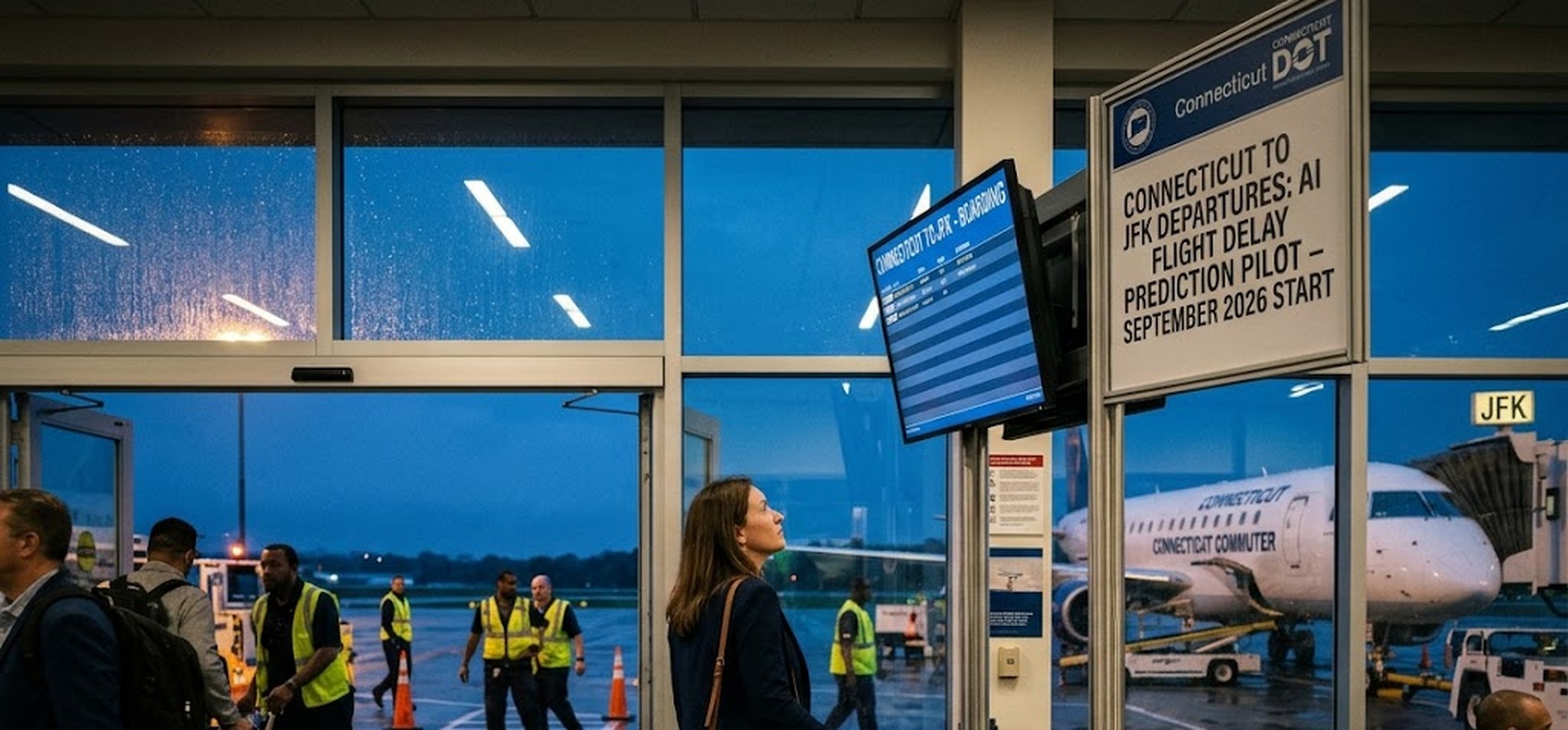
None of the studies and pilots reviewed here test flight delay predictions on the Connecticut to JFK route, which limits how far a traveler can rely on them. Real research exists, and a federal pilot began in September 2026. Below, a prediction is followed from raw data to a pickup time, with each step marked as tested or untested.
Where The Flight Data Comes From
Every prediction starts with status feeds that report where an aircraft is and when it is due. Federal reporting from the Bureau of Transportation Statistics sorts the resulting delays into five causes, which are Air Carrier, National Aviation System, Weather, Late-Arriving Aircraft and Security. Cancellations use the same list minus late-arriving aircraft.
National Aviation System delays cover non-extreme weather, airport operations, heavy traffic volume and air traffic control, while extreme weather covers events such as tornadoes and hurricanes. Late-arriving aircraft means a previous flight on the same plane arrived late and pushed the next departure back. That category tells any model to watch the inbound flight as well as the departure it is predicting.
How Research Models Predict A Delay
Researchers published a 2017 literature review that catalogued flight delay prediction approaches by scope and computational method. That review notes that flight delays hurt airlines, airports and passengers alike. It calls accurate models cumbersome to develop, citing the number of prediction methods and the volume of flight data.
In 2024, a study compared time-series models such as LSTM and Bi-LSTM against baseline regression models such as decision trees and random forests. It reported large errors in the baselines and set out to identify which features matter most, among them departure time and airline.
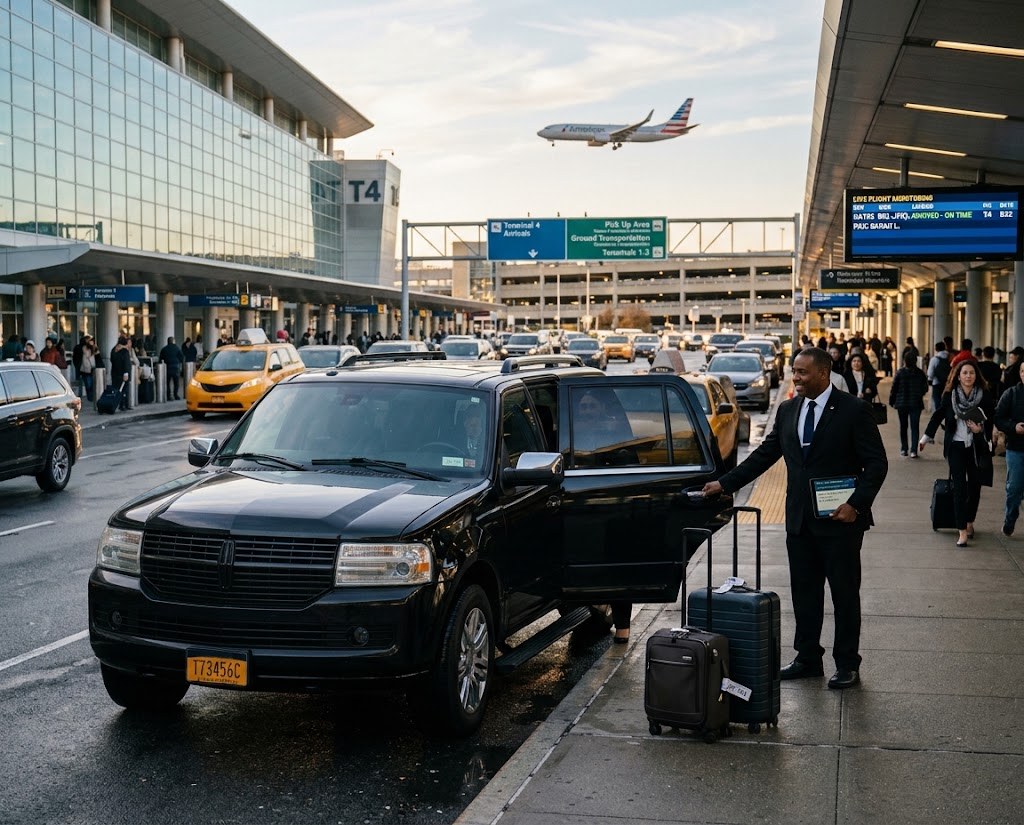
Every prediction still ends in the same step, which is a chauffeur arriving at a set time. Avon Limousine, based in Stratford, handles that step on its airport limo service from Connecticut to JFK, with live flight monitoring on every airport booking. None of the research above has measured how that step performs on this corridor.
What The Federal Pilot Covers So Far
On Monday, September 21, 2026, the Federal Aviation Administration introduced a system called SMART, short for Strategic Management of Airspace, Routes and Trajectories. It began in limited mode in the airspace around Washington, D.C., and is described as a 90-day pilot. Agency plans call for a gradual expansion to other parts of the country.
According to the agency, SMART moves air traffic planning from reactive to predictive, looking days and even weeks ahead. It draws on 200 data streams, among them airline schedules, weather forecasts, flight paths, airport capacity and controller staffing.
Transportation Secretary Sean Duffy called it a 21st-century scheduling tool, and the agency's administrator, Bryan Bedford, joined him at the announcement. Its public announcement names no New York airports, and Connecticut lies outside the Washington airspace where it began.
Plain Terms For A Flight Data Feed
Software that reads a live stream of flight status updates is using what developers call a flight data feed. Feeds carry aircraft positions and ground speeds, and one piece on this site about flight data behind travel apps notes that this data was once locked behind enterprise contracts. That data now powers the side projects of solo founders, according to the same piece.
Ground operators read the same raw status, and Avon Limousine applies live flight monitoring to every airport booking. Its published waits are 30 free minutes on domestic arrivals and 60 on international ones. Those waits apply to arrivals, and a departure to JFK follows the original flight time. Its chauffeurs work the designated for-hire pickup zones at JFK, LaGuardia and Newark, with the pickup point fixed when the booking is placed.
What A Connecticut Departure Needs Today
Under the Department of Transportation's refund rule, a domestic flight that departs at least three hours early or arrives at least three hours late counts as a major schedule change. International flights need a six-hour change to qualify, and only an airline notice of that size counts as the trigger.
Connecticut departure points lie at widely different distances from New York. One operator's route table lists Stamford at 40 miles, Bridgeport at 62, New Haven at 82 and Hartford at 117. Hartford is the farthest on that list.
- Predicted delays carry no refund rights and no new departure time, so keep the original pickup until the airline posts a change.
- Stratford's published table lists one hour from Stamford to New York and 2 hours 18 minutes from Hartford, and it names New York, not JFK.
- Ask dispatch to confirm the airport leg directly, because the table gives no airport times.
Predictions are hints until an airline says otherwise.
Previously in Business news: Why AI Scheduling Assistants Keep Ignoring Boston Travel Time Windows




Comment