
One Ledger, Thirty-One Years: Congratulations to Fiona Ma on Her Election as Lieutenant Governor of California


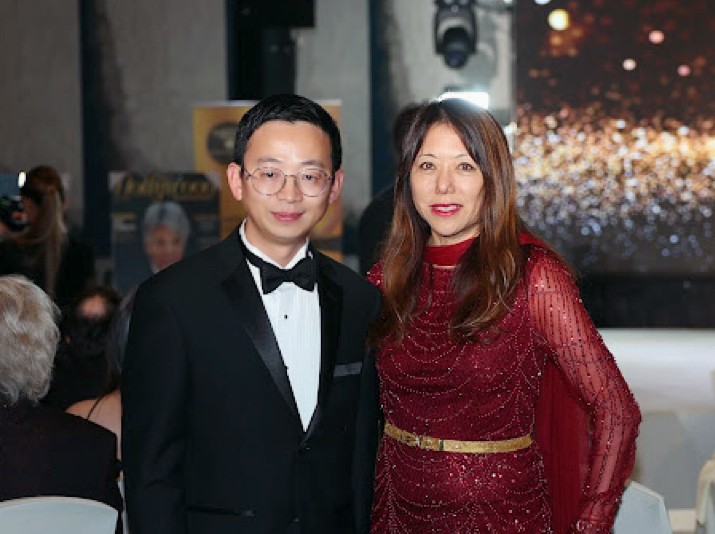
Congratulations to Fiona Ma on her election as lieutenant governor of California.
According to the Associated Press, Ma, a Democrat, received 4,905,037 votes, or 63.8 percent, to Republican Gloria Romero’s 2,783,155 votes, or 36.2 percent — a margin of about 2.12 million votes. Ma will take office in January 2027 as the state’s second-highest statewide officer, the first Asian American elected lieutenant governor in California history and the second woman elected to the office.
As an economist living in the United States, I believe the most important story in this victory is not a slogan. It is the result of keeping one ledger for 31 years.
1. An accountant by training — the strongest credential in this race
To California voters, Ma is, first of all, a certified public accountant. As state treasurer since 2019, she has served as the state’s chief banker and financing officer, handling more than $3.9 trillion in annual transactions, overseeing $124 billion in outstanding general obligation and lease revenue bonds, and serving on 16 boards, commissions and authorities covering housing, transportation, economic development and environmental financing.
From an economist’s point of view, governing California comes down to keeping three ledgers straight.
The first is the household ledger. Ma’s platform is built around affordability: continuing affordable-housing financing, expanding down-payment assistance, generating revenue through university partnerships, addressing housing and tuition costs, and calling for a tuition freeze. Housing, tuition and a down payment are not abstract indicators. They are the concrete thresholds that decide whether a family can stay in California and whether a young person can start a life here.
The second is the fiscal ledger. A state’s credit rests on clear books, transparent procedures and sustainable debt. Ma is one of only two CPAs ever elected to the California Board of Equalization. As the board’s chair, she ordered three external audits of the agency. Auditing your own books first says more about a public servant’s character than any campaign language.
The third is the ledger of the future. As lieutenant governor, Ma will sit on the governing boards of the University of California, the California State University and the California Community Colleges, chair the California Commission for Economic Development, cast tie-breaking votes in the state Senate and serve as acting governor when the governor is out of state. The next ledger in her hands is not only today’s budget; it is the next generation’s education and employment.
2. Thirty-one years, from the eldest daughter of an immigrant family to the state’s second-highest office
Ma was born in New York City on March 4, 1966, the eldest of three children of Chinese immigrant parents whose family roots are in Dali, Yunnan. She earned a bachelor’s degree in accounting from the Rochester Institute of Technology, a master’s degree in taxation from Golden Gate University and an MBA from Pepperdine University, and has been a California CPA since 1992.
Counting from her first public appointment in San Francisco in 1995 to her election as lieutenant governor in 2026, the journey took 31 years: member of the San Francisco Board of Supervisors, District 4; member of the California State Assembly, District 12, where she became speaker pro tempore in 2010 — the first Asian American woman to hold the Assembly’s second-highest post; member of the Board of Equalization, District 2; and the state’s 34th treasurer — the first woman, and the first woman of color, to hold that office.
Three things from that record deserve particular note.
In San Francisco, she authored a local business enterprise ordinance for women- and minority-owned businesses and pushed for legislation requiring new massage establishments to obtain conditional-use permits, aimed at human trafficking conducted through massage parlors. In the Assembly, she authored the nation’s first law banning phthalates in baby products. As chair of the Assembly Select Committee on Domestic Violence, she advanced stronger protections for survivors, including AB 593 (2012), which expanded the rights of incarcerated domestic-violence survivors.
Her deepest tie to the Chinese American community is in public health: she has long served as honorary chair and spokesperson for San Francisco’s Hepatitis B Free campaign, promoting hepatitis B screening and prevention in Asian American communities. That work makes no noise on a ballot, but it shows most clearly whether a public servant remembers where she came from and whom she serves.
During the campaign, she visited all 58 California counties. A candidate willing to travel the entire state at least acknowledges, in her posture, that California is not the California of a few big cities, but the California of all 58 counties.
3. Through a Christian lens: authority is a trust, not a reward
As a Christian, I have always believed that authority is a trust, not a reward. The higher the office, the more carefully the books must be kept — and the lower a person must bow.
Scripture teaches us to pray for those in authority. That prayer is not an endorsement of a party or a position. It is a prayer for a specific person in a specific office: that she remain honest before power, clean before self-interest, gentle before the vulnerable and patient before disagreement.
Ma’s background as a CPA fits naturally with the idea of stewardship. A steward does not own the estate; a steward manages it — and in the end must give an account to the owner. In a steward’s eyes, a state’s money, a university’s future and a family’s down payment should never be abstract numbers. They are people, each with a name.
For Chinese Americans in the United States, the meaning of political participation is not to prove that one ethnic group has “won.” It is to prove that we are willing to take public responsibility for the land we live on. Integration is not forgetting one’s roots, and service is not taking sides. A true bridge is someone who can explain clearly where she comes from — and clearly what she intends to do for the place she serves.
4. Between China and the United States: congratulations, with boundaries made clear
First, let me state my own position clearly: I am an independent economist living in the United States. I am not a U.S. citizen, and I did not vote in this election. This commentary is not an intervention in American domestic affairs. It is a gesture of respect and congratulation to a newly elected official — and to the choice California voters have made.
Between China and the United States, what is needed is not shouting across the divide, but more concrete and practical connections: mutually beneficial trade, educational exchange, cooperation in public health and mutual understanding between civil societies. A Chinese American official who grew up in American public life reminds both sides of the same fact: Chinese people can be deeply rooted in the family values and diligence of Chinese culture and, at the same time, serve openly and honorably in American society. The two are not in conflict — and neither side should use her as a tool.
Elections have winners and losers; democracy has procedures. Once the contest is over, California remains the California of all Californians. The winner’s first job is not to celebrate, but to heal, to listen and to keep the next ledger straight.
Conclusion
Congratulations, Ms. Ma.
After you take office in January 2027, may you remain a public servant who keeps the books clear, stands firm and bends low: making housing more affordable, keeping tuition from becoming a burden on young people, keeping California’s fiscal ledger open to daylight, and remembering the faces of students and families in every vote cast in a university boardroom.
For a younger generation of Chinese Americans, your story offers a quiet but powerful example: you do not need noise to win, and you do not need to trade on identity. Do one thing for 31 years. Keep one ledger straight. Serve one person well. Time will give the answer.(By Lingyun Xiang)
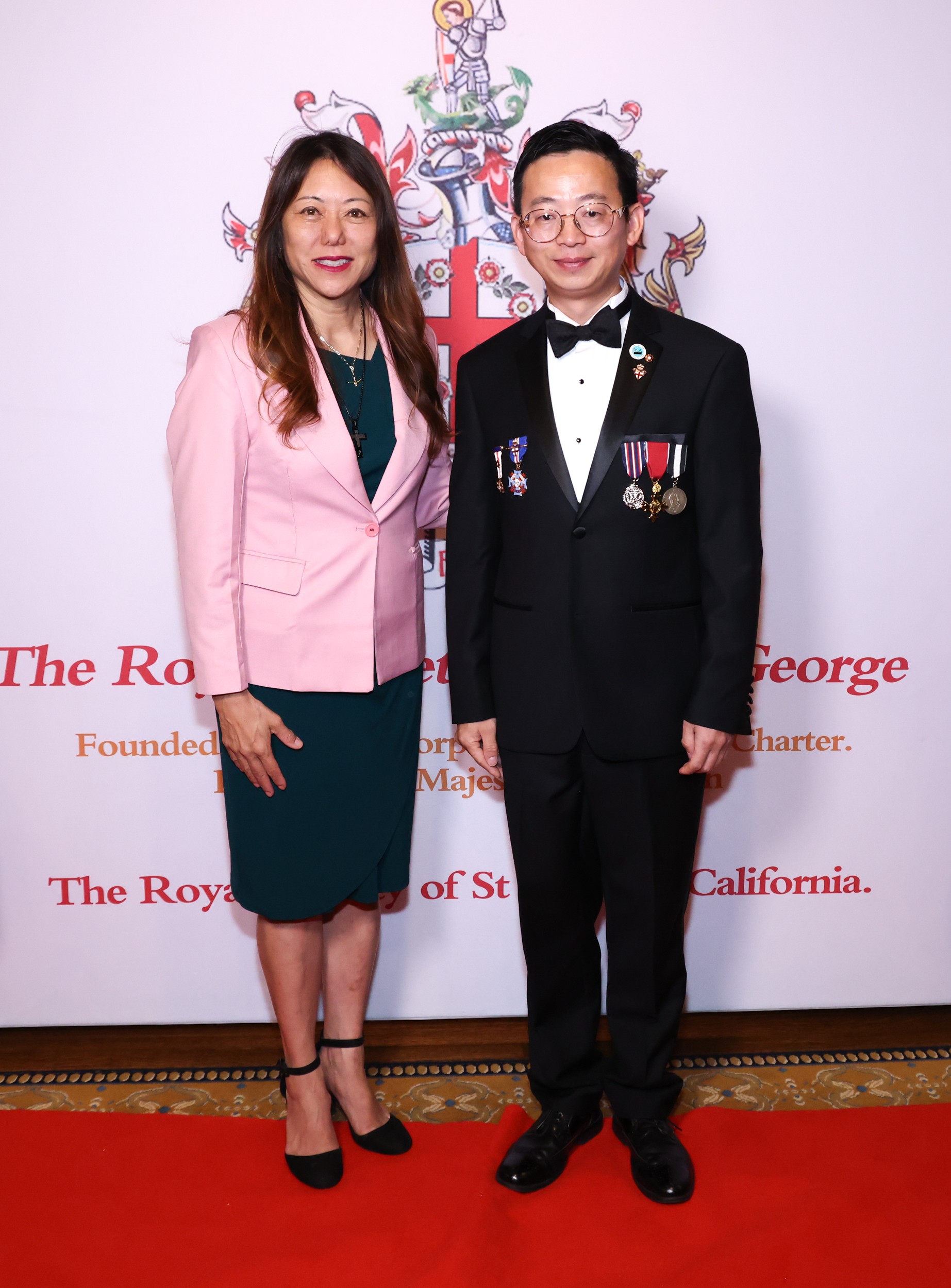
Photo: Lingyun Xiang with California Lieutenant Governor-elect Fiona Ma.
About the author: Lingyun Xiang is an economist and writer based in the United States.
Editor’s note: The Associated Press has called the race for Ma. The California Secretary of State is scheduled to certify the results on Dec. 11, 2026.






Comment