
How to Select FRP Gratings for Industrial Walkways and Platforms

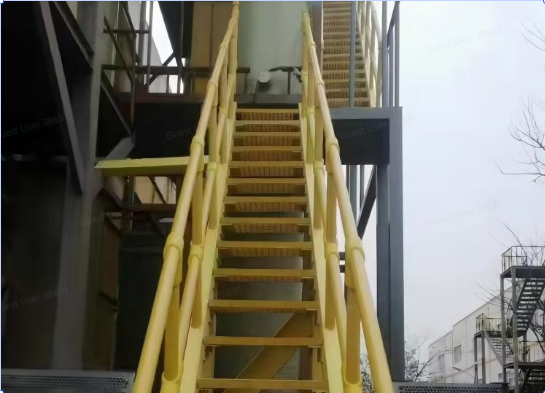
Flooring for industrial walkways and platforms must provide safe movement, resist operating conditions, and meet structural requirements. There is more to selecting the right grating than just selecting material thickness or panel size. Chemical exposure, pedestrian traffic, support spacing, surface traction, and maintenance needs all factor into the final decision. Fiberglass-reinforced plastic (FRP) grating is a practical choice for many industrial applications due to its corrosion resistance and relatively light weight. It is important to be familiar with the types of designs it offers, the properties of the materials, and the load it can withstand, so that it is possible to specify the right grating for the installation that will meet the required performance for its intended life.
-
Understand the Operating Environment Before Selection
Each industrial plant has unique requirements for walkway flooring. Grating can be exposed to corrosive liquids in chemical processing plants and can have constant moisture and cleaning chemicals in wastewater facilities. Salt exposure and the environment also have to be taken into account in coastal installations.
First, determine what chemicals, concentrations, operating temperatures, and exposure times are found at the installation site. These details affect the type of resin used and compatibility with materials. For outdoor platforms, factors such as exposure to UV light, weather conditions, and drainage should also be taken into account.
The working environment is known, and this assists in narrowing down material options. It also discourages choosing a product because it is generally corrosion-resistant but not suitable for the specific service conditions.
-
Compare Molded and Pultruded Grating Designs
There are two main types of FRP grating – molded and pultruded – and they possess different structural properties. Molded grating features fibers that run in several directions and a panel that is actually an integrated whole, and that is ideal for numerous industrial walkways, drain covers, and access platforms.
Load direction is critical in the installation of pultruded grating because of the use of parallel load-bearing bars. Its dependability is based on span, load, and designed panel configuration. Support placement must be in accordance with manufacturers’ structural information.
Not all applications are automatically suited for construction. Make sure to compare the panel design, direction of load bearing, panel dimensions, and installation requirements before selection. There is no single correct answer, as it is based on the whole structure specification and not just the method of manufacture.
-
Select the Appropriate Thickness and Load Capacity
The thickness of the panel affects the stiffness and load-bearing characteristics of a grating, but it is not a factor in determining the safe capacity. All of the factors such as clear span, support layout, load size, load distribution, and acceptable deflection should be considered when analyzing FRP gratings. If a panel’s span or loading is greater than the limits given, it may not perform adequately even if it is thicker.
Ask for the engineering data for the specific construction of the grating, the grid of the mesh, and the resin system used. Check if the walkway is used for pedestrian traffic, maintenance equipment, concentrated loads, or wheeled traffic. The wheel loads may generate different demands than evenly distributed pedestrian loads.
Also take into account openings, unsupported edges, cutouts, and fixing locations. These details have an impact on the transfer of loads to the supporting structure. Review material to ensure that the proposed configuration is consistent with project standards and safety requirements prior to approval.
-
Evaluate Surface Traction and Opening Dimensions
Surface design plays a direct role in walking safety, especially in areas where water, oil, chemicals, or cleaning residues may collect. Concave molded surfaces and gritted finishes offer varying traction, depending on the product application and characteristics specified.
Important grating features to compare:
-
Concave surfaces for pedestrian traction in suitable environments.
-
Gritted finishes for applications requiring additional surface grip.
-
Smaller mesh openings where dropped objects present concerns.
-
Covered grating where a more closed walking surface is necessary.
-
Panel configurations that accommodate drainage and cleaning requirements.
Small objects can pass through, and ventilation and drainage are also affected by opening dimensions. When determining mesh, take into account footwear, site hazards, and opening size requirements. Check slip resistance performance using appropriate product data, not just on the look of the product.
-
Choose a Resin System Compatible With Chemicals
The fiberglass reinforcement gives the material its strength, and the resin system can impact chemical resistance and environmental appropriateness. Various resin formulations have varying reactions to acids, alkalis, solvents, high temperatures, and extended exposures. Before asking for a material recommendation, specify exactly what chemicals and their concentrations are. List operating temperature, intermittent spills, cleaning agents, and exposure time. Compatibility with all industrial substances is not defined by general terms like corrosion-resistant.
Hebei Leihong FRP Technology Co., Ltd. can provide the selection of resin and fiberglass based on project requirements. It manufactures FRP products such as grating and other parts for industrial and environmental use. Ensure the proposed resin formulation, product documentation, and appropriate compatibility evidence are confirmed prior to purchase.
-
Check Installation, Fabrication, and Maintenance Requirements
The installation plan has an impact on both the structure’s performance and maintenance. Before fabrication, find out what dimensions, supports, fastening needs, edge conditions, and access are needed for panels. Accurate drawings will help you locate cutouts around pipes, equipment, drains, and structural connections.
While FRP panels can often be cut with appropriate tools, fabrication needs appropriate dust controls and personal protective equipment. Edge sealing may be necessary according to project specification and manufacturer’s instructions. Fasteners should also be appropriate to the surrounding environment and not cause corrosion issues.
Perform periodic inspections of completed installation for damaged surfaces, loose connections, excessive movement, and changes around supports—set inspection periods based on site conditions and applicable maintenance procedures. When conducted in a planned manner, inspections can detect deterioration in advance of problems with walkway usability.
-
Compare Total Project Costs and Product Specifications
The purchase price is just one of the factors involved in grating selection. Other factors that affect project costs are transportation, handling, labor, installation, fastening system, maintenance, and replacement. Lightweight FRP panels can make installation easier than heavier alternatives, but this depends on the installation.
Use equivalent structural and environmental requirements to compare FRP to galvanized or stainless steel. The comparison can be greatly influenced by steel coatings, alloy selection, chemical compatibility, and maintenance requirements. FRP also needs to be tested for fire performance, electrical characteristics, and other application-specific requirements.
Pre-order, record panel size, thickness, mesh, resin, finish, quantity, color, and fixing details. Verify manufacturing, tolerances, inspection, and delivery dates. Do not choose a product by nominal dimensions if engineering data is not verified.
-
Finalize Selection Through Technical Verification
There is a dependable selection process in which site conditions are related to proven product performance. Give the supplier clear spans, direction of supports, anticipated loads, permissible deflections, chemical exposure, and installation drawings. When the project specification specifies them, include relevant standards and testing requirements.
Check proposed material, size, fabrication, and inspection area prior to production. Depending on the design and processes available, manufacturers producing by molding, pultrusion, and custom fabrication can provide various configurations. Leihong FRP Technology can provide project-based specification and dimensional review for its FRP product line.
Check all engineering data, fastening details, and documentation required before approving delivery. This verification is useful to ensure that the chosen grating is appropriate for the actual conditions of operation, rather than on general performance statements.
Conclusion
When choosing FRP grating for an industrial walkway or platform, the following factors should be considered: the environment to which the system will be exposed, the loadings to be applied to the structure, the surface traction requirements, the compatibility of the resin to be used, and the installation details. Molded designs versus pultruded designs are suited for different requirements, and thickness and mesh dimensions should be consistent with engineering data that has been verified. This comparison of maintenance requirements and total project costs also helps to make good procurement decisions. Having a clear understanding of site conditions and verifying the specification of the proposed product will enable you to choose a grating that will meet operational requirements and provide safe and reliable access to the industrial site.
Read More From Techbullion
Never miss a storyThe TechBullion Weekly newsletter and your preferred channels.Subscribe






Comment