
The Secondary IT Hardware Market Is Becoming Critical Infrastructure

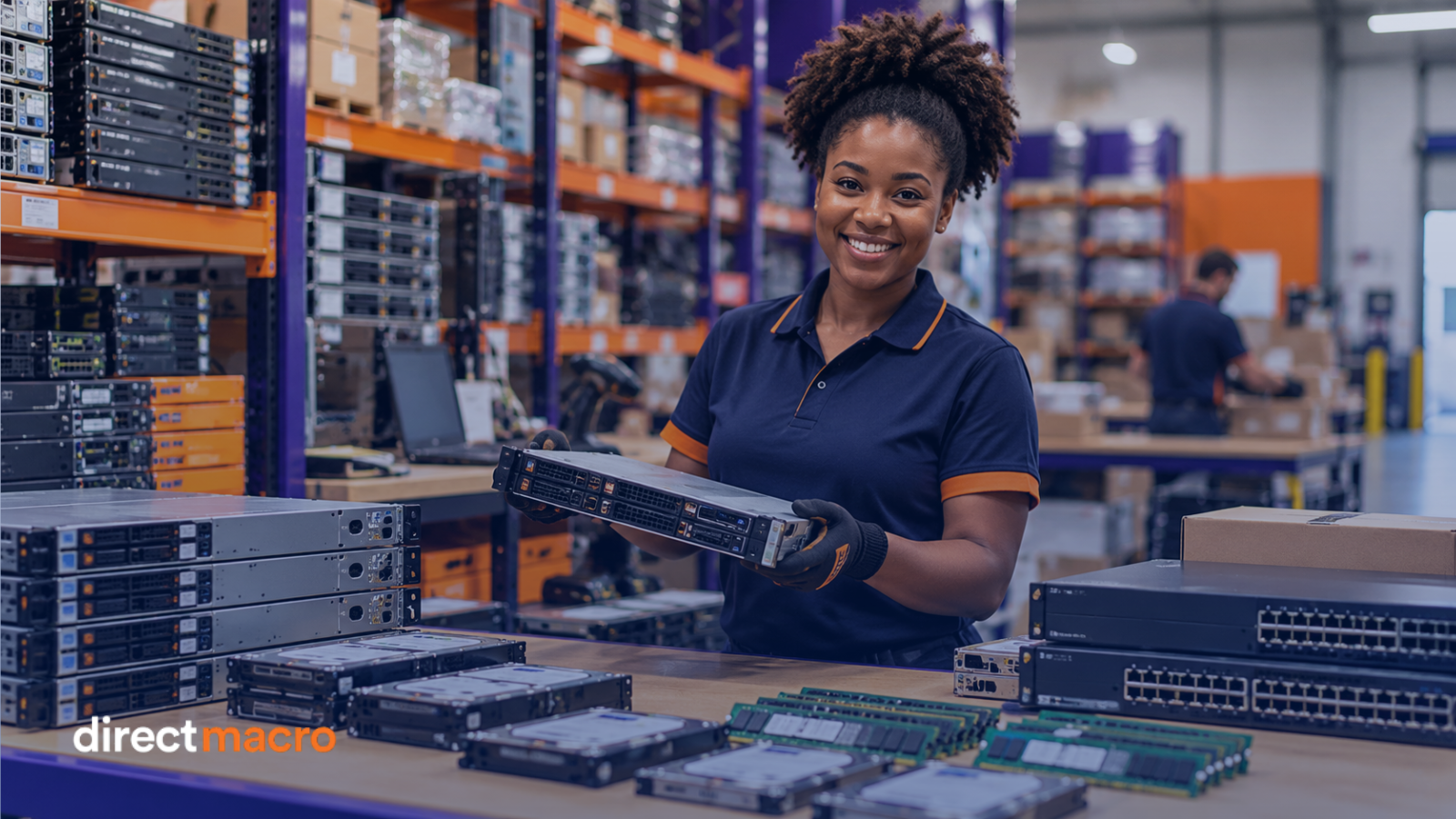
Pretty much every business process is now running on physical infrastructure that needs to be bought, maintained and replaced from time to time. The list of applications and services that run on servers, with storage and network switches, includes payroll, customer-facing portals and business analytics applications. The speed of recovery from failure of any of these components depends on how quickly the required spare parts can be sourced.
Many organizations are facing additional challenges when trying to replace failed infrastructure components. New equipment is not available in time, funds for buying it are limited and many applications are running on outdated hardware for which support has been discontinued by the manufacturer. Used, refurbished and even surplus equipment is increasingly being offered via the secondary market and is worth considering in detail in order to keep enterprise IT hardware running while controlling costs.
Why Enterprise IT Hardware Is Essential to Business Continuity
At the bottom of every service offered over the Internet or intranet is the enterprise IT hardware that is needed to operate it. This range of hardware includes the servers that run applications, storage systems containing business-critical data, processors and memory to enable work to be processed quickly, and networking hardware to provide connections to users and other sites. The failure of even a small component such as a drive controller or a piece of memory can have significant impacts on an application that relies on other components for optimal operation, even causing occasional failures that cannot be fixed in time to prevent impacting order processing or customer access.
The impact to a business from an outage is significant. In the Uptime Institute’s Annual Outage Analysis 2026, 57% of organizations reported that the last major outage had cost more than $100,000. In fact, 1 in 5 said it cost more than $1 million. Not all outages are caused by hardware, but when they are, how quickly they can be repaired and get back online determines the extent of the downtime.
IT hardware availability therefore needs to be considered in continuity planning. The recovery plan cannot simply be based on the assumption that a suitable hard drive is available overnight. The supply of this hardware has to be checked against the investment in new enterprise IT hardware and the maintenance of already installed hardware.
The Secondary IT Hardware Market Is Evolving
The secondary IT hardware market comprises used, refurbished and surplus equipment. Used enterprise IT hardware is sold in its current form. Refurbished hardware has been inspected, tested, repaired where necessary, and re-certified. Surplus products are new or open-box, have not yet been put into service and are mostly offered because they exceed requirements, part of overstocked inventories or discarded because a project was cancelled.
Legacy systems and their associated applications are frequently expensive to migrate. Manufacturers cease to make parts for older systems. As a result, the secondary market is often the only means by which such components are purchased by organizations running stable legacy platforms, usually for a simple repair that would otherwise trigger a costly and time-consuming migration.
In the example of a regional logistics provider running four-year-old servers as the platform for their warehouse software, due to be migrated in two years’ time, a double failure in the same quarter (a memory module going down at the same time as the RAID controller) can be fixed by purchasing matching refurbished server hardware to keep the cluster running and consistent. Secondary sourcing complements new procurement rather than replacing it.
Supply-Chain Resilience and Infrastructure Availability
Relying on a single procurement channel for purchasing components such as conventional DRAM creates a single point of failure. According to TrendForce, DRAM contract prices for the conventional product rose by 93% to 98% quarter over quarter in the first quarter of 2026 as suppliers prioritized AI servers. On its September 2026 earnings call, Micron’s CEO said memory supply will be even tighter in 2027 and 2028. Waiting months for replacement enterprise IT hardware, when and if it becomes available, seriously impacts IT hardware availability.
By qualifying secondary suppliers in advance for necessary hardware, organizations can use enterprise IT hardware as a bridge between the IT infrastructure of today and that of tomorrow. In order to remain operational during a transition period, a hospital’s IT department might, for example, keep a list of approved secondary suppliers that are able to deliver compatible hard drives for its imaging servers.
Spare-parts planning rounds off IT hardware supply chain resilience by first identifying the components that fail most often and then checking potential sources for these components in due time. Thus, the IT department can transform unexpected repair actions into purely routine processes that strengthen IT infrastructure resilience.
Cost Management and the Total Cost of Ownership
The lowest purchase price for used equipment is often the biggest advantage of secondary market offers. For refurbished enterprise hardware one usually pays far less than for new comparable products, especially as prices for memory and storage have been rising sharply. But a lower price does not necessarily mean lower costs over its useful life.
The total cost of ownership for IT hardware encompasses maintenance, power consumption, cooling, labor for installation, the cost of a warranty, and of course, support contracts. An older server can sometimes be purchased for less than the price of new enterprise IT hardware but in the end, the higher ongoing costs to power the server to perform the same work, to obtain third-party support when the manufacturer’s support ends, etc. can often equal or exceed the initial savings within a few years.
Companies can fairly compare new enterprise IT hardware with refurbished alternatives by modeling out the total cost of ownership for 3-5 years. Although initially less expensive, refurbished enterprise IT hardware is not always cheaper in the long run. However, in many cases it is the better option.
Quality, Compatibility, and Security Risks
When purchasing components from the secondary IT hardware market, there are risks involved that have to be managed. The biggest risk is compatibility between two components. Even though they might look similar in the part description, they can differ in terms of the firmware or even the revision level. This is especially important when buying enterprise IT hardware.
Inspection and testing of used enterprise IT hardware should be conducted by the supplier. Reputable suppliers will load test products, record their findings and provide a clear warranty and return policy. It is also wise to ask the supplier about the testing that was done, how long a warranty will last and who to return to if something goes wrong.
Security should receive equal consideration. Equipment that no longer receives firmware updates could have unpatched security vulnerabilities. Used storage should be properly sanitized according to established criteria (e.g., NIST SP 800-88) before resale. Also, incompatible components could cause unpredictable problems that would be difficult to debug.
Mitigating these risks when buying refurbished equipment can be done by applying the same rigor to used enterprise IT hardware as is applied to new products by setting up documented enterprise hardware procurement standards (e.g., approved suppliers, required test reports, minimum warranties, firmware support).
Sustainability and Longer Hardware Lifecycles
One of the simplest ways to fight electronic waste is to make sure to get the most out of the functional enterprise IT hardware that your company already owns. Instead of disposing of a working server, for example, try to make as much use as possible of it – or use it for less demanding tasks once it’s no longer needed in its original role. The refurbished market for used enterprise IT hardware is also designed to give it a second life.
It is also important to note that while older equipment may consume more energy to deliver the same results, that does not necessarily mean that the refurbished systems are the ‘greenest’. In fact, it is possible that, by consolidating several older servers into a single highly efficient server, more sustainable IT hardware decisions can be made. However, reuse must never compromise security or performance. It is therefore essential that organizations weigh the various issues to implement effective enterprise hardware lifecycle management and send end-of-life hardware to the most appropriate, certified recycler.
Building a Resilient Hardware Procurement Strategy
A resilient approach to enterprise hardware procurement combines new and secondary sources under clear rules:
1) Audit Existing Equipment: Track enterprise IT hardware assets to list their age as well as the level of support they currently receive.
2) Identify Critical Components: Determine which parts would cause most disruption should they fail, and their potential alternatives.
3) Set Testing and Compatibility Standards: Define minimum testing, part-number verification, and firmware requirements.
4) Evaluate Suppliers: Review warranty terms, return policies, and data-sanitization practices.
5) Compare Lifecycle Costs: Model the total cost to be paid over the expected service life of the asset before a purchase decision is made.
6) Plan Refreshes and Spares: Schedule refreshes in advance and have appropriate spare parts to keep key systems running.
7) Match Equipment to Risk: Use brand-new equipment for performance-critical workloads. Use proven, cost-effective refurbished enterprise hardware for the rest.
Suppliers that offer both new and refurbished options can simplify this approach. Direct Macro, for example, supplies new and refurbished IT hardware, allowing procurement teams to source different equipment tiers through one vetted channel.
Conclusion: The Secondary Market’s Role in Critical Infrastructure
Secondary markets for used enterprise IT hardware have become important components of the infrastructure required to run business-critical applications. They offer companies greater flexibility during times of scarcity of new products and help to ensure business continuity for older systems. Used enterprise IT hardware can also help to reduce costs and prolong the useful life of already functioning systems.
However, secondary sourcing also has the potential to negatively affect a company’s IT environment. This depends on a number of factors, including compatibility checks, thorough testing, data security and a solid strategy for the entire lifecycle of the hardware. An organization that treats all enterprise IT hardware, whether purchased from the secondary market or primary market, with the same level of respect will be better equipped to handle any given supply market.






Comment