
From Cosmological Physics to Algorithmic Decision-Making: An Executive Q&A With Joel Almeida

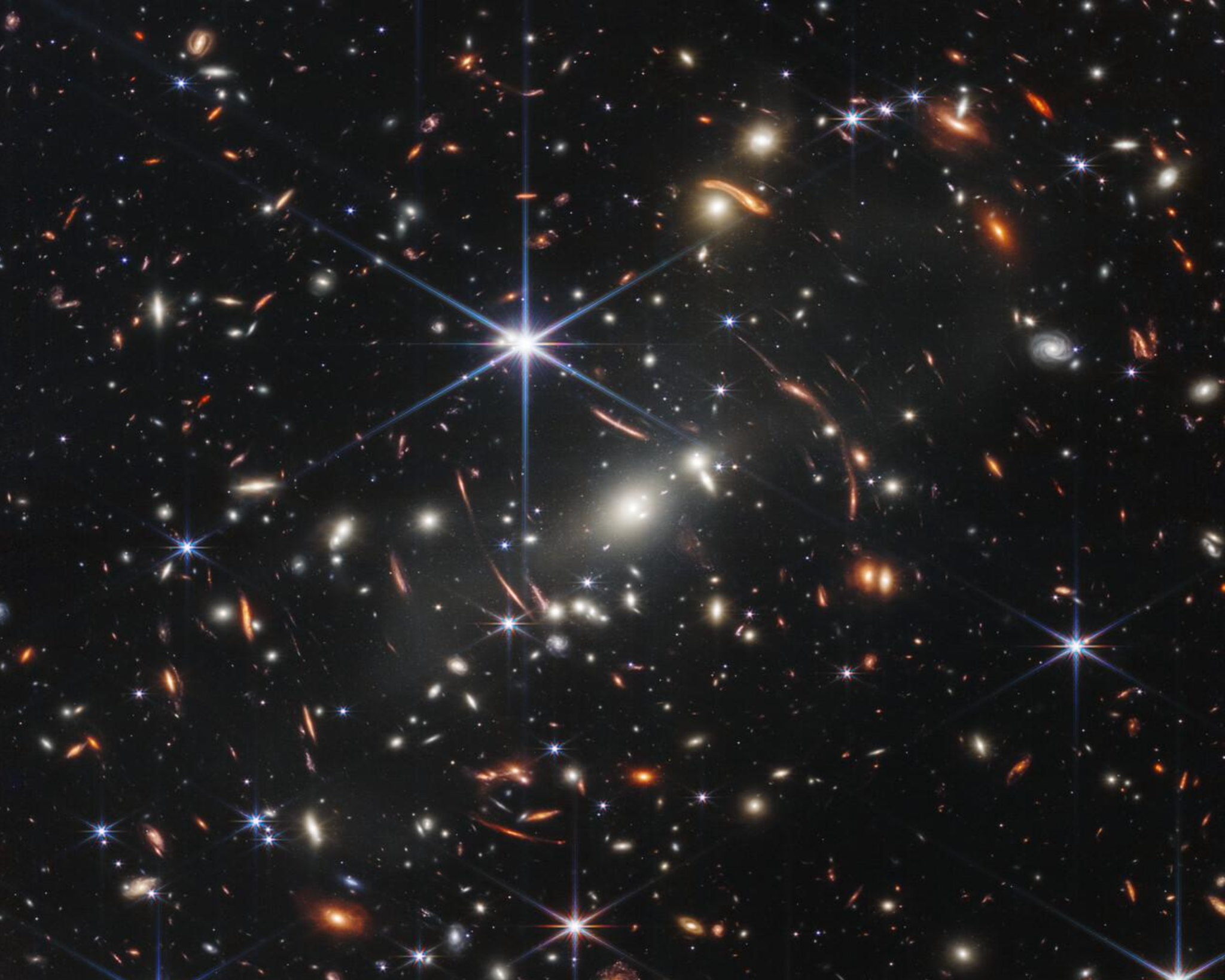
What if the Big Bang was not the absolute beginning of the universe? And what if the mathematics used to investigate cosmic mysteries could also inspire new technologies?
Since 2023, Joel Almeida, founder of ExtractoDAO Labs, has been exploring these questions through the Dead Universe Theory (DUT), a proposed alternative approach to cosmic evolution. His work connects theoretical physics, scientific computing, and quantitative financial technology, transforming mathematical research into practical software.
Q. The dead universe theory challenges conventional ideas about the Big Bang. What inspired you to question the origins of the universe, and what makes your theory different?
Joel Almeida: I began developing the Dead Universe Theory in 2023 with a question: What if the universe we observe is not the beginning of cosmic history, but a luminous chapter in a much older story?
DUT explores the possibility that our observable universe emerged as a dynamic phase of the same physical continuum that preceded it. We are not talking about parallel universes or a multiverse, but about a continuous physical reality undergoing different states.
The theory also offers a different interpretation of cosmic death. The universe does not necessarily collapse into a single point and restart. Instead, it gradually loses its ability to produce new organized structures.
Gravity remains. Matter and gravitational remnants may persist. But the universe becomes increasingly dark and less capable of forming new stars and galaxies.
This is a thermodynamic process, not a return to the beginning.
What we call the Big Bang may have been a transition, not an absolute beginning.
That possibility challenges how we understand both the origin and the ultimate fate of the cosmos.
Q. Your research introduces the Almeida growth index, a fixed mathematical value of approximately 0.618. Why is this number important?
Joel Almeida: In science, there is an important difference between choosing a number because it matches observations and obtaining a number from the mathematical structure of a theory.
The Almeida Growth Index belongs to the second category within DUT’s effective formulation.
Its derivation is presented in my research article, *“Effective Ξμν Closure and the Almeida Growth Index: γA = 0.618 as a Distinct Alternative to the ΛCDM Growth Index,”* published in the peer-reviewed journal *Quantum Reports*.
The idea is relatively simple. Physical systems involve processes that create organization and processes that dissipate it. DUT establishes a specific mathematical relationship between these components, producing the fixed value 0.618.
What matters is that this number is established before comparing the theory with observations.
Conventional cosmology predicts a different value for the growth of cosmic structures under its standard assumptions.
A number becomes scientifically interesting not because it is beautiful, but because nature can prove it wrong.
That is the challenge we have set for the Almeida Growth Index.
Q. You developed TON618 to test your theory. What has this scientific software revealed about the universe’s unresolved mysteries?
Joel Almeida: An idea becomes scientifically useful when it can be tested.
That is why I developed TON618, a scientific computing engine at ExtractoDAO Labs that transforms DUT’s mathematical framework into calculations that can be compared with astronomical observations.
We investigate two important questions: how galaxies and other cosmic structures grow, and why different measurements of the universe’s expansion rate do not always agree.
Our computational comparisons have produced encouraging results in selected observational tests. But these findings are not proof that DUT has replaced conventional cosmology.
They are reasons to investigate further.
The important feature of our approach is that we test a fixed mathematical prediction rather than continuously changing its value to obtain a better match.
For me, the software is as important as the theoretical proposal.
“A scientific theory should not depend on belief in its author. It should produce results that other researchers can independently examine and challenge.”
TON618 was developed to make that confrontation with evidence possible.
Q. With new astronomical missions exploring the universe, what evidence could confirm or disprove your theory?
Joel Almeida: The universe itself will provide the answer.
Projects such as Euclid, DESI, and the Vera C. Rubin Observatory are giving scientists increasingly precise information about how galaxies and cosmic structures evolve.
DUT makes a specific prediction about that evolution. If independent observations consistently contradict it, that part of the theory will fail its scientific test.
We are also interested in the discovery of unexpectedly mature galaxies in the early universe, although such discoveries alone cannot establish that DUT is correct.
I believe a scientist must be willing to identify the evidence that could disprove a theory.
Science advances not when we protect our ideas from criticism, but when we expose them to the strongest possible tests.
My objective is not to ask astronomers to accept DUT. It is to give them predictions they can investigate.
Q. ExtractoDAO labs has also developed dut financial. How did your work in cosmology lead to financial technology?
Joel Almeida: Cosmology and financial markets appear very different, but both involve complex systems where many variables interact and conditions change over time.
That connection inspired part of our technological research.
DUT Financial is quantitative software developed by ExtractoDAO Labs for institutional financial analysis and decision support for professional traders.
The technology has been operating for four months and has delivered encouraging results during that period.
It analyzes market conditions, calculates scenarios, and quantifies financial exposure using mathematical models developed through our research.
DUT Financial performs the calculations; the trader interprets the results and makes the investment decision.
The software does not replace human judgment or execute autonomous investment decisions. It operates entirely offline, without generative artificial intelligence.
The real innovation is not using physics as a metaphor for finance. It is transforming mathematical knowledge into technology that supports real decisions.
Creating DUT Financial was also a strategic decision to finance our cosmological research. We knew finding investors willing to fund a new cosmological theory would be extremely difficult.
We faced a choice: find a way to sustain our science or risk losing both the theory and the startup.
We chose to transform scientific knowledge into technology capable of generating financial resources. It was the right decision.
Our vision is to build an ecosystem where science generates technology, technology creates wealth, and that wealth finances new discoveries.
Q. What is your long-term vision for extractodao labs, and how do you see science and technology evolving together?
Joel Almeida: I founded ExtractoDAO Labs to build something greater than a single product.
Our ambition is to create a scientific and technological enterprise where fundamental research generates new computational capabilities, opening opportunities for further innovation.
TON618 is one example: software developed to investigate questions about the universe. DUT Financial is another: technology applying mathematical research to complex financial markets.
But our vision extends beyond cosmology and traditional finance.
We have also developed a blockchain-based stock exchange platform designed to operate at significantly lower costs.
We want to bring this technology to emerging markets, particularly African countries where establishing conventional stock exchange infrastructure can require substantial investment.
We believe blockchain technology can help reduce these barriers, expand access to capital markets, and create opportunities for local businesses and investors, while respecting local regulations.
Our portfolio is expanding into new products, including technologies for the energy sector.
Our ambition is for ExtractoDAO Labs to be recognized not only for the technologies we develop, but also for the markets we can help transform.
For me, science and entrepreneurship are not opposing activities. Scientific research can generate knowledge, technology, and economic value without sacrificing intellectual independence.
Science advances when we question established assumptions—and have the discipline to let evidence decide whether our alternatives are better.
That is the principle guiding my research and the future of ExtractoDAO Labs.
Learn more: https://extractodao.com/







Comment