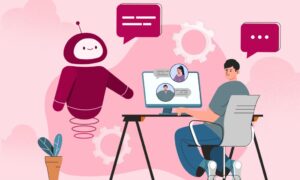
Working from home is the new normal. Since the pandemic began, remote work has risen a whopping 159% according to recent surveys. But as many employees are finding out, collaborating and communicating effectively in distributed teams can be hard. Video calls lead to Zoom fatigue. Messages get lost across multiple channels. Meetings drag on without clear purposes.
Enter the AI-powered virtual assistant – your artificial teammate. From scheduling meetings to taking notes, these cutting edge assistants are designed to prevent the breakdowns that hamper productivity and morale in remote teams. Virtual assistants boost efficiency by automating mundane tasks and ensure information flows smoothly even when employees are geographically dispersed.
The data shows these AI helpers are the future of work. Adoption of virtual assistants has skyrocketed over 300% among remote teams. As the shift to flexible, hybrid work continues, AI might just be what keeps your team connected and high-performing no matter where you’re located.
TLDR; The Rise of AI-Powered Virtual Assistants for Remote Teams
- AI-powered virtual assistants handle tasks like scheduling and note taking for remote teams
- Benefits include increased productivity, less meeting fatigue, and smoother communication
- Assistants integrate with popular work tools but can lack human traits like empathy
- Gradual implementation and customization is key to optimize value from AI assistants
- Future outlook is increased adoption as remote work grows and assistants become more advanced
Capabilities of AI Assistants
Scheduling meetings and managing calendars has become one of the most common uses for AI assistants on distributed teams. The assistant can coordinate schedules across time zones, find mutually available times, and automatically schedule meetings on calendars to eliminate the back-and-forth emails that plague remote collaboration.
Assistants can also optimize meeting times and agendas using insights from past meetings and behavioral data. AI-powered scheduling and calendar apps like Clara and Clockwise use predictive algorithms to streamline the meeting process.
Recording notes and transcribing meetings is another area where AI assistants excel. Human note takers often miss key discussion points or action items. But with an AI assistant, teams have access to searchable transcripts generated automatically using speech recognition. Apps like Otter.ai even allow users to search for keywords and topics in the conversation.
The assistant can highlight important moments, extract decisions and to-do’s, and ensure everyone shares the same understanding of the meeting. Credit building apps use similar transcription features to help users better understand and improve their financial health.
Answering common questions from team members is a basic yet powerful capability of AI assistants. Whether it’s questions about policies, technical procedures, or how to use a software tool, the AI assistant has the organization’s knowledge at its fingertips.
Instead of wandering into different Slack channels hoping to find an answer, employees can get reliable information quickly from their AI teammate.
Lastly, the assistant integrates with popular productivity and collaboration tools like Google Workspace, Slack, Trello and Asana. This gives the assistant the context to complete tasks inside tools employees already use.
For example, it can add agenda items to a shared doc, assign action items within a project management system, or retrieve relevant files – streamlining collaboration.
Benefits for Remote Teams
Increased productivity is one of the most touted benefits. By automating common tasks like scheduling, the AI assistant saves employees precious time. Meetings start promptly with agendas set. Answers are provided instantly without disrupting colleagues. According to Microsoft, their virtual assistant Cortana saves each employee up to 45 minutes per week – time they can reallocate to core work.
Reduced meeting fatigue is another benefit. Back-to-back video calls are draining for employees staring at the screen. Intelligent assistants shoulder the burden of transcription, note taking, and post-meeting follow-ups. This allows meeting participants to focus solely on the discussion and decisions occurring. Studies show assistants can improve meeting satisfaction by over 30%.
More efficient communication and knowledge sharing also occurs. Assistants streamline team communications by ensuring the right people are looped into discussions. All messages, files and meeting notes are available through the assistant for easy access later. This prevents information from getting siloed or lost, which is vital for distributed teams.
Finally, by automating lower-value tasks like scheduling, AI assistants allow remote teams to dedicate energy to substantive work. Instead of spending afternoons sorting calendars, they can focus on the priorities and projects that really move the needle for the business. This drives productivity gains of over 10% in some cases.
Challenges and Limitations
Data privacy concerns exist regarding how much access and data the AI assistant collects. With the assistant integrated into email, calendars, conversations and more, it has deep insights into a company and employees’ activities. Proper security controls, access limitations and ethical AI practices are a must to build trust.
Integration difficulties with some legacy systems can also hinder adoption. For the AI assistant to be truly effective, it needs to connect with the essential tools a company runs on. But not all platforms have the APIs or compatibility to enable this. Upfront evaluation and allowances for these limitations are key.
AI assistants currently lack human traits like empathy, humor and team spirit. The automated interactions can feel cold without those intangible qualities that build relationships and morale. Until assistants evolve more advanced emotional intelligence, some employees may still prefer human colleagues for certain interactions.
When planning offsite meetings and events for distributed teams, transportation logistics can add complexity. Charter bus rentals are a convenient solution for group travel. Companies like BusBank provide charter bus rental in San Antonio and surrounding areas.
The benefits of charter buses include door-to-door service, onboard amenities like wi-fi and entertainment, and professional drivers handling navigation so participants can relax or work enroute. Considering charter bus transportation options can help streamline travel and allow remote teams to maximize their time collaborating in person.
Best Practices for Implementation
Carefully evaluating different AI assistant options is crucial for success. Key capabilities to assess include natural language processing, voice recognition, meeting productivity features, and security protocols. Comparing user experiences and collecting feedback from other teams can help identify the best fit for your needs and culture.
Phasing in usage gradually and soliciting team feedback allows for adjustments. Rolling out the assistant to a pilot group first allows testing before company-wide deployment. Regular check-ins give employees a voice to share what’s working versus what functionalities need tweaking. This empowers them to mold the assistant into an optimal teammate.
Customizing the assistant’s role and responsibilities is also important for aligning with business objectives. Configuration settings and permissions controls allow tailoring the AI assistant to your specific use cases and needs. Establish clear guidelines for when and how to leverage the assistant to get the most business value.
Future Outlook
AI assistants are becoming more conversational and personable through advances like sentiment analysis. Instead of just robotic commands, assistants can respond with human-sounding voices, humor, and emotional intelligence to build rapport with users. As algorithms better interpret subtle cues in speech and language, interactions will feel more natural.
Growth in demand for AI-powered assistants is imminent as remote and hybrid work continues rising. Nearly 70% of companies plan to permit remote work after the pandemic. To connect these distributed teams, adoption of AI tools like virtual assistants will dramatically increase in coming years.
Finally, AI has potential to take on more complex workflows beyond scheduling and transcription. Sophisticated models like large language models can analyze contracts, process approvals, optimize processes and more. As technology improves, handing additional responsibilities to AI assistants will free up employees for higher-level work.
Wrapping Up: AI-Powered Virtual Assistants for Remote Teams
The rise of AI is inevitable – and for remote teams, it could be the key to thriving in this new era of distributed work. With their automated scheduling, transcription skills, and instant answers, virtual assistants boost productivity and streamline collaboration across the miles.
But AI still has progress to make before reaching its full potential. As the technology grows more advanced, intelligent assistants will continue evolving emotional intelligence and conversational abilities that make interactions feel more human.
For now, prudent evaluation and gradual implementation allows companies to benefit from their artificial teammates while avoiding potential pitfalls.
One thing is certain: intelligent assistants are not just smart – they are the future. Workplace adoption will only accelerate as remote flexibility becomes the norm. Companies that leverage these AI tools early will gain a competitive edge with more engaged, empowered distributed teams. So consider if it’s time to bring on an AI teammate – and let the robots make your remote work hassle-free.