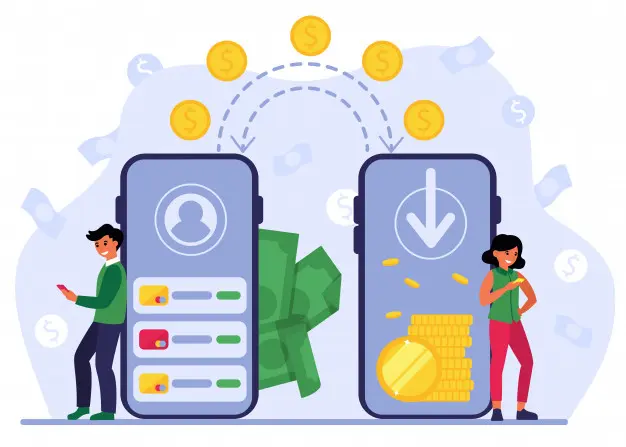
A generation ago, spending money on a video game meant buying it once, usually on a disc, and playing it until the next release came along. That model has largely disappeared. Today, a huge share of gaming revenue comes not from the initial download but from what happens after, when a player tops up in game currency, buys a battle pass, unlocks a cosmetic skin, or reloads a wallet on a platform like Steam or the PlayStation Store. These small, frequent transactions, commonly called gaming top-ups, have quietly become one of the largest and fastest growing categories in the entire digital payments economy, and the businesses built around processing them have grown right alongside the players who fuel the spending.
From Boxed Games to Ongoing Digital Spending
The shift from one time purchases to ongoing digital spending has reshaped how the gaming industry makes money. In-game purchases now account for a majority of global gaming revenue, and mobile alone generates well over one hundred billion dollars a year from in-app purchases, according to a breakdown of the in-game purchase market that tracks spending across mobile, PC, and console platforms. That figure keeps climbing even as the number of new game downloads has started to plateau in some markets, which tells its own story. The industry is no longer primarily growing by attracting new players. It is growing by getting the players it already has to spend more often, in smaller increments, over a much longer period of time.
Gaming top-ups sit right at the center of that shift. Rather than paying once for a finished product, players now regularly add funds to a platform wallet, a specific game’s currency, or a subscription service, and each of those top-ups is a small but meaningful transaction flowing through the broader digital payments system. Multiply that by the billions of active gamers worldwide, and it becomes clear why payment processors, platform holders, and third party services have all built entire business lines around making these transactions faster, cheaper, and more reliable.
Why Speed and Convenience Drive the Category
Unlike a traditional purchase, a gaming top-up is almost always tied to a moment of immediate desire. A player wants to finish a battle pass tier before a season ends, join friends in a multiplayer match that requires a paid skin, or claim a limited time offer before it disappears. That urgency puts enormous pressure on the payment experience itself. A top-up that takes minutes to process, requires switching between several apps, or demands entering full card details on a small mobile screen risks losing the sale entirely, since players in that moment are looking for the fastest possible path from wanting something to having it.
That pressure has pushed the entire category toward instant, frictionless payment methods. Mobile wallets, stored payment credentials, local e-wallets in regions where credit cards are less common, and one tap redemption of pre-paid credit have all become standard expectations rather than nice to have features. Research on the mobile gaming market points to in-app purchases and microtransactions as a central growth driver behind the industry’s expansion, and much of that growth depends on removing exactly this kind of friction from the payment moment. A platform that makes topping up feel effortless tends to see far more frequent, smaller transactions than one that makes players stop and think twice before completing a purchase.
A Global, Cross-Border Category
Gaming top-ups are also unusually global compared to many other categories of digital spending. A player in Southeast Asia, Latin America, or the Middle East may want to top up an account tied to a game published in the United States or South Korea, and traditional banking rails were never built with that kind of frequent, small value, cross-border transaction in mind. Local payment preferences vary widely as well. Some regions rely heavily on e-wallets, others still depend on cash based voucher systems, and credit card penetration differs enormously from one country to the next.
This is exactly the kind of complexity that has pushed gaming companies and platforms toward specialized digital gifting and payments infrastructure rather than trying to build cross-border payment support entirely in house. Platforms like Gifq, offering gaming top-ups as a dedicated service exist specifically to solve this problem, letting businesses deliver in-game currency and credit to players in dozens of countries almost instantly, without each individual company needing to negotiate local payment rails, currency conversion, or regional compliance requirements on its own. For a game studio focused on building and updating its product, offloading that payment complexity to a specialized partner is often far more efficient than trying to solve it internally.
Beyond Personal Spending: Rewards, Prizes, and Community Building
Gaming top-ups have also expanded well beyond players simply spending their own money on their own accounts. Tournament organizers use them to distribute prize money instantly to winners anywhere in the world, without waiting on international bank transfers that can take days to clear. Streamers and community managers use them as giveaway prizes to keep audiences engaged during live broadcasts. Game studios use them as onboarding incentives, crediting new players with a small amount of in-game currency the moment they create an account, which research on player retention consistently shows helps convert casual sign-ups into active, paying users far more effectively than a generic welcome email ever could.
This broader set of use cases reflects something important about where gaming top-ups sit in the wider digital payments economy. They are no longer just a way for a single player to spend money inside a single game. They function as a flexible, borderless currency for rewarding engagement, resolving disputes, running promotions, and building loyalty across an entire gaming community, which is part of why the category has attracted so much attention from payments companies looking for their next major growth area.
What This Means for the Payments Industry at Large
The rise of gaming top-ups offers a preview of where a much larger share of digital payments may be headed. Consumers are growing increasingly comfortable with small, frequent, instant transactions tied to a specific moment of desire rather than a planned purchase, and gaming has been at the leading edge of training an entire generation to expect that kind of experience. As more industries look to replicate the same responsiveness, from streaming services to fitness apps to online marketplaces, the infrastructure originally built to support gaming top-ups is likely to influence how digital payments evolve across categories that have nothing to do with gaming at all.
For now, though, gaming remains the clearest example of just how large this category has become. What started as an optional add-on to a boxed game has turned into a payments ecosystem worth well over a hundred billion dollars a year, built entirely around making it as fast and as easy as possible for a player to go from wanting something to having it, wherever in the world they happen to be.