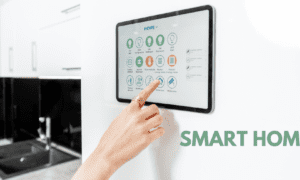
Few areas of home technology promise more and deliver more unevenly than the smart home. For many people the phrase conjures a drawer full of half-forgotten gadgets, three different apps to dim three different lamps, and a smart speaker mainly used as a kitchen timer. Yet done properly, home automation is something else entirely: a single, integrated system that quietly makes a home more comfortable, more efficient and easier to live in — so seamlessly that you stop noticing the technology at all. The trick is knowing which parts are genuinely worth it and how to make them work together.
Here is a clear-eyed look at what smart home automation actually does well, and what separates a useful system from a box of gimmicks.
Gadgets versus a system
The root of most smart-home disappointment is the piecemeal approach: a smart plug here, a wifi bulb there, each with its own app and none of them talking to each other. The result is more fiddly, not less. A proper automation system takes the opposite approach, integrating lighting, heating, audio, shading and security so they work together and can be controlled from one place — a single app, a wall keypad or a handheld remote. That integration is the whole point. It is the difference between juggling a dozen gadgets and simply telling your home what you want it to do.
Lighting: the place most people start
Automated lighting is the most used and, for many, the most immediately rewarding part of a smart home. Beyond simply switching on and off from your phone, it lets you dim and group lights, set scenes that recall the right combination for cooking, relaxing or entertaining at a touch, and schedule lights to come on and off — useful both for convenience and for giving the impression someone is home while you are away. Once people live with good lighting control, it is the feature they would least want to give up.
Heating and climate
Smart climate control is where comfort and cost savings meet. Zoned, scheduled heating means rooms are warm when and where you want them and not wastefully heated when nobody is there, and sensor-driven systems can adjust automatically to conditions. The comfort of walking into an already-warm room is matched by the satisfaction of not paying to heat an empty house, and over a long winter that control shows up on the energy bill as well as in day-to-day comfort.
Shading: blinds and curtains
Automated blinds and curtains are quietly one of the most useful additions. At the touch of a button or on a schedule, they manage daylight, heat and privacy — opening to let in morning light, closing against summer glare or winter heat loss, and shutting at dusk without anyone lifting a finger. Integrated shading, using systems such as Lutron, also works hand in hand with lighting and heating to keep a room comfortable, and reaching high or awkward windows becomes effortless.
Music in every room
Multi-room audio is consistently one of the best-loved parts of a smart home. The ability to play music throughout the house — the same track everywhere or different rooms doing their own thing — and to control it all from one app or remote turns a house into a far more enjoyable place to be. Whether it is radio in the kitchen, a playlist in the garden and a film soundtrack in the lounge, having sound follow you around the home, simply and reliably, is the kind of everyday luxury people quickly find they cannot do without.
Bringing it all together with scenes
The real magic of automation appears when these elements combine. Because an integrated system controls everything at once, it can run scenes that orchestrate the whole home with a single command. A good-night scene might dim the lights, lower the blinds, drop the heating and arm the alarm; a movie scene might close the curtains, set the lighting low and power up the cinema; an away setting could secure the house and pare back heating and lighting as you leave. This is automation doing what gadgets never can: coordinating the whole home around what you are actually doing.
Security that works with everything else
Security sits naturally within a smart home rather than bolted on beside it. Integrated cameras, alarms and door sensors can be viewed and controlled from the same app as everything else, and — more usefully — they can work together with the rest of the system: lights that come on when a camera detects movement, an alarm that arms itself as part of a leaving routine, or a phone alert when something needs your attention while you are out. Treating security as one strand of an integrated system, rather than a separate gadget with its own app, makes it both easier to live with and more genuinely useful, giving real peace of mind whether you are upstairs or on the other side of the world.
Achieving that kind of coordination reliably is precisely why a properly designed smart home automation system is worth so much more than a collection of off-the-shelf gadgets — the components are chosen to work together and integrated into a single, dependable whole, rather than left as a patchwork of apps that half-cooperate on a good day.
Saving energy, not just adding convenience
Automation is not only about comfort; it can genuinely cut waste. Systems that use daylight and occupancy sensors heat and light rooms only when they are needed, dimming or switching off when there is enough natural light or nobody present. Coordinating heating, lighting and shading intelligently means the home uses energy deliberately rather than by default, and the savings, while varying from home to home, are a real and lasting benefit rather than a gimmick.
It only works if the network does
One unglamorous truth underpins all of this: a smart home is only as reliable as the network it runs on. Automation, multi-room audio, security cameras and streaming all depend on solid, whole-home connectivity, and a patchy wifi signal is the most common reason smart features become frustrating. Getting the underlying network and wifi right — proper coverage in every room rather than a single router struggling to reach the far corners — is the foundation everything else is built on, and it is why good installers treat connectivity as a first priority rather than an afterthought.
Designed, not assembled
The thread through all of this is that a smart home worth having is designed as a whole, not assembled piecemeal from whatever gadgets caught your eye. When lighting, heating, shading, audio and security are chosen to work together, controlled from one place and built on a reliable network, the technology recedes into the background and simply makes life easier — which is the entire promise of automation in the first place. Approached that way, the smart home finally lives up to the name: not a drawer of gadgets you rarely use, but a home that quietly does the right thing without being asked. That is the point worth holding onto when the next gadget tempts you: the goal is not more devices, but a home that simply works.