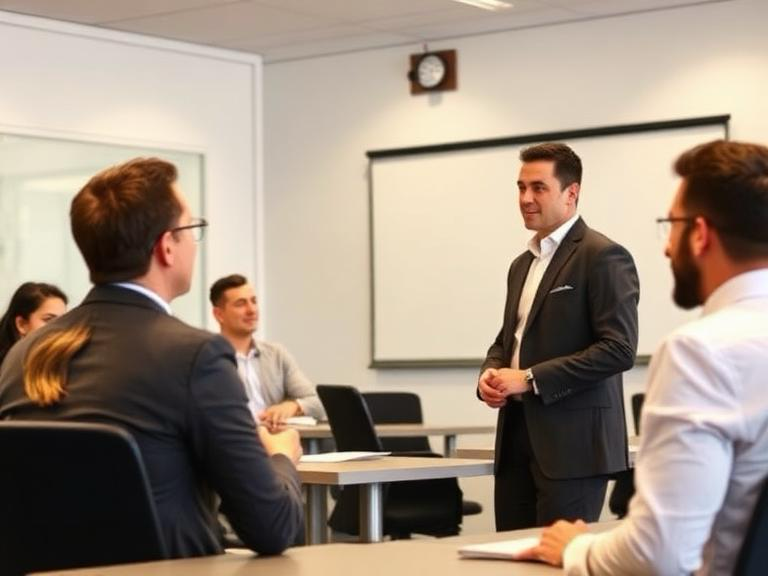
Good sales performances are not achieved through force. Very skilled sales teams often have management experts who take time developing the skill levels of people and creating a culture where constant improvement is the order of the day. A good sales coach will help make the salesperson capable of managing difficult buyer situations and achieving targets.
Sales coaches should not be regarded as one-off events for companies that want sustainable growth. Coaching in sales is the continuous process that aids people in developing their skills and adapting to changes in the environment. Organizations that embrace professional sales coaching in Melbourne understand the importance of leadership development in revenue generation.
Practice #1: Focus on Individual Development
Every salesperson is different from another. Everyone possesses distinct strengths, backgrounds, and learning styles. It is unwise for a competent leader to rely on generic development programs since effective leaders create personalized coaching programs for their individual salespersons.
Competent sales coaches understand that some people struggle when prospecting, whereas others need help with negotiating or closing deals. Personalized development programs will ensure quick growth as well as instill confidence within the sales personnel.
Practice #2: Deliver Feedback Regularly
Most sales leaders tend to provide feedback only during performance appraisal meetings, which means that their employees lose out on valuable feedback and opportunities for growth. Feedback has to be constructive, meaningful, and based on behavior.
When employees receive regular feedback, they can make changes before their mistakes affect their overall performance. Most successful coaching discussions revolve around doing something about specific behavior.
Consider the following coaching practices:
- Organize brief weekly meetings between the coach and the representative.
- Acknowledge both good performance and areas needing improvement.
- Use concrete evidence instead of assumptions.
- Create a two-way exchange during feedback meetings.
Feedback helps build trust and creates the groundwork for successful coaching of sales professionals regardless of their experience level.
Practice #3: Coach Using Real Sales Scenarios
The most effective coaching is done through real-life selling situations. Instead of depending solely on theoretical explanations, management should base the process on customer interactions.
During the discussion of real-life scenarios in sales, a sales coach can guide the representative in making decisions, spotting missed chances, and adopting new tactics. It becomes much more practical, as well as easy to remember. Coaching based on scenarios is favored by many companies in Melbourne that provide training for their sales representatives.
Practice #4: Promote Accountability
The role of coaching involves empowering workers to be accountable for their self-development. As much as the manager facilitates and offers guidance, personal achievement comes through self-accountability. Goal setting, planning, and ongoing review sessions facilitate accountability. A good manager knows that accountability does not mean managing by control but rather making things clearer and moving towards progress. This practice is especially vital in situations where sales teams have to compete fiercely.
Practice #5: Measure Coaching Success
Without a metric or measure, coaching can easily become a worthwhile but meaningless activity. The success of coaching requires managers to use specific measures to gauge that success. Performance indicators, including conversion ratios, movement along the sales funnel, customer engagement rate, and revenues gained, can all offer valuable insights into how well the coaching process is working.
Conclusion
An efficient sales team is created through conscious leadership, continuous direction, and development activities. Those managers who pay attention to personal development, provide quick feedback, offer practical training, hold employees accountable for their actions, and ensure results have managed to create an environment conducive to both people and results. As many companies turn to professional sales coaching in Melbourne, it becomes clear that people are indeed the key to success in sales.