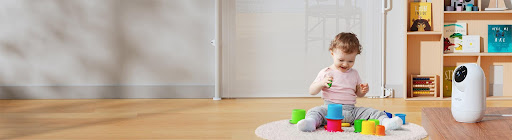
Every new parent knows the feeling — that constant undercurrent of worry about whether their home is truly safe for a curious, crawling baby. From the moment your little one begins to move independently, every corner, cord, and cabinet becomes a potential hazard. Childproofing your home is one of the most critical responsibilities you’ll face, yet the sheer number of risks to address can feel overwhelming. Where do you even begin?
Fortunately, modern technology has transformed how parents approach this challenge. Baby safety video monitors have evolved far beyond simple listening devices, becoming sophisticated tools that offer real-time visual oversight of your child’s environment. These monitors don’t just let you watch your baby sleep — they actively help you identify dangers, verify that safety measures are working, and respond instantly when your child ventures into risky territory. In this article, we’ll walk you through how to integrate a video monitor into a comprehensive baby proofing strategy, combining digital awareness with physical safety products to create a home where your child can explore with confidence and you can breathe a little easier.
Understanding Baby Safety and the Need for Childproofing
Baby safety at home revolves around one fundamental principle: anticipating dangers before your child encounters them. Babies and toddlers are naturally driven to explore their surroundings through touch, taste, and movement, but they lack the cognitive ability to recognize risk. This means the responsibility falls entirely on parents and caregivers to reshape the home environment around a child’s developmental curiosity.
The list of common household hazards is longer than most parents initially realize. Staircases present obvious fall risks, but so do raised thresholds and uneven flooring. Sharp corners on coffee tables and countertops sit at exactly the height of a toddler’s head. Electrical outlets become irresistible targets for small fingers, while unsecured cabinets grant access to cleaning chemicals, medications, and sharp utensils. Heavy furniture and televisions can topple when climbed, and blind cords pose strangulation risks that are easy to overlook.
Childproofing is fundamentally a proactive discipline. Rather than waiting for an accident to reveal a danger, effective parents systematically evaluate each room and eliminate or mitigate threats in advance. This proactive mindset shifts parenting from a constant state of crisis response to one of confident supervision. When your home is properly childproofed, your baby gains the freedom to crawl, pull up, and investigate without encountering serious harm at every turn. You gain the emotional relief of knowing that even a momentary lapse in attention won’t result in catastrophe. A well-childproofed home doesn’t restrict exploration — it channels it safely, supporting your child’s development while protecting their physical well-being.
The Role of Video Monitors in Modern Baby Proofing Solutions
A baby safety video monitor is a dedicated surveillance device designed to give parents continuous visual and audio access to their child’s immediate environment. What began decades ago as simple one-way audio transmitters — essentially walkie-talkies that let you hear crying from another room — has transformed into a category of intelligent monitoring systems capable of delivering high-definition video feeds, infrared night vision, two-way audio communication, and comprehensive room coverage from virtually any angle.
Think of a video monitor as the central nervous system of your childproofed home. Physical safety products like gates, locks, and corner guards serve as the barriers and buffers, but the monitor provides the awareness layer that ties everything together. It allows you to observe your child’s behavior in real time, verify that safety installations are holding up under daily use, and intervene the moment something unexpected happens — all without physically hovering over your child every second of the day.
This distinction between static and dynamic protection is crucial. A cabinet lock is a fixed measure; it either works or it doesn’t, and you may not discover its failure until after your child has accessed something dangerous. A safety gate blocks a staircase, but it cannot tell you that your toddler has figured out how to shake it loose. A video monitor bridges this gap by providing continuous, dynamic oversight that adapts to your child’s evolving abilities. When your baby learns a new skill — pulling to stand, climbing onto furniture, reaching higher surfaces — the monitor reveals these milestones in real time, prompting you to update your childproofing measures accordingly. It transforms baby proofing from a one-time setup into an ongoing, responsive process where you stay one step ahead of your child’s growing curiosity and physical capability.
Key Features to Look for in a Safety-Focused Video Monitor
When selecting a video monitor specifically to support your childproofing strategy, prioritize features that maximize situational awareness and reliability. High-resolution video paired with a wide-angle lens ensures you can see details clearly across an entire room without blind spots. A secure, encrypted connection is non-negotiable — you need confidence that your feed remains private and inaccessible to unauthorized viewers. Look for dependable power options, whether that means long battery life for portability or stable plug-in operation with backup capability. Motion and sound detection alerts are essential for notifying you the instant your child moves into a restricted area or makes distress sounds. Brands like Momcozy offer video monitors designed with these parent-focused features in mind, combining clear night vision with reliable alert systems suited to everyday nursery use. Integration with other smart home devices expands your safety ecosystem, allowing the monitor to work alongside smart locks or lighting. Finally, choose monitors with solid build quality, cord-free mounting options, and recognized safety certifications to ensure the device itself doesn’t become a hazard in your child’s space.
A Step-by-Step Guide to Integrating Your Video Monitor into Childproofing
Owning a video monitor and having childproofing products installed are both valuable independently, but their true power emerges when you integrate them into a unified safety system. Here’s how to do it methodically, turning your monitor from a passive viewing tool into an active childproofing partner.
Begin with a room-by-room hazard assessment, but do it differently than you might expect. Place your video monitor in each room temporarily and review the live feed from the parent unit or your phone. This perspective reveals blind spots and dangers you might miss at adult eye level — the gap beneath a bookshelf where small hands can reach, the way afternoon light obscures your view of a particular corner, or the angle at which a heavy lamp becomes accessible from a nearby couch. Walk through the nursery, living room, kitchen, and hallways this way, documenting every concern the camera reveals.
Next, position your monitor strategically to cover the highest-risk zones in your home. The crib area is the obvious first choice, but consider secondary placements near doorways that lead to stairs, beside play areas where your child spends unsupervised time, or facing windows with accessible blind cords. If your monitor supports pan-and-tilt functionality, angle it to capture the widest possible view of transition zones where your child moves between safe and potentially hazardous spaces.
Now connect your monitor’s alert capabilities directly to physical childproofing actions. When motion detection notifies you that your baby has crawled toward the kitchen entrance, that alert should trigger an immediate response — whether that means closing a gate you’d left open or recognizing that you need a permanent barrier installed there. Use sound alerts similarly; unusual banging or rattling might indicate your child is testing a cabinet lock or pulling on furniture. Each alert becomes actionable intelligence rather than background noise.
The fourth step involves ongoing verification. Physical childproofing products degrade, loosen, or get defeated by growing toddlers. Use your monitor to periodically observe how your child interacts with installed safety measures. Watch whether your toddler has learned to peel back an adhesive cabinet lock, whether a pressure-mounted gate shifts when pushed, or whether corner guards have started peeling away from furniture edges. This surveillance allows you to replace or upgrade products before they fail completely.
Finally, establish consistent routines around your monitor usage. Check the feed at predictable intervals — after putting your child down, during transitions between rooms, and whenever the house goes unusually quiet. Set alert sensitivity appropriately so you receive meaningful notifications without alarm fatigue. Over time, this routine becomes second nature, and the monitor functions as a seamless extension of your parental awareness rather than an additional task to manage.
Top-Rated Childproofing Products to Pair with Your Video Monitor
A video monitor gives you eyes throughout your home, but it works best when paired with physical barriers that buy you time to respond. Understanding which childproofing products complement your monitoring setup helps you build a layered defense system where the monitor verifies performance and the products do the heavy lifting of prevention.
Safety gates represent your first line of defense at staircases and room transitions. Hardware-mounted gates, which screw directly into wall studs, are essential at the top of stairs where a failure could mean a serious fall — your monitor lets you confirm the gate is latched after every pass-through. Pressure-mounted gates work well for lower-risk doorways between rooms, and your camera feed will quickly reveal if your toddler’s persistent pushing has shifted one out of alignment.
Cabinet and drawer locks protect your child from accessing toxic chemicals, sharp objects, and choking hazards stored at floor level. Magnetic locks remain invisible from the outside and require a key to disengage, making them nearly impossible for small children to defeat. Adhesive strap locks offer a simpler alternative for less critical cabinets. Through your monitor, you can observe whether your child has discovered a weakness in any lock’s adhesion or mechanism — catching the problem before full access is gained.
Corner and edge guards cushion the sharp edges of coffee tables, hearths, and countertops that sit at exactly toddler head height. These soft bumpers absorb impact during inevitable stumbles. Your video feed helps you notice when guards begin peeling away or when your child has pulled one off entirely. Electrical outlet covers — whether simple plug-in caps or self-closing plate covers — prevent small fingers and objects from entering live sockets. Monitoring the area around accessible outlets ensures covers stay in place.
Furniture and television anchor straps prevent tip-over accidents, one of the most dangerous yet underestimated hazards in homes with young children. These straps secure heavy dressers, bookshelves, and flat-screen TVs to wall studs. Your monitor becomes critical here because it reveals climbing behavior you might not otherwise witness — the moment you see your toddler scaling a dresser on camera, you know the anchors are earning their keep and that you may need to rearrange the room to discourage the behavior. Door knob covers and lever locks restrict access to rooms you haven’t fully childproofed, like garages, bathrooms, or home offices. When your monitor’s motion alert fires near a restricted door, you can verify through the feed whether the knob cover successfully prevented entry or whether your child needs a more robust solution.
Building a Layered Safety System for Confident Parenting
Creating a truly safe home for your baby isn’t about choosing between physical barriers and digital monitoring — it’s about weaving both into a cohesive system where each element strengthens the other. The childproofing products you install provide the tangible protection that prevents accidents in the moment, while your video monitor delivers the continuous awareness that ensures those products remain effective and that new risks are caught as they emerge. Neither approach alone is sufficient; together, they form a layered defense that adapts alongside your child’s rapidly developing abilities.
A video monitor will never replace a properly installed safety gate or a secure cabinet lock, but it will show you the instant those measures need attention, replacement, or reinforcement. It transforms childproofing from a static checklist into a living, responsive practice. If you haven’t yet started this process, take the first step today: choose a reliable video monitor with the features that match your home’s layout, then walk through each room with the camera’s perspective guiding your hazard assessment. Pair what you see with the right physical products, establish consistent monitoring routines, and adjust as your child grows. You have every tool available to build an environment where your baby explores freely and safely — and where you parent with confidence rather than constant fear.