
AEO vs GEO for AI Search: How to Build Content That Earns Citations

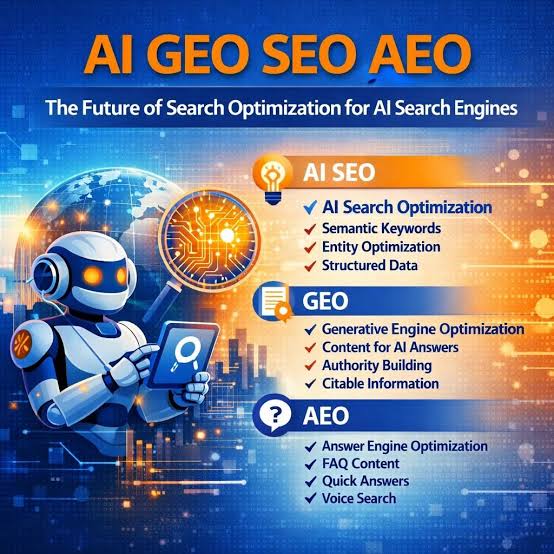
The debate around aeo vs geo for ai search reflects a real change in how people find information. Search experiences increasingly provide a synthesized response alongside, or instead of, a list of pages. For publishers and businesses, the goal is no longer just to rank for a query. Content also needs to be easy for systems to interpret, useful enough to draw on, and credible enough to cite.
AEO and GEO are overlapping approaches, not competing technical standards. Their labels are still used inconsistently, so it is more useful to understand the work behind them than to treat either as a guaranteed ranking formula.
What Do AEO and GEO Mean?
Answer engine optimization (AEO) focuses on making information clear and accessible to systems that respond directly to questions. That can mean structuring a page so a concise answer is easy to identify, using descriptive headings, and addressing common questions in language readers actually use.
Generative engine optimization (GEO) focuses on whether content can be understood and used in AI-generated responses. That includes clear explanations, reliable sourcing, distinct facts or perspectives, and enough context for a system to represent the material accurately. In practice, a well-organized, trustworthy page can support both goals.
The distinction is useful as a planning tool, but it should not lead to separate content strategies for every kind of search interface. AI products change, and their methods for retrieving and selecting sources are not fully visible. No formatting trick can ensure a citation. Strong content and sound technical foundations remain the more durable investment.
Make the Main Answer Easy to Find
Readers and AI systems benefit when a page establishes its subject quickly. Begin with the question or problem the page addresses, then provide a direct explanation before adding qualifications and detail. Use headings that describe the information in the section rather than relying on clever but vague wording.
Directness does not mean reducing every topic to a one-line answer. A short opening response can orient the reader, while the rest of the page explains conditions, trade-offs, examples, and exceptions. This layered structure is particularly useful for technical or consequential subjects where a simplified answer could mislead.
For example, an article about choosing business software might state the key decision factors near the beginning, then explain how company size, integration needs, security, and total cost affect the choice. The page becomes easier to scan without sacrificing depth.
Give AI Search Something Specific to Cite
Generic summaries are easy to produce and difficult to distinguish. Content is more valuable when it contributes something concrete: original research, a documented process, a useful comparison, a clear explanation of a complicated issue, or informed experience from people who work in the field.
Support factual claims with appropriate evidence and make the scope of each claim clear. Separate established facts from opinion, explain when information was last reviewed if it changes frequently, and identify relevant limitations. These practices help human readers assess a page and reduce the risk that a brief excerpt will be misunderstood.
For a practical overview of the publishing work involved, see these AI citation strategies. The central lesson is not to write for a machine at the expense of a person. The more useful question is whether a knowledgeable reader could verify, understand, and apply the information.
Build a Clear, Accessible Content Structure
Good editorial organization also supports discoverability. Keep each page focused on a coherent subject, use headings in a logical order, and define specialist terms when they first appear. Tables and lists can clarify comparisons or steps, but should add information rather than repeat nearby paragraphs.
Technical accessibility matters too. Pages should load reliably, work on mobile devices, and present important text in a form that can be accessed without unnecessary barriers. Clear page titles and descriptions help users understand what they will find. Structured data may clarify certain types of information, but it is not a substitute for accurate, readable content or a promise of inclusion in an AI answer.
Measure Outcomes Without Chasing Every Mention
Traditional search metrics remain useful, but they do not show the whole picture. Track organic visits, conversions, and engagement alongside changes in queries, referral sources, and the visibility of important pages. Where AI platforms provide referral information, examine it over time rather than drawing conclusions from a single mention or traffic spike.
It can also help to test a consistent set of relevant questions across AI search tools. Record whether answers are accurate, whether your organization or material appears, and which sources are cited. Results can vary between tools and over time, so treat these checks as directional research, not a definitive score. If your content is absent, investigate whether it answers the question clearly and offers a distinct reason to be included.
Manage the Work as an Ongoing Program
Improving AI visibility usually involves more than one article. Teams may need subject-matter review, editing, design, technical support, and regular updates. If some work is handled by freelancers, define each deliverable and approval stage before commissioning it. This helps align editorial quality with the available budget.
For teams that hire independent specialists across writing, design, or technology, purpose-based wallets can make project spending easier to organize. Osdire, for example, is a freelance marketplace where buyers can commission work across many categories. Its guide to Osdire Credit and budget management explains how top-ups affect a balance and how buyers can plan spending. The practical point is to allocate funds against defined work, rather than treating content production as an untracked monthly expense.
Focus on Usefulness, Not the Acronym
AEO and GEO offer different ways to describe the same broad challenge: helping people and information systems find, understand, and trust useful material. Publishers can respond by answering real questions clearly, adding evidence and expertise, maintaining accessible pages, and reviewing performance with realistic expectations. These steps do not guarantee a citation, but they create content that is more valuable whether a reader arrives through a conventional search result, an AI-generated answer, or a direct recommendation.







Comment