The MCP integration is live in Codex — what changed, how to install it, and where it still falls short
TL;DR
- Enkio now ships an MCP integration, and it launches in Codex first — download the installer, open Codex, find Enkio under Plugins, click Try Now, then attach a song plus reference images and let the agent run the workflow.
- What I actually care about isn’t that it exists as a plugin. It’s that the generation now happens where the idea already lives, which is the reason I used to abandon half-finished concepts — the idea and the tool were in two different places.
- The honest caveats: it’s a Codex-first rollout, no API keys are needed, generations draw from the same credit balance as the web app, and the remote link it shows you is not your file.
Disclosure: Everything below is just my own personal experience with the product — what I liked, and what I wasn’t happy with. Please treat it as one user’s honest sharing.
For transparency about where the facts come from: the installation steps, workflow list and limits below are taken from Enkio MCP pages, which I checked in October 2026. The judgments and the scores are mine.
What actually shipped
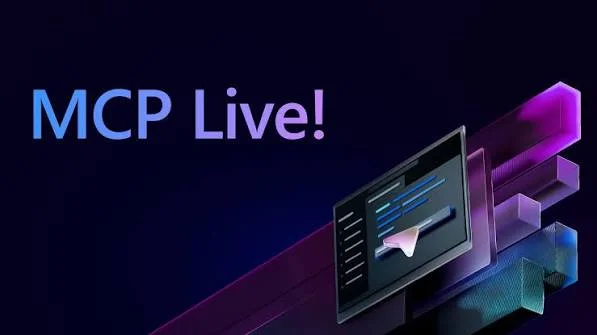
MCP stands for Model Context Protocol — the standard that lets an AI assistant call external tools. Enkio plugin wraps its visual creation workflows in that standard, so a compatible agent can generate images, video clips and full music videos inside the conversation instead of sending you off to a web app to finish the job.
One clarification the official guide makes that’s worth repeating, because it tripped me up: here, “Codex” means the Codex mode inside the unified desktop app that also includes Chat and Work. It’s not a separate product you need to go install. Enkio’s integration is launching in Codex first, and its own MCP page also documents the ChatGPT route — add the plugin, sign in, then type `@Enkio` or `/Enkio` to activate it.
That’s two surfaces on day one, which is more than I expected for a first release, and it’s the thing I’d watch over the next few months: which assistants get supported next, and how quickly.
Setup: five steps, and none of them involve a developer
This is the part I want to be precise about, because “MCP integration” sounds like something that requires a terminal and a YAML file. It doesn’t.
- Download the installer. Paste the installer link into a conversation with Codex and ask the assistant to install it — or run it yourself.
- Open Codex → Plugins → Enkio → Try Now. Codex opens a new conversation with the plugin active, and the page shows three starter prompts: create a music video from a song and photos, turn one photo into a five-second video, or create a transition between two images.
- Write a prompt and attach your inputs. A working starting point: “Create a music video from this song and these photos.” For AI MV generation you attach both a reference audio file and one or more reference images.
- Let the agent run. In the example the guide shows, it reads the MV skill, checks your files, verifies your login and credit balance, measures the song length, and then generates.
- Keep the locally saved file. More on that below, because this is the step people get wrong.
If you want to direct the look from inside the prompt, you can. The official example is a single line: “Create a 9:16 cinematic music video from this song and these images, with a dreamy night atmosphere, neon reflections, and slow camera movement.” That’s the whole interface for creative direction — a sentence, not a settings panel.
The six workflows
The plugin page lists six creation workflows, and they’re broader than “music video”:
- Music videos — audio plus images in, story, cover, character designs, storyboard and final MV out.
- Image-to-video clips — animate a single still.
- First-to-last-frame transitions — build a transition between two images.
- Reference-image videos — combine several reference images into a new clip.
- Text-to-video clips — generate from a prompt with no source media at all.
- AI images — create or edit images by changing style, background or detail with a prompt.
Four of those six have nothing to do with music, which is the strategic point: Enkio isn’t selling you a music video button in a chat window. It’s exposing the same asset-generation layer the MV workflow is built on, and letting you use it directly.
Scorecard, weighted for integration
Since this piece is specifically about the integration, I’ve re-weighted the dimensions toward what an integration should be judged on. Same 100-point scale, different emphasis.
| Dimension | Weight | Score | My take |
| Integration into an existing workflow | 25 | 9/10 | Generation happens inside the conversation, and a reshoot request is just another message. This is the reason to use it. |
| Setup & onboarding | 20 | 9/10 | Installer, Plugins, Try Now, attach files. No API keys, no config file, no developer involved — genuinely rare for MCP. |
| Output capability | 20 | 8/10 | Six workflows, same engine as the web app. The 1080p ceiling follows you here, so MCP doesn’t buy you a better render. |
| Credit model transparency | 15 | 8/10 | One balance across plugin and web, stated plainly. I’d still like a live balance readout before a long run. |
| Documentation & troubleshooting | 10 | 9/10 | The guide lists the four failure modes that actually happen — missing plugin, not logged in, no credits, missing inputs. |
| Platform coverage | 10 | 6/10 | Codex first, ChatGPT documented, that’s it so far. Fine if you live in one of those two; a wait otherwise. |
| Weighted total | 100 | 84/100 |
What I don’t love
It’s a Codex-first rollout. If your daily driver is a different assistant, you’re waiting. The guide is explicit that Codex is the first target, and “first” means a queue, not a promise.
A music video still needs two inputs. Reference audio and at least one reference image. The guide says input-requirement failures are the most common reason an MV request won’t start, and I believe it — I would have tried to send the song alone.
The remote link is not your file. When generation finishes, Codex shows you where the video was saved on your computer, and it may also show a remote URL for quick access. The guide states that the remote link is temporary and will be cleaned up. Treat the local file as the master and move it somewhere you own; don’t bookmark the link.
The resolution ceiling doesn’t move. Whatever the channel, the published output ceiling is 1080p. MCP changes where you work, not what you can ship — so a 4K deliverable still needs a different pipeline.
An account and credits are still required. There’s no separate plugin bucket, which is good, but it also means the plugin is not a way around the plan limits: same credits, same caps, same 7- or 30-day task retention.
None of these are reasons to skip it. Each one is a reason to know what you’re getting before you install.
One correction worth making
There’s a belief going around that connecting a tool to an AI assistant through MCP means you’ll be handling API keys and managing a developer account. For this integration, that’s simply wrong: Enkio’s own step two is “sign in to your Enkio account to complete the connection — it only takes a few seconds and no API keys are needed.”
That distinction matters more than it sounds. API-key integrations are gated to people who are comfortable holding credentials, which in practice means developers. An account-based sign-in means the person who actually wants a music video — a musician, a small label, someone posting to short-form — can use it without touching anything technical.
FAQ
Do I need an Enkio account?
Yes. The workflow verifies your login before generation starts, and an insufficient balance stops the run.
Do plugin generations use a separate credit balance?
No. They draw from the same Enkio credit balance as the web app, so there’s only one number to track.
What files do I need to make a music video?
A reference audio file and at least one reference image. Both are required for an MV; other workflows differ — text-to-video starts from a prompt alone, image-to-video needs one image.
Where is my finished video saved?
Locally, on your computer, with the file path shown in the conversation. If a remote URL is also provided, keep the local file — the link is temporary.
Can I request changes after the video is generated?
Yes. Stay in the same conversation, name the shot you want changed, and describe the adjustment.
Can I use the output commercially?
That depends on your plan and on where the video goes, and the governing text is Enkio’s Terms of Use rather than a blog post — mine included. Use music and images you own or have the right to use, and check the destination platform’s policy on AI-generated content.
Verdict
If you already work inside Codex or ChatGPT, this is the most useful thing Enkio has added this year, and it isn’t close. The reason is mundane and decisive: the idea and the tool now live in the same window, and asking for one shot to be redone costs you a sentence instead of a new session.
If you don’t, there’s nothing here yet — MCP support starts with Codex, and the second assistant is documented but not the whole field. Install nothing; make a note and check back. The feature is real. The coverage isn’t universal yet.