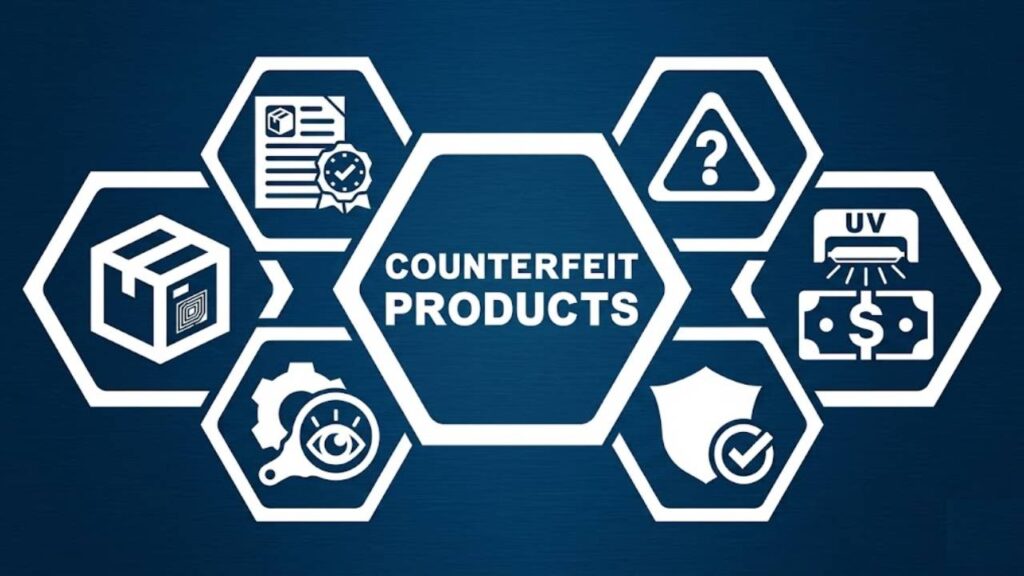
Counterfeit products can affect almost any company; however, some industries face a higher risk of falling victim to such fraud. The counterfeiters do not pick their product lines randomly; rather, they tend to identify those products that have high sales volumes, significant brand equity, high profit margins, or are relatively easy to duplicate.
Some of the commonly counterfeited products are medicines, electronic devices, cosmetics, apparel, food, auto parts, and luxury products. Different industries face different kinds of counterfeiting risks. Anti-counterfeit solutions help authorized parties distinguish genuine products from suspicious ones.
- Pharmaceuticals
The pharmaceutical industry is among the most vulnerable ones to a range of counterfeiting risks. One of the major risk factors is that counterfeit medicines can affect people’s lives. They imitate the real product in packaging, labeling, tablet shape, and name.
Counterfeit medicines may use the wrong ingredients. Also, they may have the wrong dosage or no legitimate content at all. Patients will think that they received the correct medication. But in reality, they did not get any.
Pharmaceutical companies must test their products at different stages of their supply chains. This is one of the prime reasons it’s worth choosing anti-counterfeiting solutions.
- Electronics and Consumer Technology
Mobile phones, chargers, batteries, headphones, memory cards, and other electronic goods are attractive targets for counterfeiters. Customers buy them often and can resell them.
A charger may have the same logo and packaging. A battery might have an identical label. Fake parts might become part of the regular-looking distribution chains. As a result, a fake part can reach a repair center, store, or consumer. It would be very late by the time the parties realize it because no one would know how and when they entered.
Brands can use supply chain management alongside anti-counterfeit technology. Why it would be fine is that it will add another layer of verification for distributors, retailers, and customers.
- Cosmetics and Personal Care
Another item that is frequently being targeted is cosmetics. Perfumes, skin care, makeup, hair care, and personal care products can create strong demand, provided customers know the brand.
Counterfeiters can reproduce bottles, boxes, packaging, and even color. They sell their products using social media accounts or websites.
The packaging may look authentic. The contents can be completely different. Fake cream or cosmetic products can be responsible for causing allergic reactions.
Hidden anti-counterfeit technologies may also let you check the item without any visible security measures on the packaging.
- Luxury Fashion and Accessories
Luxury products tend to become targets of imitation because there is usually quite a difference between the cost of production and the final price of the product. Imitating an expensive item can be much cheaper.
Luxury brands have long incorporated holograms, specific branding, serial numbers, tags, and other security measures. In fact, counterfeiters can study all those characteristics and try to replicate the visual ones.
Thus, modern anti-counterfeiting solutions can rely on both visual and invisible features. Visual characteristics are useful for the first check, while invisible ones can be used to confirm.
- Food and Beverages
All these items have been subject to either adulteration or mislabeling.
Forgers might replace an expensive ingredient with a cheaper one. Another possibility is that they mimic a famous brand’s label and sell an entirely different product under that name.
Food producers find it hard to prevent this kind of problem. Their packaging passes through many hands. Products can move from manufacturers to distributors, warehouses, retailers, restaurants, and finally consumers.
Strong protection mechanisms help businesses monitor products and investigate suspicious ones. Authentication technologies can also help verify products during transfers.
- Automotive Parts
The automotive industry faces counterfeiting risks across a wide range of components. Brake parts, filters, lighting products, bearings, engine components, and replacement parts, among others, can all be susceptible to such manufacturing.
Pricing is an important factor. A car owner might want a cheaper part instead of an expensive one. This creates an opportunity for a counterfeit seller to introduce a part that seems to fulfill the same purpose.
The risk increases even more when the counterfeit part affects vehicle safety. A part that can’t handle pressure or high temperatures can lead to consequences that go far beyond financial loss.
Several methods can help determine a part’s authenticity, including manufacturer and distributor authentication, traceability, packaging, and technology.
- Alcohol and Other High-Demand Branded Products
Branded drinks and other high-demand consumer goods can also fall prey to counterfeiting. A strong brand identity helps market these products. Counterfeiters either reuse the original packaging or create false packaging. Customers may not know they are buying a counterfeit.
Brands in these industries must protect the product’s packaging. Also, they should have appropriate knowledge about how the product is reaching the customer. Security features can identify genuine items, while distribution controls can help investigate unauthorized movement.
Why Do These Industries Attract Counterfeiters?
These seven industries have the following common features. Firstly, consumers know these brands well. This gives counterfeiters instant market recognition.
Second, many products on the list above have strong demand. This means a seller of counterfeits does not need to persuade customers to buy these goods; demand already exists.
Third, some products have high margins. This means that even if a counterfeit good is cheap to manufacture, its price can be high enough to allow making profits.
Fourth, modern distribution methods have increased the number of sales outlets. These can be online platforms, social media, personal websites, and global shipping services. Finally, numerous goods are transported over long distances nowadays. Companies may struggle to trace the exact origin of products or even detect substitutes.
How Brands Can Respond
No single approach will prove highly favorable for every brand. A pharmaceutical company does not have the same requirements as a fashion house. The requirements of an automobile firm will vary again. Companies must think about the product, packaging, and distribution channel. Also, they should consider consumer behavior, and potential counterfeiting techniques before choosing security features.
This could include anti-counterfeit solutions that integrate authentication and traceability. It could also include anti-counterfeiting technologies that authenticate the product without altering its appearance.
However, packaging also requires consideration. An anti-counterfeit packaging solution will not only make imitation harder but also give genuine consumers an additional way to verify authenticity.
World of Today’s Product Security Solutions
Businesses looking for effective authentication methods may also turn to specialized companies whose products focus on extra security measures that are hard for counterfeiters to detect and copy.
Cryptoglyph, an authentication technology from AlpVision, uses microscopic structures in printed varnish layers. This solution remains invisible to the naked eye and can support digital authentication. AlpVision also offers a product-based authentication solution called AlpVision Fingerprint, which relies on natural microscopic differences in plastics.