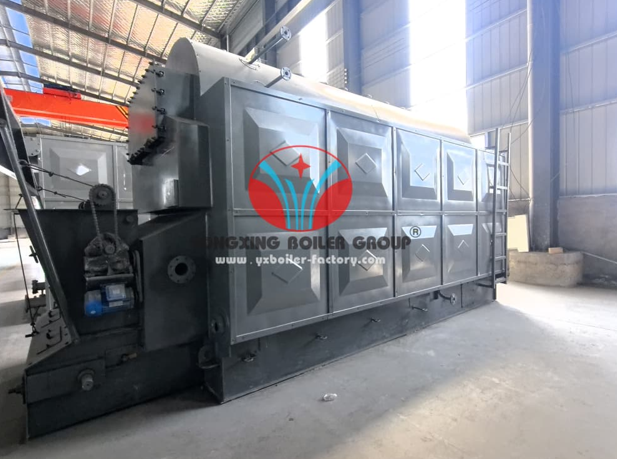
A wood fired steam boiler is a boiler that burns wood or other biomass to create steam. The steam can then be used for heating, drying, cooking, cleaning and other industrial applications.
If you have a factory that always has wood waste, chips or sawdust lying around, this can be a good way of using them up. Suitable wood residues can be used as a source of process heat instead of being considered as waste.
However, the correct choice also depends on the type of fuel available, its moisture, the amount of steam required and the way the boiler will be fired.
What Is a Wood Fired Steam Boiler?
Simply put a wood fired steam boiler is a device that burns wood based fuel to heat water. The fuel is burned in a furnace and the heat obtained from burning is passed on to the water.
As the water gets hotter, it eventually becomes steam. The steam is then piped to the machinery or production area where it is required.
Different industries use this steam in different manners. It might be needed in a food factory for cooking or sterilization, and in a textile plant for dyeing or finishing.
How Does a Wood-Fired Boiler Work?
Wood or biomass is first charged into the furnace. Air is supplied to the combustion area so that the fuel can burn properly and generate the required heat.
Hot gasses are produced by combustion, and they flow through the heat-transfer areas of the boiler. The water absorbs their heat. The water slowly turns to steam.
Some systems are capable of returning the condensate to the boiler after the steam has been used. That means the process can go on with less water and energy wasted.
Why Use Wood as Boiler Fuel?
Wood availability often is the tipping point. Sawmills, furniture factories, forestry operations and some agricultural businesses may have large quantities of wood residues on hand.
If the material is combustible, it can be a sensible alternative to just shipping it away or disposing of it, to use it as boiler fuel.
It is not all in the price of wood. The real cost of operating the boiler is affected by storage space, transportation, fuel preparation, moisture, ash handling, labor and maintenance.
Main Components of a Wood Fired Steam Boiler
A wood-fired boiler is made of parts that work together. The grate holds the wood fuel. Air must flow through the burning area. The furnace is the place where the fuel actually burns.
Heat transfer surfaces take heat from the gases. Pass it to the water inside the boiler. Depending on how the system’s built it might also have equipment for feeding fuel, steam drums, water circuits, tools for handling ash, control systems and safety devices.
It is important to keep all these parts clean and in working order. This helps make sure the wood-fired boiler runs well every time.
Benefits of a Wood Fired Steam Boiler
The main attraction is the possibility of using biomass as fuel. For a business with reliable access to suitable wood, this can offer an alternative to meet its heating needs.
Depending on the design, wood-fired systems can also be used with other types of biomass. Wood chips, sawdust and pieces of wood can all work in some systems.
Another benefit is that wood waste producers may be able to use some of their waste on-site. This makes a by-product of one operation into fuel for another.
That doesn’t mean a wood-fired boiler is always the cheapest choice. A fair comparison should include the total cost of handling, storage, operation, maintenance and water treatment of the fuel.
Choosing the Right Boiler Capacity
The boiler capacity should match the amount of steam that a facility actually uses. If the boiler is too small, it can become strained when production reaches its peak.
However, choosing a boiler that’s too large can create its own issues. A boiler that runs most of the time at a load is not as efficient as it could be.
Before selecting a system, you should consider the peak steam demand, the working pressure, the operating hours the available fuel, the installation space and the potential, for future expansion.
Applications of Wood Fired Steam Boilers
Wood-burning steam boilers are used wherever industrial processes require a reliable source of heat.
Steam is used in food processing for cooking, cleaning, drying, heating and sterilization. It may be used in textile factories for dyeing, finishing and drying.
Other applications can be found in paper production, agricultural processing, chemical manufacturing and various manufacturing operations.
The requirements are different across industries. The boiler should be selected around the process and not just a standard size.
Yongxing Boiler and Biomass Steam Systems
Yongxing Boiler is a manufacturer of industrial boiler systems and equipment for biomass and solid fuel.
When you are evaluating a Yongxing Boiler system, capacity is only one part of the decision. Other considerations are fuel used, steam output required, working pressure, degree of automation, space available and maintenance requirements
You might also want to consider installation requirements, safety standards, technical support and expected operating costs before you buy.
Not all boilers are the same for all factories. The best is the one that fits the actual production requirement.
Maintenance and Safe Operation
A wood fired steam boiler needs constant attention. The combustion of solid fuel results in the formation of ash and deposits that can be deposited in the furnace region and on heat transfer surfaces.
Clean and inspect the furnace, grate, fuel feeding system, controls and safety equipment according to the manufacturer’s instructions.
Another important part of boiler maintenance is water treatment. Bad water quality can cause scale or corrosion, reducing the efficiency and life of equipment. They work under pressure and safe operation should always be the priority. Operators must adhere to manufacturer directions and the safety needs of their facility.
Conclusion
A wood fired steam boiler can make sense for industries that have access to suitable biomass and need steam for their production processes.
Its value lies in more than just burning wood. Whether this is the right solution depends on several factors, including fuel availability, boiler capacity, operating costs, maintenance, and the specific application.
If you are thinking about the Yongxing Boiler, it would be wise to start by comparing the available equipment with your actual steam and fuel requirements. A well-designed and maintained system can provide reliable process heat while making good use of available biomass.