For years, criticism of social media has followed a familiar pattern: lawmakers hold hearings, researchers publish studies, and platform executives promise reforms. Yet the fundamental architecture of the modern internet has remained largely unchanged.
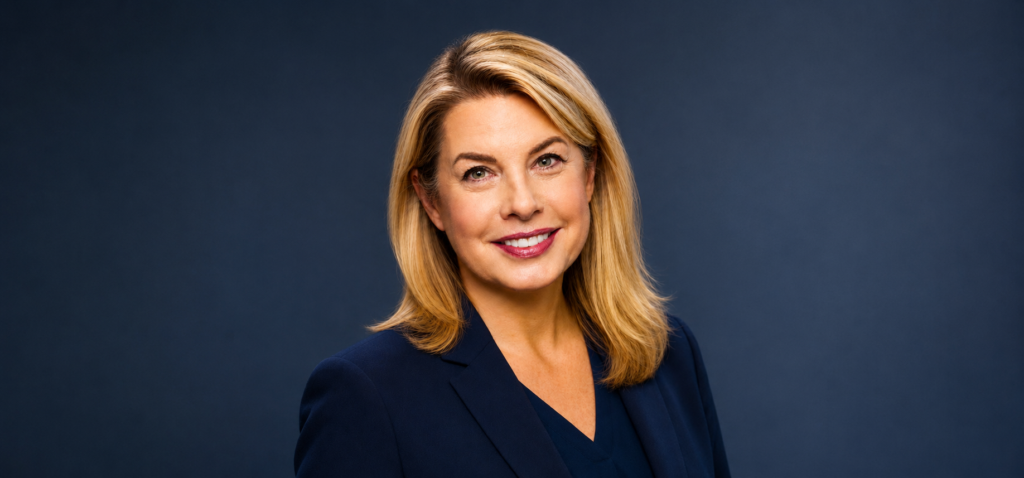
Laurie Edwards believes that is the problem.
A veteran technology entrepreneur who describes herself as having been “writing code while today’s billionaire tech bros were still in diapers,” Edwards has launched LivSocial, a new platform built around a premise that runs counter to many of the assumptions that have defined social media over the past two decades.
Rather than maximizing engagement, optimizing feeds, and keeping users scrolling for as long as possible, LivSocial is attempting something different: reducing the influence of algorithms, limiting performative online behavior, and creating structures intended to encourage community engagement and authentic conversation.
The effort arrives at a moment when public trust in online platforms remains under pressure. Concerns over misinformation, algorithmic amplification, political polarization, and AI-generated content have increasingly shifted the conversation from what social media enables to what it incentivizes.
For Edwards, the issue is not technology itself.
“It’s the incentives and the lack of governance,” she says. “Optimizing engagement sounds like a great strategy. But when you allow bots, misinformation, AI, and deliberate manipulation, you end up with an online mud wrestle. This has caused unrealistic social realities within the same stack. The systems have enabled distortion.”
Edwards says LivSocial emerged not from a single breakthrough moment but from a series of observations that accumulated over time.
“It wasn’t a lightning bolt. It was more like a slow burn that eventually became a fire!”
She points to the 2024 U.S. election as an early catalyst, describing a growing sense that people were no longer debating shared facts but “operating from entirely different realities.” The flood of bots, trolls, and misinformation that followed reinforced her concerns about the direction of digital discourse.
A third influence came from journalist Kara Swisher’s book Burn Book.
“Swisher summed up the problem better than I ever could: ‘We had, in essence, privatized our public discourse and were now allowing billionaires to implement the rules of the road.'”
For Edwards, the quote crystallized a broader concern: that social platforms had evolved from facilitating public conversation to actively shaping it.
“LivSocial grew from the belief that we can change the rules the Tech Bros created.”
At the center of LivSocial is a deliberate rejection of what Edwards sees as the dominant business logic of modern social media.
“Social media companies are under constant pressure to earn profits for shareholders. When the main goal is revenue, algorithms are designed to keep people scrolling for as long as possible. Over time, it gets to be a flattened, if not exhausting, experience.”
Instead of measuring success through engagement metrics and time spent on the platform, Edwards argues that platforms should prioritize trust and authenticity.
“If we want to change the model, we have to change our philosophy of success. Instead of measuring engagement and time spent on the platform, we can work towards a more trustworthy, authentic experience.”
That philosophy extends to how content discovery works on LivSocial. While most major platforms rely heavily on recommendation engines that surface content based on predicted engagement, Edwards says LivSocial uses a simpler approach.
“Our algorithm isn’t complex, it’s based on what users tell us their interests are and who’s in their invited circle.”
The approach intentionally resembles earlier eras of social networking.
“It’s a return to the early years of social media where you had a neighborhood of friends and family.”
Perhaps the clearest example of LivSocial’s philosophy is a feature called The SpeakEasy.
Unlike traditional social platforms, where comment sections often become the primary battleground for debate, The SpeakEasy presents users with provocative questions but disables open commenting.
The design choice is based on a simple observation: platform structure shapes behavior.
“Because we’re asking provocative questions and removing open comment capability, we’re seeing a much more thoughtful, less performative way of communicating.”
Edwards argues that the feature works because it reduces incentives for confrontation while still exposing users to differing viewpoints.
“The feature welcomes and encourages all points of view. That’s the beauty of it.”
She describes the concept less as a reinvention than a digital adaptation of a much older model.
“We’re not reinventing the wheel, op eds and public discourse have been in place for millennia, but this is the digital form of that model with timely questions centering on current events.”
LivSocial’s other notable feature is the Politician Report Card, which allows users to evaluate elected officials based on performance rather than party affiliation.
The concept reflects Edwards’ broader view that technology platforms should help strengthen public participation rather than simply amplify political content.
“We’re also trying to create political accountability,” she says. “The Politician Report Card allows users to evaluate their elected officials across key issues. At scale, the idea is to create a clearer feedback loop between citizens and the people representing them. The potential for accountability is enormous.”
The feature also illustrates one of the platform’s core distinctions. While traditional social networks often compete for attention through scale and engagement, LivSocial is positioning itself as a platform for shared dialogue and public discussion.
The launch also enters a larger debate currently unfolding across Silicon Valley: whether truly neutral platforms are possible.
Edwards is skeptical.
“I don’t believe that big tech platforms are neutral.”
She argues that recommendation systems, content policies, and product decisions inevitably reflect the values of the people who design them.
“Is true neutrality possible? I think it would be extremely difficult to achieve.”
Even proposals that rely heavily on artificial intelligence raise new concerns.
“What if AI managed an entire platform? It would reduce human bias, it could delete misinformation, eliminate the bots and trolls. It almost sounds like a good thing. But it brings its own blindspots and potential for outside manipulation.”
Her conclusion is less ideological than practical.
“The honest answer is that it’s not a default position. It’s something that needs to be carefully developed, consistently monitored, and managed in a way that keeps users safe. I don’t think we’re there.”
The challenge facing LivSocial is one that confronts nearly every social startup: convincing users to leave platforms where their networks already exist.
Edwards acknowledges the difficulty.
“I’m not a believer in ‘if you build it, they will come.’ This is going to be an uphill battle.”
Still, she believes growing dissatisfaction with existing platforms creates an opportunity.
“There are very large user groups that have a vested interest in our mission.”
Whether that mission can translate into sustained adoption remains an open question. The history of social media is littered with challengers that identified real problems but struggled to overcome network effects.
Yet LivSocial’s launch is notable for another reason. At a time when much of the industry conversation revolves around AI, creator monetization, and increasingly sophisticated recommendation systems, Edwards is asking a more fundamental question: what if the future of social media isn’t about making algorithms smarter? What if it’s about giving them less power?