
Why Vehicle Specs Vary by Trim – and How Smart Buyers Check Them

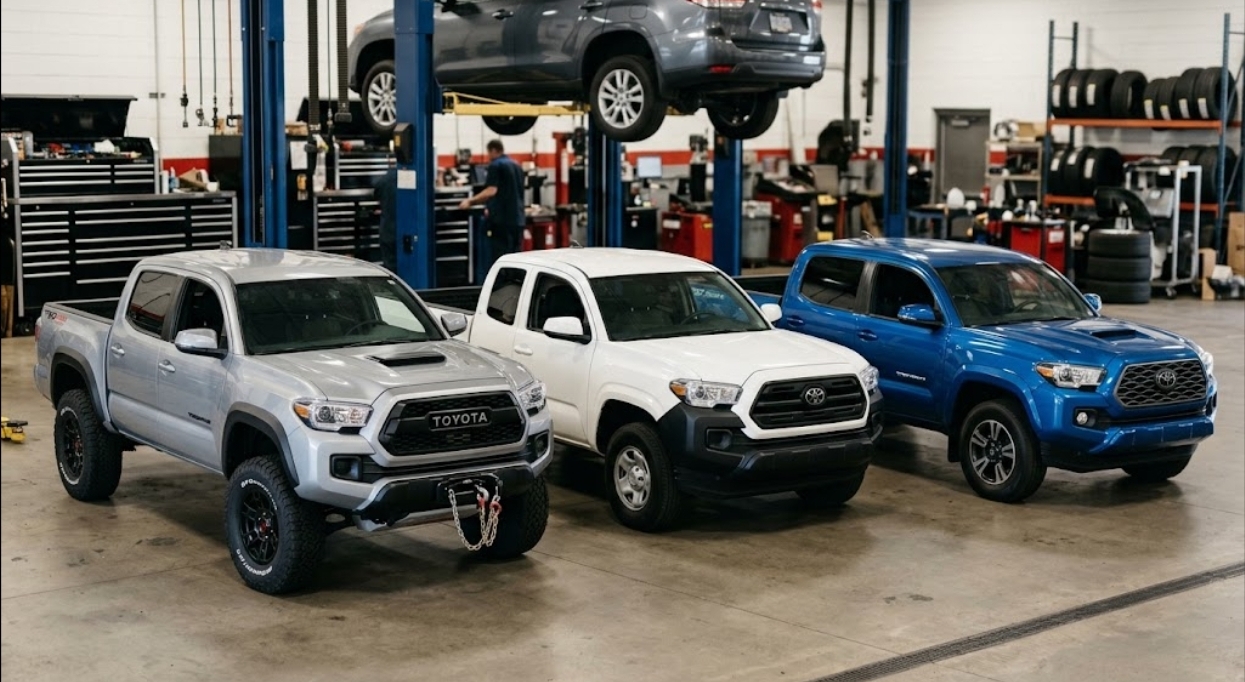
In the automotive world, few things cause more confusion for everyday owners than factory specifications. Ask what tires a particular car uses, how much oil its engine holds, or how much it can tow, and the honest answer is almost always: “it depends on the trim.” As automakers expand their lineups with more trims, engine options, and drivetrains, the gap between a base model and a top trim of the same vehicle has only widened.
For buyers, mechanics, and DIY owners alike, understanding those differences is no longer optional. It affects what you pay for tires, how you maintain the engine, and whether a towing job is safe or dangerous.
One vehicle, several sets of numbers
Consider a modern mid-size pickup. A 2022 Toyota Tacoma fitted with the V6 and the factory tow package is rated to pull up to 6,800 lbs. The four-cylinder version of the same truck, in the same model year, is limited to roughly 3,500 lbs. Nothing on the outside tells you which is which – the difference lives in the drivetrain and the equipment list.
The same pattern repeats across tire sizes and oil requirements. Wheel packages change between trims, so a base model and a sport trim may wear completely different tires. Engine options change oil capacity and even viscosity, which is why generic maintenance figures so often miss the mark. A free reference that breaks these numbers down per trim is TrimSpecs, which organizes Toyota and Honda factory data by year, make, model, and trim.
The hidden cost of generic answers
Relying on a single figure for an entire model line is where owners get into trouble. Buy tires based on the wrong trim and you may end up with the wrong size, the wrong load rating, or a speedometer that reads incorrectly. Use a generic oil capacity and you risk overfilling or underfilling the engine. Trust a headline towing number without checking your configuration, and you can exceed a limit that was never meant for your truck.
These are not edge cases. Tire fitment and oil specification questions are among the most searched automotive topics, precisely because the answers are so trim-dependent.
What to verify before you spend
Three specifications reward a few minutes of checking. The first is tire size: the factory-approved sizes appear on the driver’s door-jamb placard, and trim-by-trim guides such as this breakdown of 2021 RAV4 tire size options show how much they vary within a single year.
The second is oil. Both the capacity and the viscosity matter, and the cost of a change depends heavily on the engine. References covering Honda CR-V oil change cost and type illustrate how the figures shift between a turbocharged four-cylinder and a hybrid powertrain in the same model.
The third is towing. Here the key is matching the rating to the exact configuration – two-wheel versus four-wheel drive, with or without the tow package – and remembering that passengers and cargo count against the combined limit alongside the trailer itself.
A simple framework for owners
The safest habit is to treat every spec as trim-specific until proven otherwise. Match the figure to your trim rather than the model as a whole, confirm tire sizes against the door-jamb sticker, check both oil capacity and viscosity before a change, and always include everything loaded in and on the vehicle when calculating a towing limit.
As vehicles grow more complex, this kind of trim-level accuracy is becoming the difference between informed owners and expensive mistakes. Full per-trim breakdowns and additional model lookups are available at trimspecs.com, and owners should always cross-check any figure against their official owner’s manual before acting on it.







Comment