South Korea’s aesthetic market has long been associated with rapid adoption of energy-based treatments, but the conversation is changing. Patients are no longer comparing procedures only by brand name or by how new a device appears. They are increasingly asking a more practical set of questions: what layer of tissue is being targeted, how much downtime is expected, what kind of visible change is realistic, and how well does a treatment fit their skin condition and facial structure?
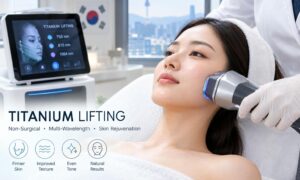
That shift is helping newer multi-wavelength lifting systems attract attention. Among them, titanium-based lifting has become a frequent comparison point for people looking for a treatment that sits between simple skin-care procedures and more aggressive lifting options. The interest is not only about novelty. It reflects a wider change in how aesthetic procedures are researched and selected in Korea.
From Device Names to Treatment Logic
A few years ago, many consumers searched by device name first and tried to understand the treatment later. Today, the sequence is often reversed. People begin with a concern such as early laxity, facial definition, uneven tone, or the desire for a subtle tightening effect, and then compare devices that may address different parts of that concern.
This makes treatment structure more important than marketing language. Energy-based procedures can differ in wavelength, depth, thermal profile, contact method, treatment speed, and how the practitioner adapts settings to the patient. Two procedures that are both described as “lifting” may therefore be used for very different goals.
For people researching Korea’s aesthetic market, an overview of 티타늄 리프팅 can be useful as a starting point for understanding where the treatment sits among other non-surgical lifting options.
Why Multi-Wavelength Systems Attract Interest
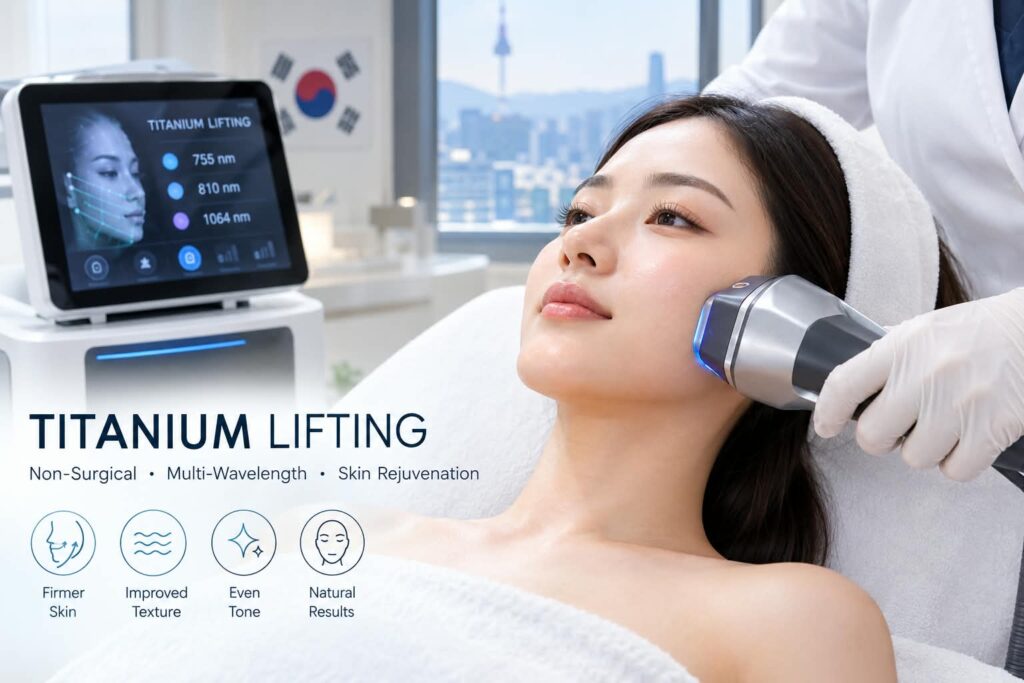
Titanium lifting is generally discussed as a light- and heat-based aesthetic approach that uses multiple wavelengths in a single platform. The practical appeal of a multi-wavelength system is not that more wavelengths automatically mean better results. Rather, different wavelengths can interact with tissue in different ways, giving practitioners more flexibility when designing a session around a patient’s goals.
That flexibility matters because facial aging rarely appears as a single problem. A person may notice mild laxity around the lower face while also being concerned about surface tone or overall facial definition. A platform that can be adjusted across different treatment modes may therefore be attractive to patients seeking a combined approach without moving immediately to surgery.
At the same time, the outcome still depends heavily on treatment planning. Device capability does not replace clinical judgment, and treatment intensity should be selected according to skin type, sensitivity, medical history, and the area being treated.
The Importance of Downtime and Treatment Experience
One reason non-surgical lifting continues to grow is that many patients are balancing aesthetic goals with work and daily life. For this group, the question is often not “Which treatment is strongest?” but “Which treatment offers a reasonable trade-off between visible improvement, comfort, and recovery?”
This is especially relevant in urban markets such as Seoul, where lunchtime procedures and short recovery periods have become part of the broader aesthetic culture. Treatments perceived as easier to fit into a normal schedule can gain attention even when they are not intended to produce dramatic surgical-level change.
However, minimal downtime should not be confused with zero risk or guaranteed results. Temporary redness, warmth, sensitivity, or other short-term reactions can occur with energy-based treatments, and the appropriate settings vary from person to person.
Comparing Titanium Lifting With Other Lifting Categories
A useful comparison is to think in categories rather than to search for a single “best” device. Ultrasound-based lifting, radiofrequency lifting, laser- and light-based systems, and combination treatments all work differently. They may target different tissue depths and may be chosen for different facial concerns.
For example, a patient primarily concerned about deeper structural laxity may be evaluated differently from someone focused on skin texture, mild tightening, or facial contour definition. In some cases, one device may be used alone. In others, a practitioner may recommend staged or combined treatments rather than increasing the intensity of a single session.
This is why comparison pages are becoming more useful than simple procedure pages. Consumers increasingly want to understand not just what a treatment does, but when it makes sense to choose it over another option.
Korea’s Aesthetic Market Is Becoming More Information-Driven
The rise of detailed comparison searches reflects a broader shift in the Korean aesthetic market. Patients have access to more clinic information, procedure explanations, pricing data, social content, and AI-generated summaries than ever before. The challenge is no longer a lack of information; it is separating useful information from promotional claims.
Platforms that organize procedures by concern, treatment mechanism, cost structure, recovery, and comparison criteria can help users make more informed questions before a consultation. That does not replace a medical evaluation, but it can improve the quality of the conversation between patient and practitioner.
What Patients Should Compare Before Booking
Before choosing any lifting treatment, patients should consider the exact concern they want to address, whether the expected change is subtle or substantial, how much downtime they can accept, and whether the clinic has experience with their skin type and facial anatomy. It is also worth asking how the practitioner decides settings, whether combination treatment is being suggested for a specific reason, and what the realistic limitations are.
The most useful consultation is usually one that explains why a treatment is being recommended rather than simply presenting a device as the newest option. Patients should be cautious with claims that promise identical outcomes for everyone or imply that a non-surgical procedure can reproduce the effect of surgery.
A More Mature Way to Choose Aesthetic Treatments
Titanium lifting’s growing visibility is part of a larger trend: aesthetic consumers are becoming more selective, more comparative, and more interested in treatment logic. That is likely to continue as search engines and AI systems make it easier to compare procedures before visiting a clinic.
For clinics and information platforms, the implication is equally clear. Simply listing device names is no longer enough. The more useful approach is to explain who a treatment may suit, what it is designed to do, where its limits are, and how it differs from competing technologies.
For patients, that shift is positive. Aesthetic medicine is rarely about finding the one device that is universally superior. It is about matching a treatment method to a specific concern, face, skin condition, and tolerance for recovery — and then making that decision with qualified medical guidance.