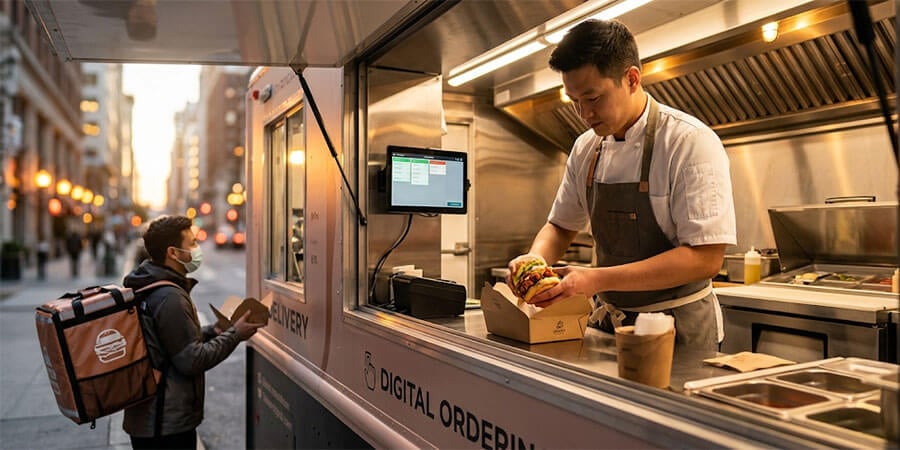
There’s something oddly revealing about the last few minutes of a food order. A customer might spend twenty minutes choosing where to eat from, comparing dishes, checking reviews and finally placing the order, but the part they remember most clearly is often the handover. Was the food ready? Was it still warm? Did they have to wait around awkwardly? Did the whole thing feel easy, or did it feel like the restaurant had technically accepted the order but hadn’t really thought through what happens next?
For cafés, restaurants, convenience stores and food service operators, those small moments add up. The customer may not notice every system working behind the scenes, but they definitely notice when the experience feels clunky. That’s one reason heated lockers are becoming such a practical part of modern pickup setups, especially for businesses trying to make takeaway and collection feel more polished without creating more pressure for staff.
Convenience has changed shape
Not that long ago, pickup meant standing near a counter, catching someone’s eye, giving your name and hoping your order hadn’t been handed to the wrong person. It was simple enough when things were quiet, but it could get messy fast during lunch rushes, dinner peaks or event traffic. Staff were already juggling dine-in guests, delivery drivers, phone calls and kitchen updates, while customers hovered nearby trying to work out whether they were in the right place.
Modern customers expect something smoother. They’re used to tracking parcels, collecting groceries from dedicated bays and receiving messages the moment something’s ready. Food pickup now sits inside that same expectation. People don’t necessarily want a big interaction; they want accuracy, speed and a feeling that the business respects their time.
The counter isn’t always the best collection point
A crowded counter can make even a good venue feel chaotic. It’s hard for staff to stay focused when every few seconds someone is asking whether their order is ready, and it’s not much better for customers who are trying to collect quickly without blocking the people behind them. Even when everyone is polite, the setup itself can create friction.
A better pickup process gives orders a clear destination and gives customers a clear next step. Instead of relying on shouted names, paper bags lined up wherever there’s space, or staff stopping mid-task to check dockets, the business can separate collection from the main service flow. That small change can make the whole operation feel calmer.
Temperature matters more than people admit
Food is emotional in a way many other purchases aren’t. A slightly delayed parcel might be annoying, but a lukewarm lunch can feel personally disappointing, especially if the customer ordered ahead because they were short on time. When food is meant to be hot, keeping it at the right temperature until collection is part of the product, not just part of the logistics.
This is where the little details become brand details. A customer might not know exactly how long their order was waiting, but they’ll know whether it still felt fresh when they opened it. They’ll know whether the chips survived the trip, whether the pasta still felt comforting, or whether the meal seemed like it had been sitting in limbo.
Better systems help staff, too
The customer experience usually gets the attention, but staff benefit just as much from a smarter pickup process. When collection is organised, there are fewer interruptions, fewer awkward searches and fewer moments where someone has to leave one task half-finished to solve another. During peak periods, that matters.
A good system also reduces the mental load on teams. Instead of relying on memory, improvisation or constant checking, staff can follow a simple process that supports the rhythm of the venue. It doesn’t remove hospitality; it just removes some of the unnecessary scrambling around it.
Small upgrades can change the whole mood
Modern food pickup doesn’t need to feel futuristic or complicated. In many cases, it just needs to feel considered. Clear instructions, reliable holding spaces, better temperature control and less crowding can turn collection from a weak point into a quiet strength.
Customers may not walk away saying, “What an excellent operational process,” but they’ll remember that the order was easy to collect, the food was still warm and nobody looked stressed when they arrived. For a food business, that kind of smoothness is worth paying attention to, because it’s often the small details that decide whether someone comes back next week.